Wildlife. Updated November 2026. 3 min read.
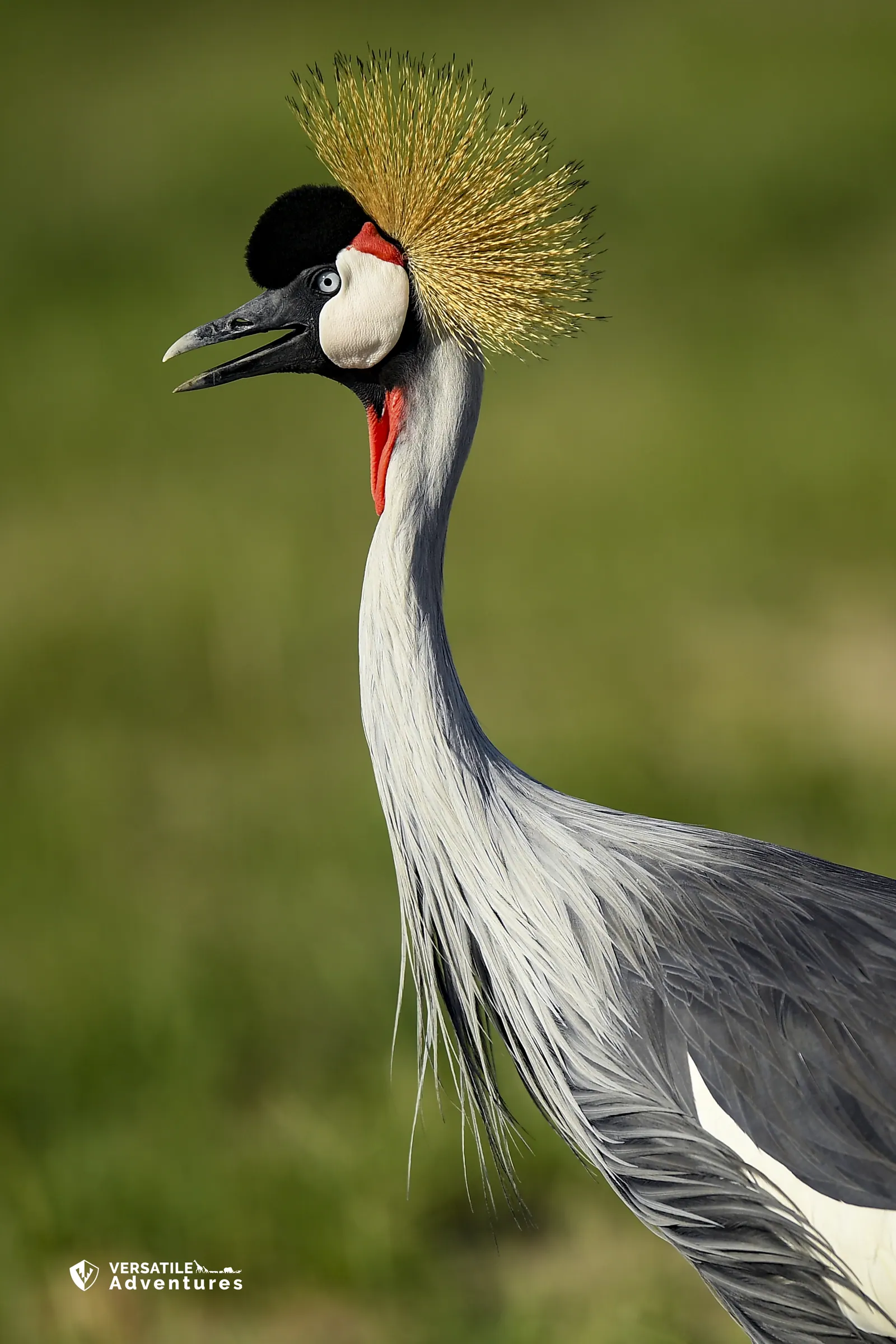
A tall grey crane with a golden crown of stiff feathers, red wattle and white cheeks. Grey crowned crane (Balearica regulorum) is 105 cm long and endangered on the IUCN Red List. Uganda's national bird, declining fast across East Africa through wetland loss; Kenya's Rift and western wetlands hold important numbers.
Where to see Grey crowned crane
- Lake Naivasha: A freshwater lake of hippos, fish eagles and flower farms, and the easiest weekend out of Nairobi.
- Saiwa Swamp: Kenya's smallest park: a walk on boardwalks to see sitatunga, De Brazza's monkeys and crowned cranes.
- Kisumu: Kenya's lake city: fresh tilapia at Dunga, boat trips to Ndere Island and the gateway to Rusinga, Mfangano and Kogelo.
- Maasai Mara: Kenya's most famous reserve: the Great Migration from July to October and the densest big-cat country in Africa all year.
- Lake Nakuru: Kenya's surest rhino sighting, a soda lake of pelicans and flamingos, and tree-climbing lions.
- Kakamega Forest: Kenya's last rainforest: 400 bird species, blue monkeys, colobus and 400 kinds of butterfly.
Pairs dance with bows, leaps and wing-spreads; forages in wet grassland and farmland. It is widespread enough that a standard safari finds it without trying; the best months are Jan, Feb, Mar, Jun, Jul, Aug, Sep, Oct.
How to identify it
A tall grey crane with a golden crown of stiff feathers, red wattle and white cheeks. Size: about 105 cm, unmistakably big. Family: cranes. Pairs dance with bows, leaps and wing-spreads; forages in wet grassland and farmland.
Status and conservation
Grey crowned crane is endangered on the IUCN Red List. It is a priority species for Kenya's conservation bodies; sightings reported to your guide or to the Kenya Bird Map project help track it.
On a Kenya Experience trip
Our guides carry binoculars and the East African field guide in every vehicle, and our birding itineraries put a specialist bird guide in the front seat. For Grey crowned crane we would start at Lake Naivasha and Saiwa Swamp. Tell us the species on your list and we build the days around them.