
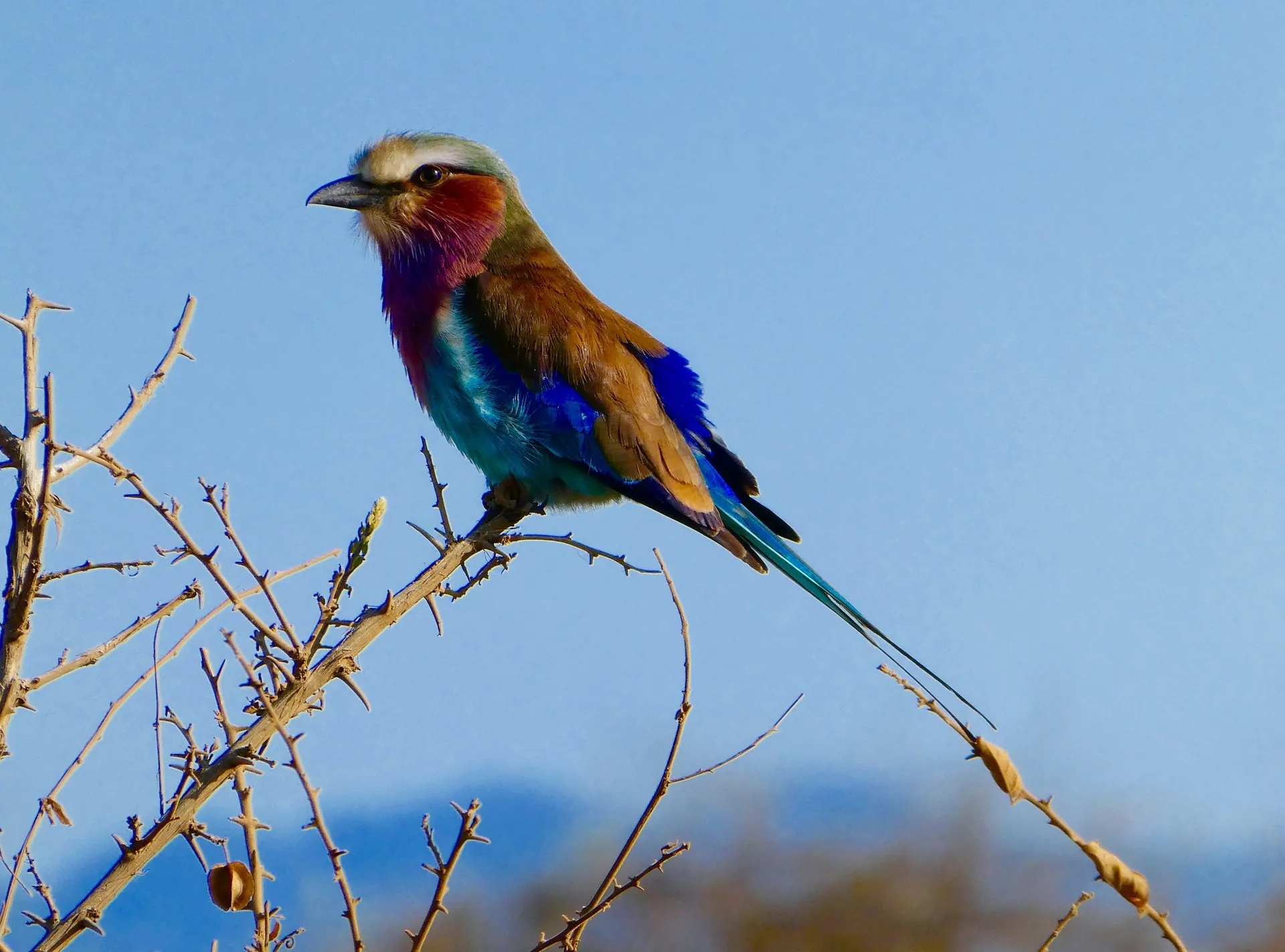
Wildlife. Updated November 2026. 3 min read.
Spotted black, white, red and yellow with a red face and a yellow bill. Red-and-yellow barbet (Trachyphonus erythrocephalus) is 23 cm long and common and not threatened. Its duet is the dry country's alarm clock; Baringo's camps have tame ones.
Where to see Red-and-yellow barbet
- Samburu: The dry north: the Samburu Special Five, elephants on the Ewaso Nyiro and the red-robed Samburu people.
- Tsavo East: Kenya's largest park: red elephants, the Yatta plateau and huge skies, an easy add-on to the coast.
- Amboseli: Big-tusked elephants crossing dry lakebeds under Kilimanjaro, clearest at dawn.
- Lake Baringo: A freshwater Rift lake of 470 bird species, hippos, crocodiles and boat trips to the Njemps islands.
Nests in termite mounds; pairs duet loudly from the top. It is widespread enough that a standard safari finds it without trying; the best months are Jan, Feb, Mar, Jun, Jul, Aug, Sep, Oct.
How to identify it
Spotted black, white, red and yellow with a red face and a yellow bill. Size: about 23 cm, thrush-sized. Family: barbets. Nests in termite mounds; pairs duet loudly from the top.
Status and conservation
Red-and-yellow barbet is common and not threatened. No special measures are needed to see it, and your park fees support the habitats it uses.
On a Kenya Experience trip
Our guides carry binoculars and the East African field guide in every vehicle, and our birding itineraries put a specialist bird guide in the front seat. For Red-and-yellow barbet we would start at Samburu and Tsavo East. Tell us the species on your list and we build the days around them.