
Wildlife. Updated November 2026. 3 min read.
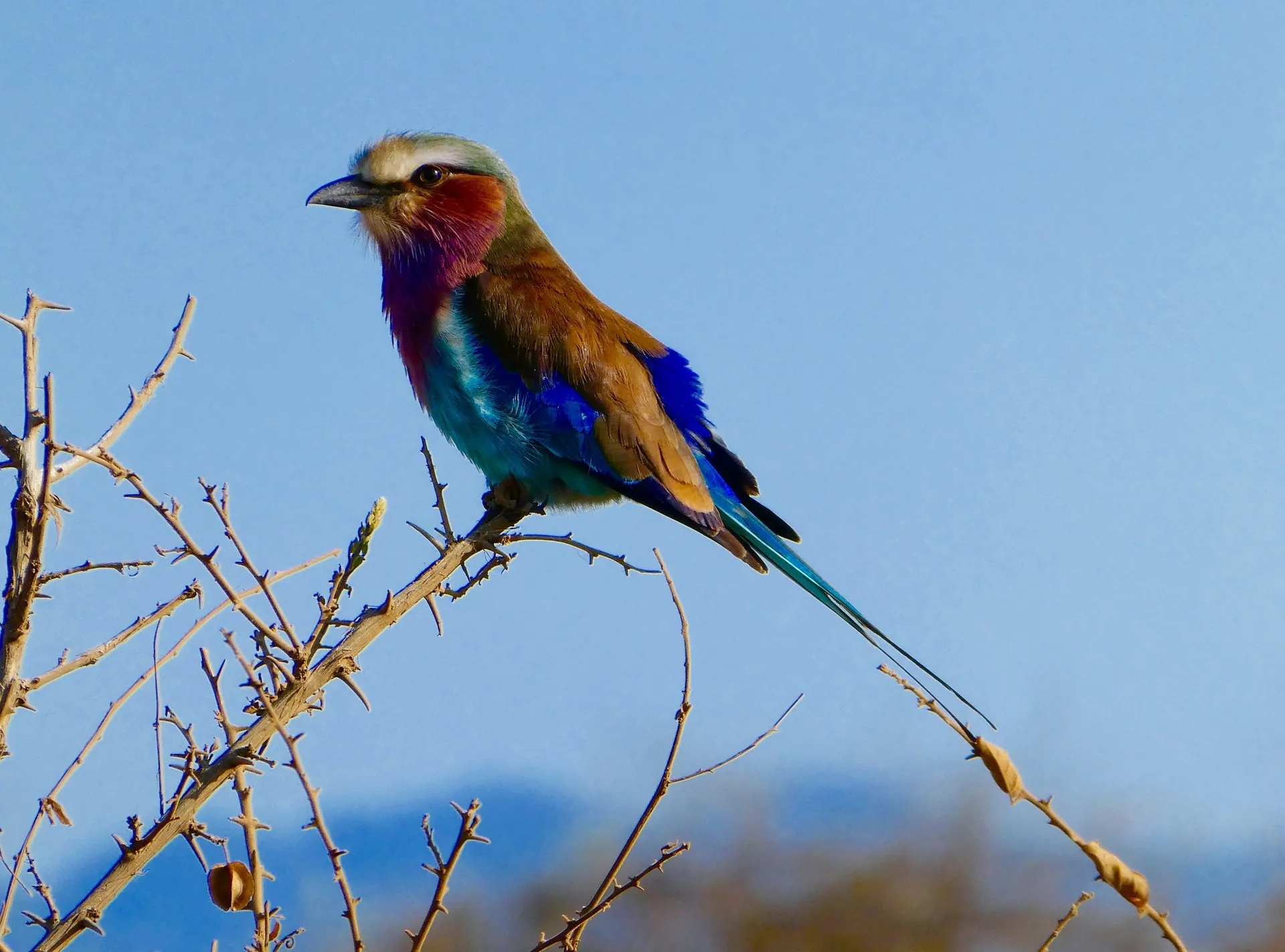
Crimson and pink with a turquoise crown and rump and long tail streamers. Northern carmine bee-eater (Merops nubicus) is 35 cm long and common and not threatened; it is a migrant, present in Kenya in November, December, January, February, March, April. Visits Kenya from the north from about November to April; Samburu's riverbanks hold colonies.
Where to see Northern carmine bee-eater
- Samburu: The dry north: the Samburu Special Five, elephants on the Ewaso Nyiro and the red-robed Samburu people.
- Lake Baringo: A freshwater Rift lake of 470 bird species, hippos, crocodiles and boat trips to the Njemps islands.
- Lake Turkana: The world's largest desert lake, the cradle of mankind at Koobi Fora and the Turkana, El Molo and Rendille peoples.
- Meru National Park: Elsa's park: thirteen rivers, doum palms, a rhino sanctuary and almost no other vehicles.
Hawks insects from the backs of bustards, goats and vehicles. It is widespread enough that a standard safari finds it without trying; the best months are November, December, January, February, March, April.
How to identify it
Crimson and pink with a turquoise crown and rump and long tail streamers. Size: about 35 cm, thrush-sized. Family: bee-eaters. Hawks insects from the backs of bustards, goats and vehicles.
Status and conservation
Northern carmine bee-eater is common and not threatened. No special measures are needed to see it, and your park fees support the habitats it uses.
On a Kenya Experience trip
Our guides carry binoculars and the East African field guide in every vehicle, and our birding itineraries put a specialist bird guide in the front seat. For Northern carmine bee-eater we would start at Samburu and Lake Baringo. Tell us the species on your list and we build the days around them.