
Wildlife. Updated November 2026. 3 min read.
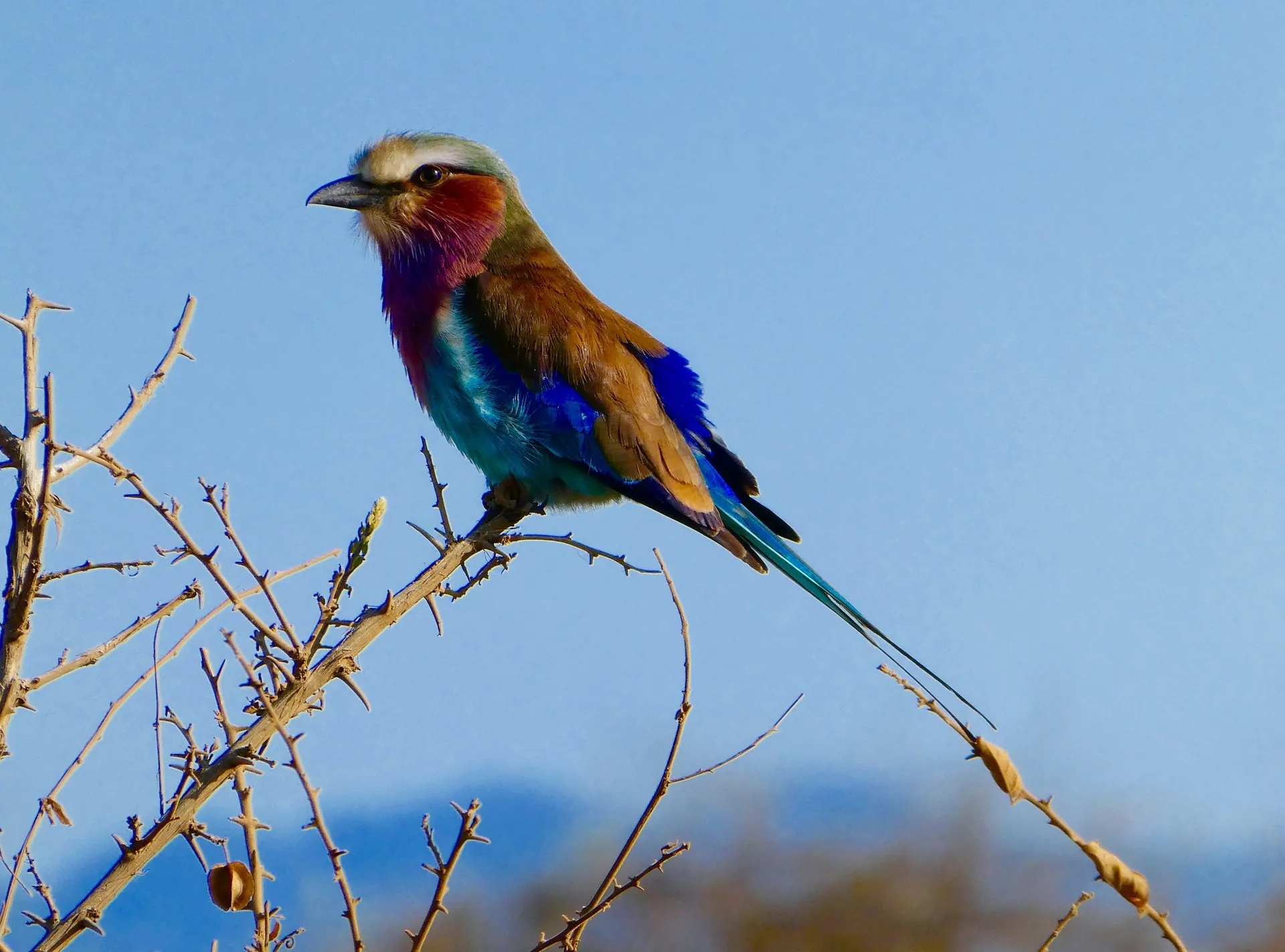
Green with a red throat, white forehead and a blue rump. White-fronted bee-eater (Merops bullockoides) is 23 cm long and common and not threatened. Colonies in the Mara's river banks can hold hundreds of burrows.
Where to see White-fronted bee-eater
- Maasai Mara: Kenya's most famous reserve: the Great Migration from July to October and the densest big-cat country in Africa all year.
- Lake Naivasha: A freshwater lake of hippos, fish eagles and flower farms, and the easiest weekend out of Nairobi.
- Lake Baringo: A freshwater Rift lake of 470 bird species, hippos, crocodiles and boat trips to the Njemps islands.
- Hell's Gate: The park you cycle through: cliffs, zebras beside your wheel and the gorge that inspired The Lion King.
Nests in colonies in riverbank cliffs, with helpers at the nest. It is widespread enough that a standard safari finds it without trying; the best months are Jan, Feb, Jul, Aug, Sep, Oct.
How to identify it
Green with a red throat, white forehead and a blue rump. Size: about 23 cm, thrush-sized. Family: bee-eaters. Nests in colonies in riverbank cliffs, with helpers at the nest.
Status and conservation
White-fronted bee-eater is common and not threatened. No special measures are needed to see it, and your park fees support the habitats it uses.
On a Kenya Experience trip
Our guides carry binoculars and the East African field guide in every vehicle, and our birding itineraries put a specialist bird guide in the front seat. For White-fronted bee-eater we would start at Maasai Mara and Lake Naivasha. Tell us the species on your list and we build the days around them.