Parks and reserves. Updated November 2026. 4 min read.
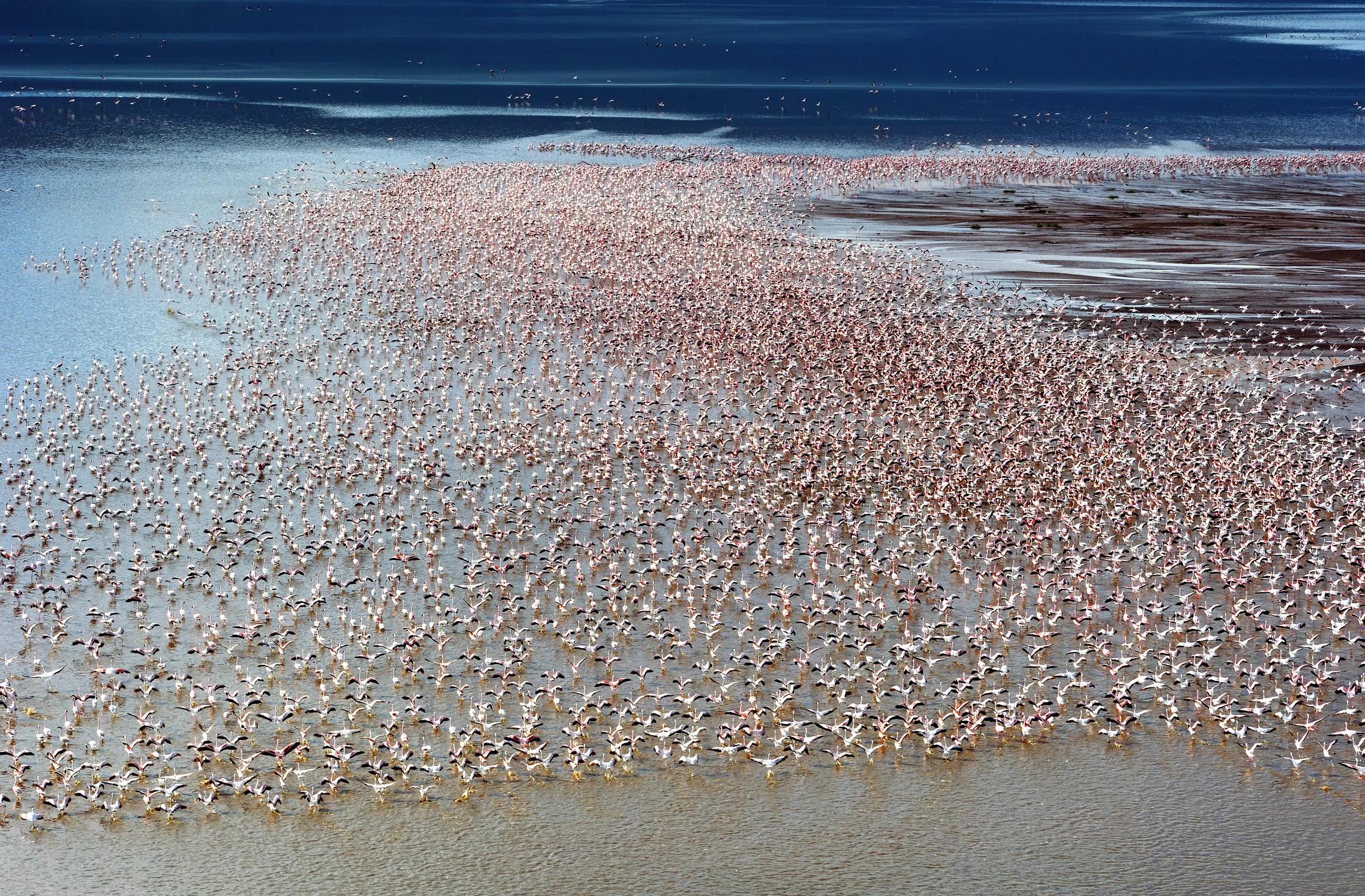
In two hours the road from Nairobi drops more than a thousand meters, from cool highland suburbs to the hottest, lowest place within easy reach of the capital. At the bottom lies Lake Magadi: not so much a lake as a white and pink crust of soda, cracked into plates, with pools of red and rose-colored brine, steam rising from hot springs at its edge, and flamingos feeding where the water is open.
Magadi is a day trip, not a safari park. There is no Kenya Wildlife Service gate and no park fee, because the lake is a working soda mine and the town on its shore belongs to the company that runs it. You come for the strange landscape, the hot springs, the birds and the drive itself, which passes the Olorgesailie prehistoric site on the way. In Kiswahili, magadi is the word for soda ash, which cooks across Kenya still add to beans and greens to soften them.
What the lake is
Magadi is the southernmost of Kenya's Rift Valley lakes, a saline, alkaline pan close to the Tanzanian border. Unlike lakes fed by rivers, it is fed mainly by hot springs rich in dissolved sodium carbonate. As the water evaporates in the heat, the soda crystallizes into a thick crust, called trona, that renews itself. The pink and red colors come from salt-loving microorganisms that thrive in the brine.
Soda has been extracted here since the early 1900s, when a branch railway was built down the escarpment to carry it out. The operation is now run by Tata Chemicals Magadi, and Magadi town is still a company town, with its own housing, school and services. You will see the works, the evaporation pans and the causeway across the lake. Ask before photographing the plant or the people who work there.
Hot springs and flamingos
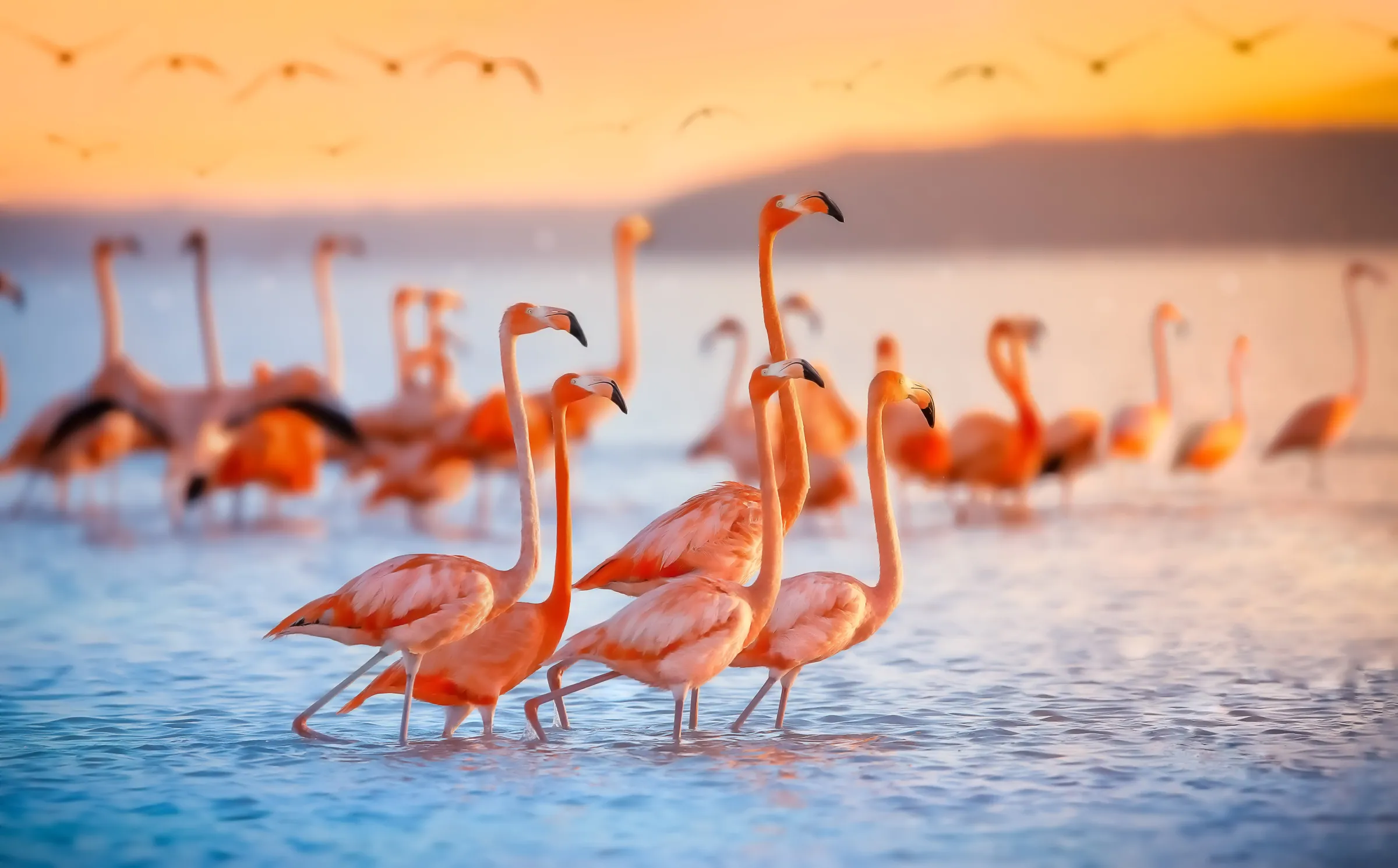
Toward the southern end of the lake, hot springs feed open lagoons that draw lesser and greater flamingos, along with stilts, avocets and other waders. The springs are home to the Magadi tilapia, a small fish found nowhere else on earth, which lives in water that would cook most fish. Local people and visitors bathe at one of the warmer pools; the water is hot and the rocks are slippery, so take care and never let children in unsupervised. Flamingo numbers vary with the season and the state of the water.
Olorgesailie on the way
About halfway between Nairobi and Magadi, the Olorgesailie prehistoric site, run by the National Museums of Kenya, preserves hundreds of stone hand axes made by early humans, lying on the ground where they were left, protected by raised walkways. Louis and Mary Leakey excavated here in the 1940s. A small museum explains the finds. It takes about an hour and turns a lake trip into a lesson in human origins; our cradle of humankind page explains the bigger story.
Plan the day
| Time | Stop |
|---|---|
| 6:30am | Leave Nairobi through Kiserian and down the Ngong escarpment |
| 8:00am | Olorgesailie: the hand axes, the museum and the view of Mount Olorgesailie |
| 10:00am | Magadi town and the causeway over the soda crust |
| 11:00am | The southern hot springs and flamingo lagoons |
| 1:00pm | Picnic lunch in whatever shade you can find, then back up the escarpment |
| 4:00pm | Back in Nairobi, before the evening traffic |
What to bring
- At least three liters of water per person, and more in January and February
- A wide hat, strong sunscreen and dark sunglasses: the white crust throws glare back at you
- Closed shoes: the soda crust is sharp and the brine stings cuts
- Cash in Kenyan shillings for small local charges, as visitor fees at the town or springs vary
- A cooler box with lunch: there are very few places to eat
Do not walk out onto the crust. In places it is thin, and the brine underneath is caustic. Midday temperatures often reach or pass 100°F (38°C), so the trip runs on an early start.
Beyond Magadi
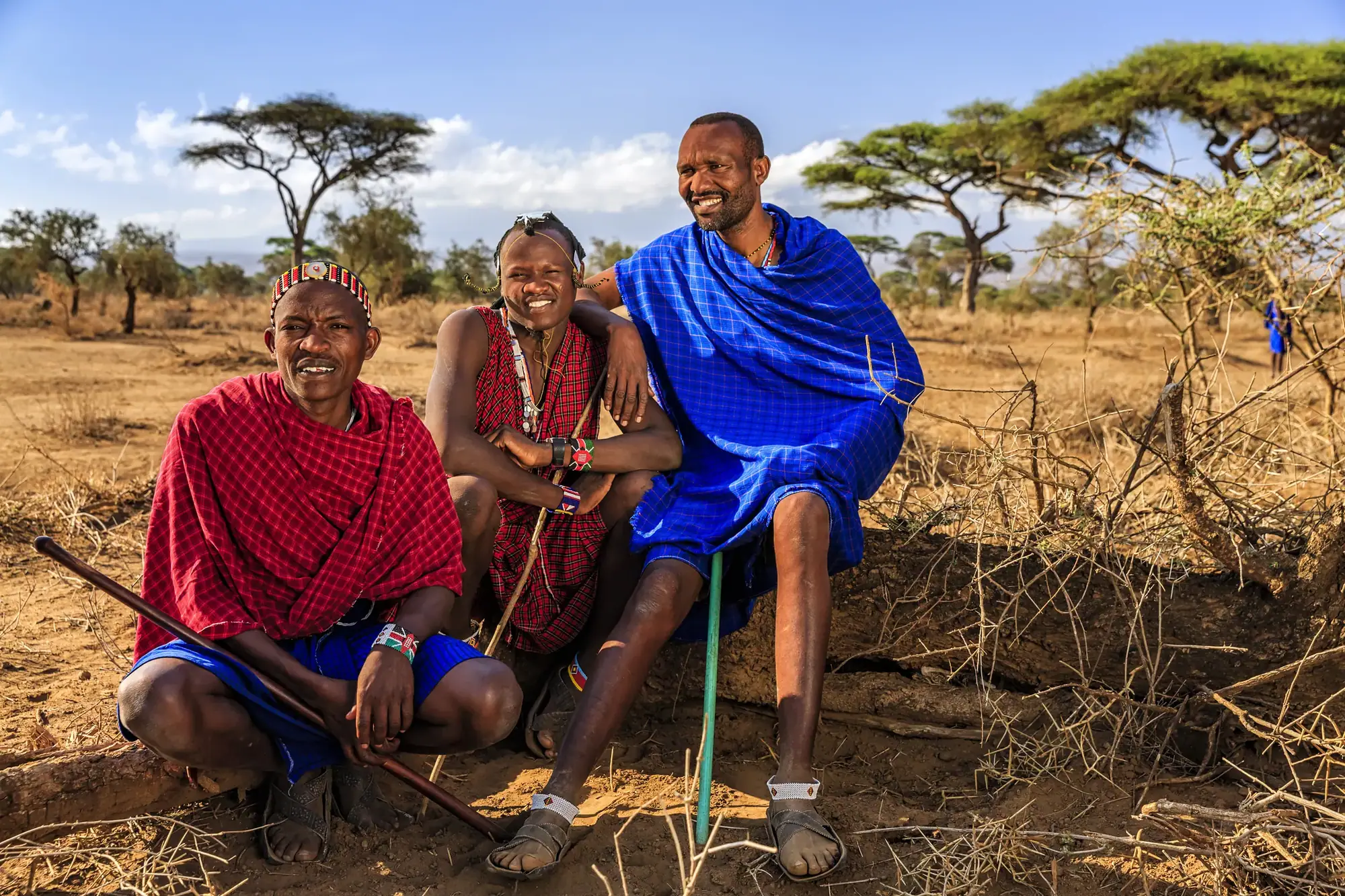
South and west of the lake, the Nguruman escarpment rises in a wall above the valley, and the Shompole and Olkiramatian conservancies, owned by Maasai group ranches, protect wild country along the Ewaso Ng'iro river toward Tanzania's Lake Natron. It is remote, beautiful and little visited, with community-run camps. We plan it on request as an overnight or two, with experienced guides.
When to go
Magadi is hot all year. The dry months, June to October and January to March, give the easiest tracks; the long rains of April and May and the short rains of November can cut off the southern springs. Go on a weekday for an empty causeway, and buy beadwork directly from the Maasai women who sell along the road.