Kiswahili. Updated November 2026. 5 min read.
The most useful sentence in this lesson is three words long: Choo kiko wapi? Where is the toilet? Learn it and its relatives and you can find a bathroom, a gate, a hotel and an airport, follow a stranger's directions, and ask a driver to slow down, which on Kenyan roads is a sentence worth having.
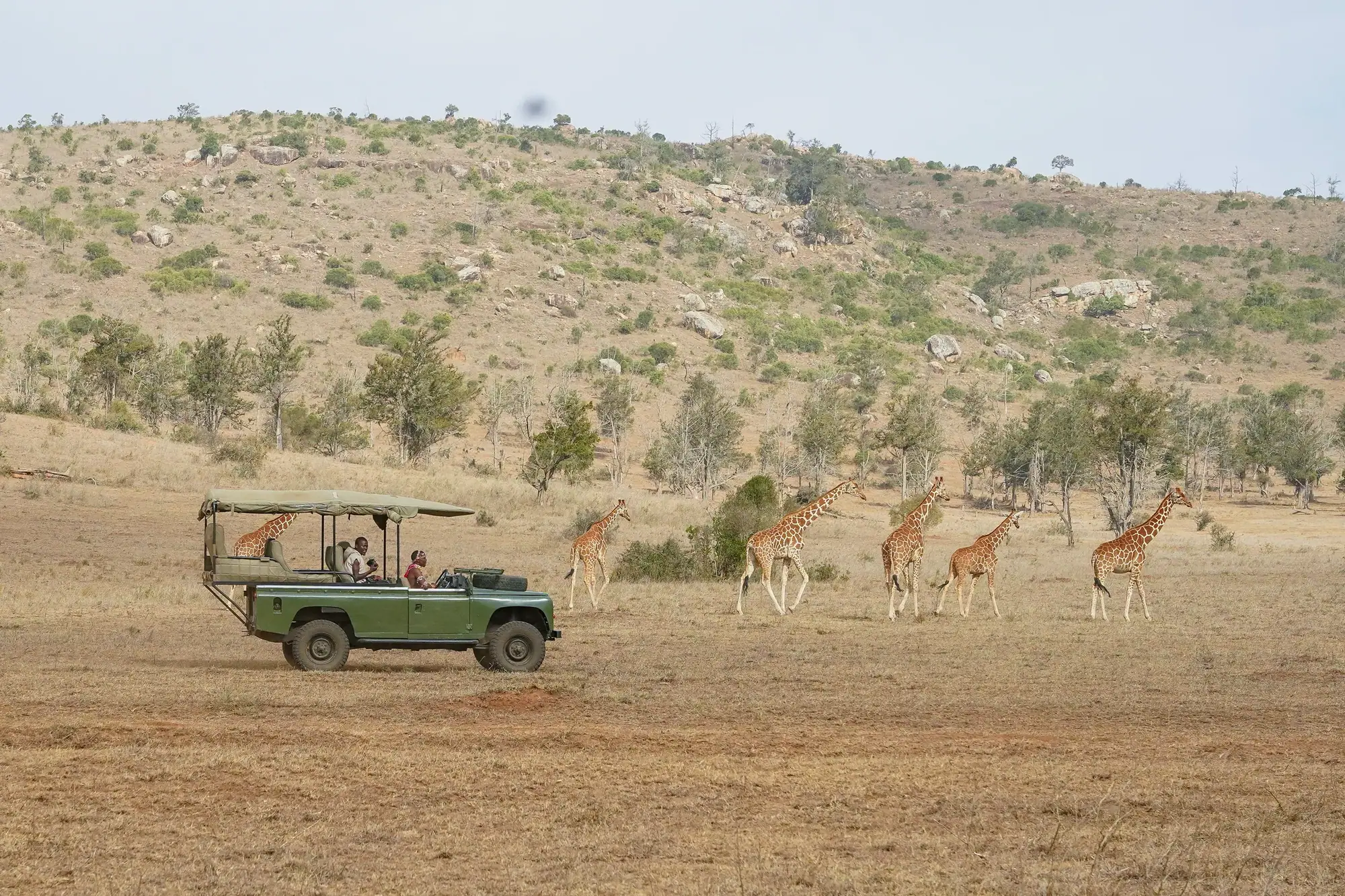
Directions come down to a small kit: wapi (where), hapa and pale (here and there), kushoto and kulia (left and right), moja kwa moja (straight on), karibu and mbali (near and far). Add the transport words and three commands, twende, polepole and simama hapa, and you can manage taxis, matatus and game drives. The words your safari guide uses in the bush are on our Kiswahili for safari page; this lesson is about getting around.
What you will be able to do
- Ask where a place or a person is, and understand the answer
- Follow simple directions: left, right, straight on, near, far
- Ask whether somewhere is far, and how many minutes it takes
- Tell a driver to go, slow down, wait and stop
- Recognise what a matatu conductor is shouting
The words
| Kiswahili | Say it | Meaning |
|---|---|---|
| wapi? | WA-pi | where? |
| Iko wapi? | I-ko WA-pi | Where is it? |
| hapa / pale / kule | HA-pa / PA-le / KU-le | here / there (that place) / over there (further off) |
| kushoto / kulia | ku-SHO-to / ku-LI-a | left / right |
| moja kwa moja | MO-ja kwa MO-ja | straight on |
| pinda | PI-nda | turn |
| halafu | ha-LA-fu | then, after that |
| karibu na | ka-RI-bu na | near, close to |
| mbali | m-BA-li | far |
| Ni mbali? | ni m-BA-li | Is it far? |
| Dakika ngapi? | da-KI-ka NGA-pi | How many minutes? |
| gari | GA-ri | car, vehicle |
| matatu | ma-TA-tu | shared minibus |
| ndege | n-DE-ge | plane (and bird) |
| uwanja wa ndege | u-WA-nja wa n-DE-ge | airport (literally: field of planes) |
| stesheni | ste-SHE-ni | station |
| hoteli | ho-TE-li | hotel; also a small café in everyday speech |
| choo | CHO-o | toilet |
| Twende | TWE-nde | Let's go |
| Polepole | po-le-PO-le | Slowly |
| Ngoja kidogo | NGO-ja ki-DO-go | Wait a little |
| Simama hapa | si-MA-ma HA-pa | Stop here |
| Nashuka hapa | na-SHU-ka HA-pa | I'm getting off here |
Dialogue: finding your way
First at a lodge, then in a taxi to the airport.
- Wewe: Samahani, choo kiko wapi?
- Mhudumu: Kiko pale, kushoto.
- Wewe: Asante. Na mkahawa uko wapi?
- Mhudumu: Nenda moja kwa moja, halafu pinda kulia. Si mbali.
- Wewe: Asante sana!
- Wewe (in the taxi): Habari! Twende uwanja wa ndege, tafadhali. Ni mbali?
- Dereva: Si mbali sana, lakini kuna foleni.
- Wewe: Hakuna shida. Polepole, tafadhali.
- Dereva: Tumefika!
- Wewe: Simama hapa. Asante!
Mkahawa is a restaurant or café, si mbali means it's not far, and kuna foleni means there is traffic (foleni, from the English 'file', is a queue or a jam). Hakuna shida is no problem, and tumefika is we've arrived, a tense you will meet properly in Lesson 7.

Grammar point: 'where is it?' and the -ko ending
Iko wapi? is literally 'it is where?'. The -ko means 'is at a place', and the syllable in front of it agrees with the noun class of the thing you are looking for. The answer uses the same form: Kiko pale (it is there), Iko hapa (it is here), Yuko nje (he is outside).
| You are looking for | Ask | Why that form |
|---|---|---|
| choo (toilet) | Choo kiko wapi? | ki- class, like kikombe |
| hoteli (hotel) | Hoteli iko wapi? | n- class, like ndizi |
| gari (car) | Gari liko wapi? | ji-/ma- class, like embe |
| uwanja wa ndege (airport) | Uwanja wa ndege uko wapi? | u- class |
| mkahawa (café) | Mkahawa uko wapi? | m-/mi- class, for many things and plants |
| dereva (the driver) | Dereva yuko wapi? | one person |
| watoto (the children) | Watoto wako wapi? | more than one person |
A secret that will make you feel better: in everyday Kenyan speech many people use iko for almost everything, and Choo iko wapi? is heard all the time. You will always be understood with iko, and you can pick up the correct forms as you go. Commands are even easier. The bare verb is the command: simama (stop), pinda (turn), ngoja (wait), and nenda (go), which is slightly irregular. Twende, let's go, comes from kwenda, to go.
The matatu, in Kiswahili and Sheng
Matatus are the privately run minibuses that carry most Kenyans to work: painted with murals, loud with music and run by a driver and a conductor, the makanga, who hangs out of the door calling the route. You will hear Tao! (town, Sheng for the city centre), the names of stops, and Panda! (get in). Passengers get off by calling Nashuka stage, or simply Shukisha!, drop me off; a stage is the Kenyan word for a matatu stop. Fares are paid to the makanga in cash or, on some routes, by M-Pesa.
Most visitors get around Nairobi by Uber, Bolt or a private driver, and our Nairobi transport guide covers the options and the costs. If you want the matatu experience, ride one in daylight with a Kenyan friend and keep your phone in your pocket; the language lesson alone is worth it.
Practice
- 1. Ask where the hotel is. Answer: Hoteli iko wapi?
- 2. Say 'Turn left.' Answer: Pinda kushoto.
- 3. Say 'Go straight on, then right.' Answer: Nenda moja kwa moja, halafu kulia.
- 4. Your driver is going too fast. Answer: Polepole, tafadhali.
- 5. You want off the matatu at the next stop. Answer: Nashuka stage, or Shukisha!
- 6. Ask whether the airport is far. Answer: Uwanja wa ndege ni mbali?
- 7. Ask where the children are. Answer: Watoto wako wapi?
- 8. Ask your guide to wait a moment while you change lenses. Answer: Ngoja kidogo, tafadhali.
Cultural note: directions, Kenyan-style
Kenyans give directions by landmarks, not street names: past the petrol station, left at the church, the green gate after the school. Outside the main roads few people use addresses, and drivers navigate by phone calls as much as by maps; do not be surprised when your driver rings the lodge for directions. Ask Dakika ngapi? (how many minutes?) rather than Ni mbali?, because distance is elastic. A cheerful hapa tu, just here, can mean the next building or a twenty-minute walk, and karibu means both near and welcome, which tells you something.
Two memory tricks. Kulia means right, and it also means to cry, so think of crying over your right hand. And polepole is doubled for a reason: pole is slow and gentle, and polepole is slowly, carefully, take it easy. You will hear it from guides, climbers and grandmothers alike.
Say it on your trip
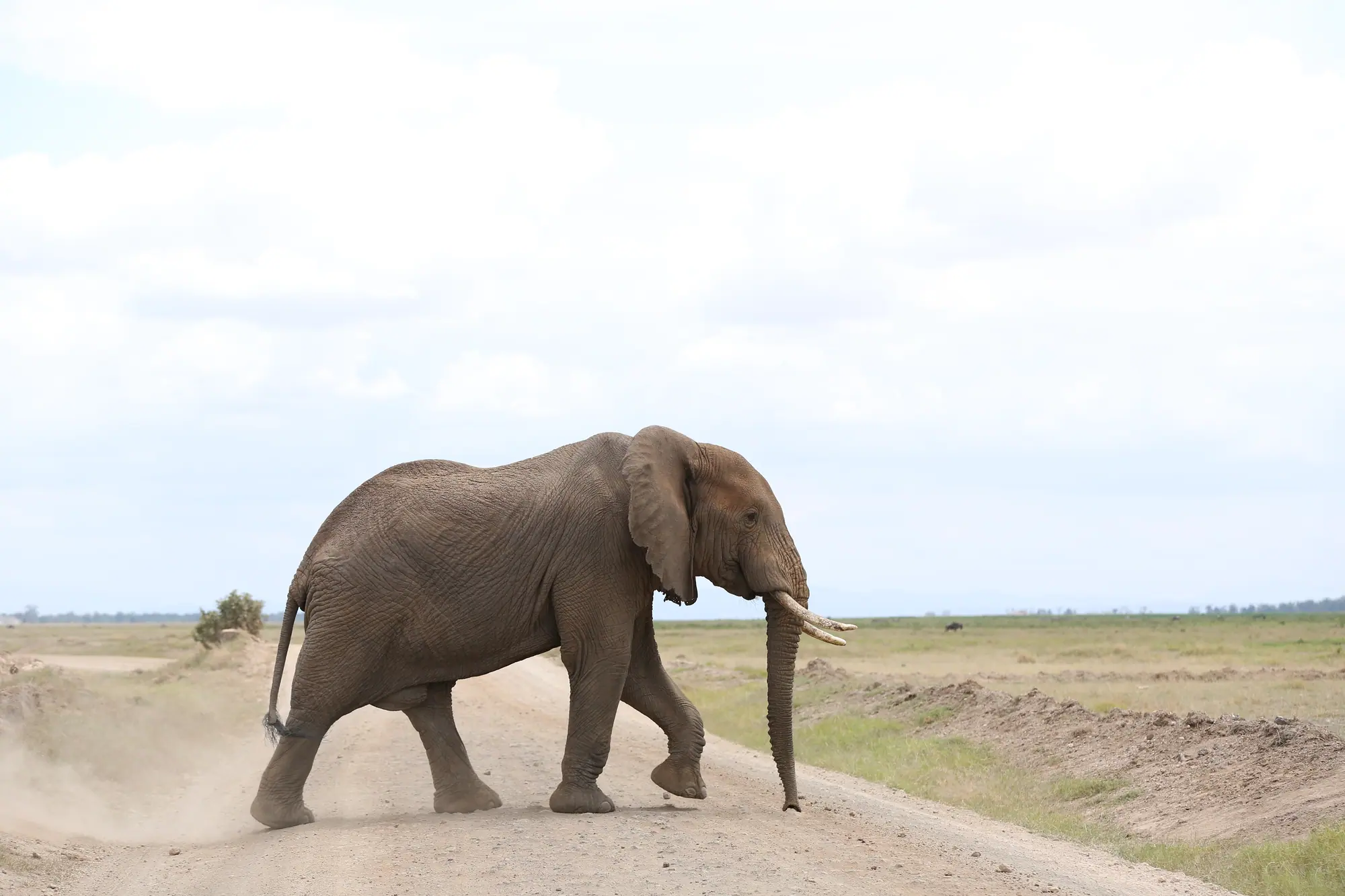
On a game drive, Simama hapa, tafadhali is the polite way to ask your guide to stop for a photograph, and polepole asks him to creep closer. Your guide will be watching the animals' body language, so if he answers Hapana, he has a reason. Our game-drive etiquette guide has the rest of the unwritten rules.
Next lesson
Lesson 6 is family: the words for the people who meet you at the airport, and how to introduce your spouse and children to relatives in Kenya.