Kiswahili. Updated November 2026. 5 min read.
A Kenyan market is a classroom with fruit. Sellers call out prices, weigh tomatoes on old scales, sell onions in neat little piles and slip you an extra mango if you have been friendly, and every transaction runs on a handful of phrases you can learn in an afternoon. The same phrases carry you through a restaurant meal, from ordering tea without sugar to asking for the bill.
The key is asking politely. Kiswahili has a plain way (nataka, I want), a direct way (nipe, give me) and a gracious way (naomba, I request) to ask for things, and Kenyans use naomba far more than English speakers expect. Learn it first. Our Kiswahili food words page is the full glossary of dishes and menu terms; this lesson teaches you to put the words to work in a sentence.
What you will be able to do
- Buy fruit and vegetables by the piece, the pile and the kilo
- Ask politely in a shop, a restaurant or someone's home
- Order food without chilli or tea without sugar
- Say the food was delicious and that you are full
- Ask for the bill
The words
| Kiswahili | Say it | Meaning |
|---|---|---|
| soko / sokoni | SO-ko / so-KO-ni | market / at the market |
| Nataka... | na-TA-ka | I want... |
| Naomba... | na-OM-ba | May I have... (literally: I request) |
| Nipe... | NI-pe | Give me... |
| kilo moja ya... | KI-lo MO-ja ya | one kilo of... |
| nusu kilo | NU-su KI-lo | half a kilo |
| fungu | FU-ngu | a pile (how produce is often sold) |
| embe / maembe | EM-be / ma-EM-be | mango / mangoes |
| ndizi | n-DI-zi | banana, bananas |
| nyanya | NYA-nya | tomato, tomatoes (also grandmother) |
| kitunguu / vitunguu | ki-tu-NGU-u / vi-tu-NGU-u | onion / onions |
| parachichi | pa-ra-CHI-chi | avocado |
| nanasi | na-NA-si | pineapple |
| chakula | cha-KU-la | food |
| maji baridi | MA-ji ba-RI-di | cold water |
| chai | CHA-i | tea, usually boiled with milk |
| bila... | BI-la | without... |
| pilipili / sukari | pi-li-PI-li / su-KA-ri | chilli / sugar |
| Ni tamu | ni TA-mu | It's sweet, it's delicious |
| Kitamu sana! | ki-TA-mu SA-na | Very tasty! (of food) |
| Nimeshiba | ni-me-SHI-ba | I'm full |
| Naomba bili | na-OM-ba BI-li | The bill, please |
Dialogue: buying mangoes
At a fruit stall in any town market. Again, the numbers are for practice, not a price guide.
- Wewe: Habari, mama!
- Muuzaji: Nzuri sana! Karibu. Unataka nini?
- Wewe: Maembe ni bei gani?
- Muuzaji: Matatu kwa mia moja.
- Wewe: Sawa. Naomba maembe sita, tafadhali. Na nusu kilo ya nyanya.
- Muuzaji: Haya. Maembe sita na nyanya, ni mia tatu.
- Wewe: Embe hili ni tamu?
- Muuzaji: Tamu sana! Onja.
- Wewe: Kweli, ni tamu! Hapa ni mia tano.
- Muuzaji: Chenji yako ni mia mbili. Asante, karibu tena!
Unataka nini? means what do you want? Matatu kwa mia moja is three for a hundred, and notice matatu, not tatu, because maembe is in the ma- class from Lesson 3. Onja means taste it, kweli means truly, and karibu tena, welcome again, is how sellers and hosts say goodbye.
Grammar point: three ways to ask
- Nataka (I want) is ni-na-taka shortened, the present tense from Lesson 2. It is fine at a market stall but can sound blunt in a home or to a waiter.
- Naomba (I request, may I have) is the polite default, and Kenyans use it everywhere: Naomba maji (may I have water), Naomba bili (the bill, please), Naomba kupita (may I pass). If you only learn one, learn this.
- Nipe (give me) is the verb pa, to give, with ni- (me) in front: nipe, give me; tupe, give us; mpe, give him or her. It is friendly and direct at a market, especially with tafadhali after it. You will meet mpe again in a proverb in Lesson 9.
One more ending does a lot of work. Add -ni to a place noun and it means at, in or to that place: soko becomes sokoni (at the market), nyumba becomes nyumbani (at home), duka becomes dukani (at the shop) and meza becomes mezani (at the table). Ninaenda sokoni is I am going to the market; Yuko nyumbani is he is at home. And watch the adjective tamu: it takes the noun's prefix, so chakula ni kitamu (the food is delicious), maembe ni matamu (the mangoes are sweet), but embe ni tamu.
At a restaurant
- Naomba menyu, tafadhali. (The menu, please.)
- Naomba chai bila sukari. (Tea without sugar, please.)
- Bila pilipili, tafadhali. (No chilli, please.)
- Mimi sili nyama. (I don't eat meat.) Sili is the negative of kula, to eat.
- Naomba maji baridi. (Cold water, please.)
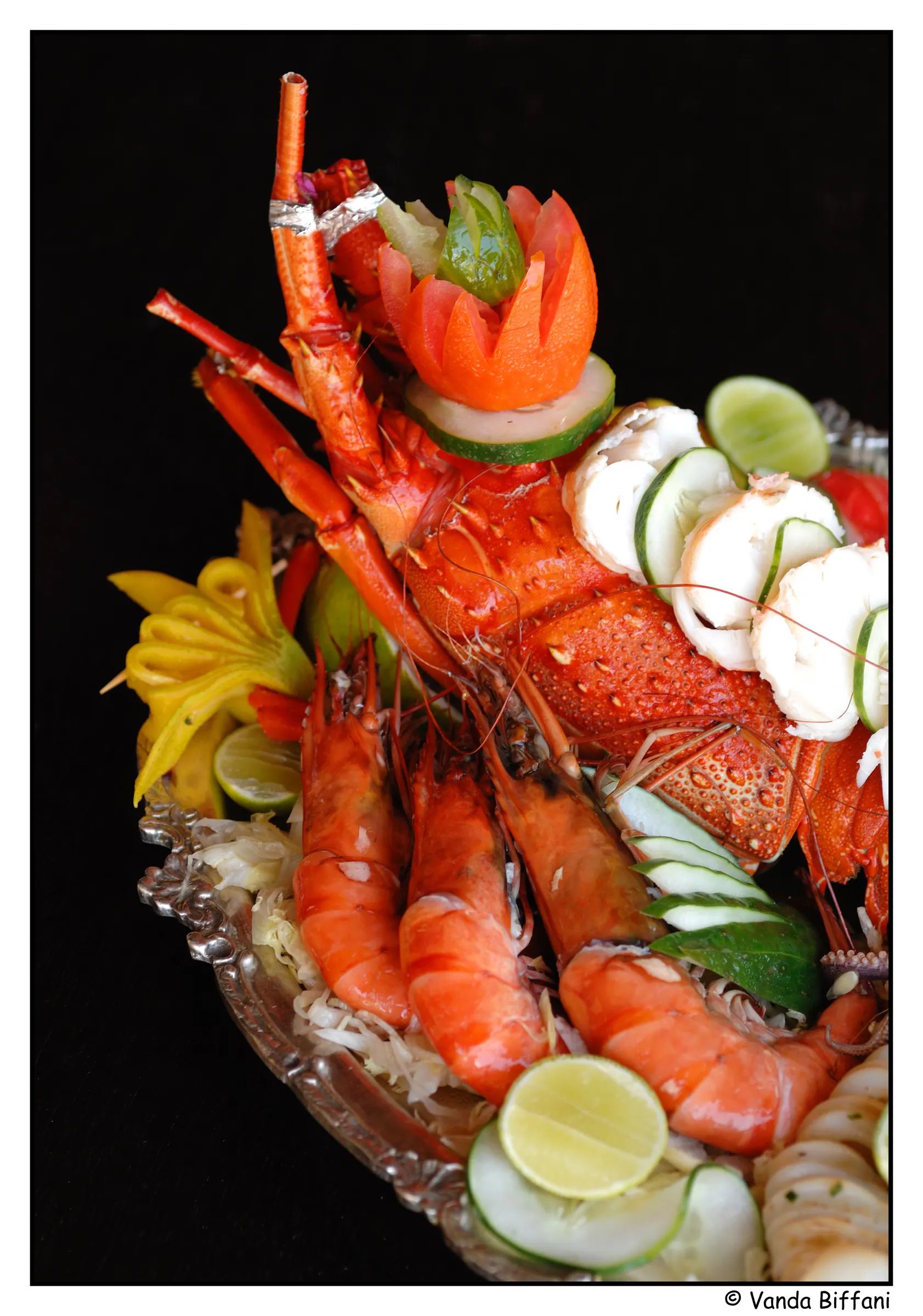
- Chakula ni kitamu sana! (The food is delicious!)
- Nimeshiba, asante. (I'm full, thank you.)
- Naomba bili. (The bill, please.)
Practice
- 1. Ask politely for two bananas. Answer: Naomba ndizi mbili, tafadhali.
- 2. Say 'I am going to the market.' Answer: Ninaenda sokoni, or Naenda sokoni.
- 3. How do you say 'at home'? Answer: nyumbani.
- 4. Order tea without sugar. Answer: Naomba chai bila sukari.
- 5. Your host offers a third helping and you cannot eat more. Answer: Nimeshiba, asante sana.
- 6. Tell the cook the food was delicious. Answer: Chakula ni kitamu sana!
- 7. Which word means both tomato and grandmother? Answer: nyanya.
- 8. Ask how much one pile costs. Answer: Fungu moja ni bei gani?
Cultural note: food is hospitality
In a Kenyan home, refusing food can read as refusing the host. Take a little of everything, accept tea when it is offered (it will be, at every visit) and when you truly cannot eat more, nimeshiba said with a smile and followed by chakula ni kitamu sana is the graceful way out. Ugali, the stiff maize porridge, is eaten with the right hand: pinch off a piece, roll it, press a dent with your thumb and scoop. You may hear karibu chakula, come and eat, called to anyone who passes during a meal. It is courtesy, and asante is a fine answer.
Kenyan food is mostly mild, with pilipili served on the side so each person can add their own; coast cooking is spicier. Markets sell by the piece, by the fungu (a small pile of tomatoes, onions or potatoes at a set price) and by the kilo, and most sellers round in your favour once you have chatted. Our food pages cover what to eat and where.
Say it on your trip
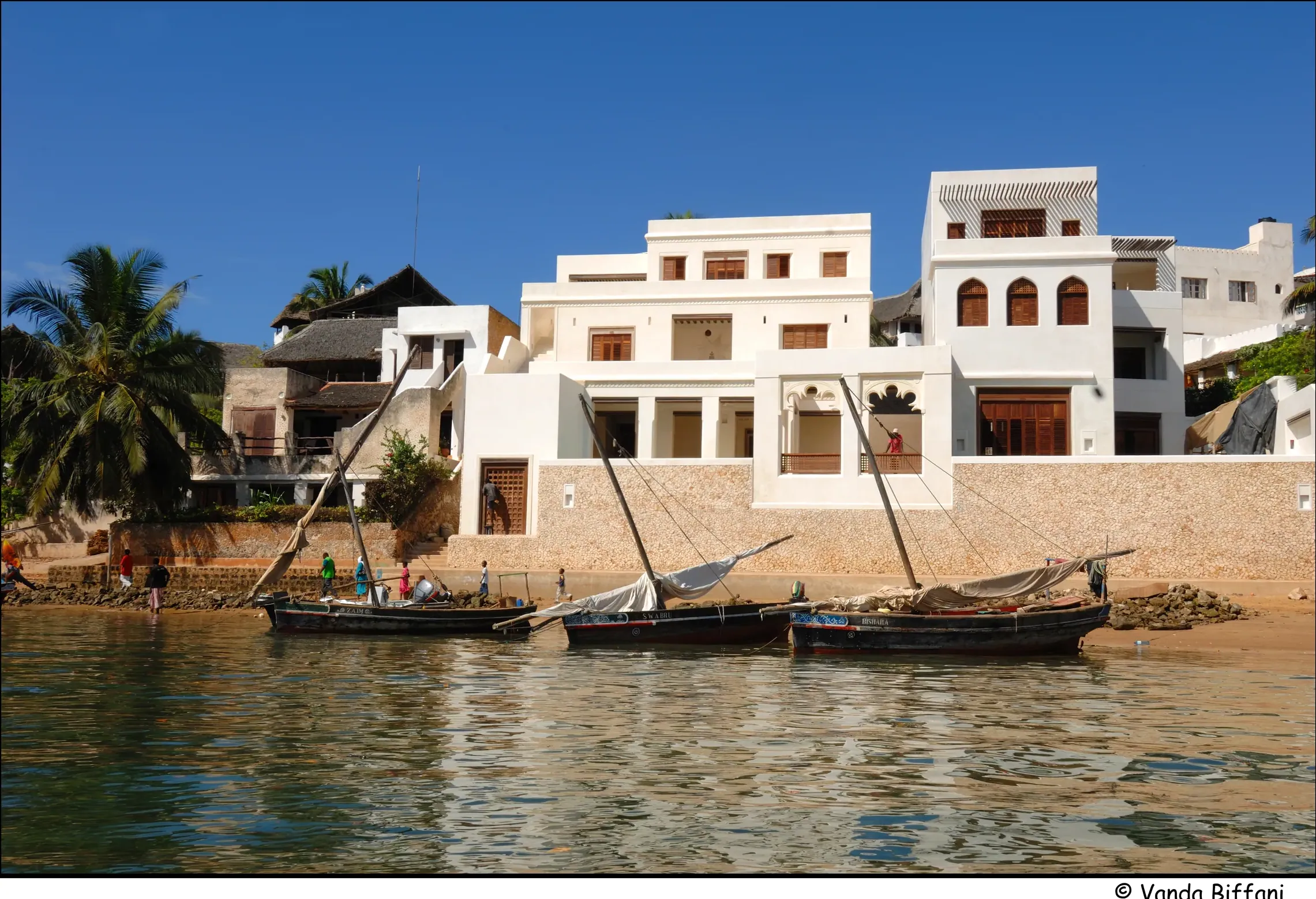
Order your first meal in Kenya with naomba, and end it with chakula ni kitamu sana. At a roadside fruit stall, point to a pile and ask Fungu moja ni bei gani? The sellers who line the roads near Naivasha and on the way to the coast hear plenty of English; Kiswahili gets you a grin and, often, a taste of the fruit before you buy.
Next lesson
Lesson 5 gets you moving: where things are, left and right, and how to talk to drivers, matatu conductors and your safari guide.