Kiswahili. Updated November 2026. 5 min read.
Numbers are where Kiswahili starts paying for itself. You need them for prices at the Maasai Market, for telling the time (Lesson 8), for counting lions with your guide and for haggling with a curio seller who quotes in English and is delighted to be answered in Kiswahili. The good news is that ten words and two rules give you everything up to a million.
Learn moja to kumi (one to ten) first, then the tens, then mia (hundred) and elfu (thousand), and you can say any price. Our Kiswahili numbers and money words page is the quick-reference list, with Sheng money slang and M-Pesa phrases; this lesson teaches you how the system works, so that you can build numbers yourself instead of memorizing them.
What you will be able to do
- Count from one to ten without thinking, and build any number to a million
- Understand a price when a seller says it
- Ask the price, say it is too expensive and ask for a better one
- Count people and things with the right form of the number
The words
| Kiswahili | Say it | Meaning |
|---|---|---|
| moja | MO-ja | 1 |
| mbili | m-BI-li | 2 |
| tatu | TA-tu | 3 |
| nne | N-ne (two beats) | 4 |
| tano | TA-no | 5 |
| sita | SI-ta | 6 |
| saba | SA-ba | 7 |
| nane | NA-ne | 8 |
| tisa | TI-sa | 9 |
| kumi | KU-mi | 10 |
| mia | MI-a | hundred |
| elfu | EL-fu | thousand |
| Bei gani? | BE-i GA-ni | What's the price? |
| Shilingi ngapi? / Shingapi? | shi-LI-ngi NGA-pi / shi-NGA-pi | How many shillings? (the second is street speech) |
| Ni ghali (sana) | ni GHA-li (SA-na) | It's (very) expensive |
| Ni rahisi | ni ra-HI-si | It's cheap |
| Punguza (kidogo) | pu-NGU-za (ki-DO-go) | Reduce it (a little) |
| Bei ya mwisho? | BE-i ya MWI-sho | Final price? |
| Nitalipa... | ni-ta-LI-pa | I will pay... |
| Sawa / Haya | SA-wa / HA-ya | OK / Alright then |
| pesa | PE-sa | money |
| chenji | CHE-nji | change (the coins you get back) |
How to build any number
Eleven to nineteen are 'ten and': kumi na moja (11), kumi na tano (15), kumi na tisa (19). The tens come from Arabic, which is why they look nothing like tatu or nne: ishirini (20), thelathini (30), arobaini (40), hamsini (50), sitini (60), sabini (70), themanini (80), tisini (90). Add units with na: ishirini na tano (25), hamsini na mbili (52).
Hundreds and thousands put the big word first, the opposite of English: mia moja (100, literally 'hundred one'), mia mbili (200), mia tano (500); elfu moja (1,000), elfu mbili (2,000), elfu kumi (10,000). Then you chain the pieces from biggest to smallest. Kenyans also use laki for a hundred thousand and milioni for a million, which you will hear when people talk about rent, school fees and cars.
| Number | Kiswahili | Built as |
|---|---|---|
| 15 | kumi na tano | ten and five |
| 25 | ishirini na tano | twenty and five |
| 80 | themanini | eighty |
| 150 | mia moja hamsini | hundred one, fifty |
| 300 | mia tatu | hundred three |
| 750 | mia saba hamsini | hundred seven, fifty |
| 1,200 | elfu moja mia mbili | thousand one, hundred two |
| 2,500 | elfu mbili mia tano | thousand two, hundred five |
| 100,000 | laki moja | one lakh |
Grammar point: numbers that agree with the noun
Here is the one wrinkle, and it is a gentle introduction to the noun classes you met in Lesson 2. The numbers one to five and eight change their first sound to match the noun they count. Six, seven, nine, ten and every larger number never change. The number always comes after the noun.
| Noun | One | Two | Three | Five |
|---|---|---|---|---|
| mtu, watu (person, people) | mtu mmoja | watu wawili | watu watatu | watu watano |
| kikombe, vikombe (cup, cups) | kikombe kimoja | vikombe viwili | vikombe vitatu | vikombe vitano |
| embe, maembe (mango, mangoes) | embe moja | maembe mawili | maembe matatu | maembe matano |
| ndizi (banana, bananas) | ndizi moja | ndizi mbili | ndizi tatu | ndizi tano |
So you say watu wawili (two people) but watu sita (six people), vikombe vinne (four cups) but vikombe saba (seven cups). Words in the large n- class, which includes shilingi, ndizi, chai and many borrowed words, keep the plain number: shilingi mia tano, chai mbili. If you forget, use the plain number; you will be understood, and someone will probably correct you kindly.
Dialogue: bargaining for a kikoi
At a curio market you pick up a kikoi, the striped cotton wrap from the coast. The numbers are for practice, not a price guide.
- Wewe: Habari, mama! Kikoi hiki ni bei gani?
- Muuzaji (seller): Nzuri! Elfu mbili tu.
- Wewe: Ni ghali sana! Punguza kidogo, tafadhali.
- Muuzaji: Sawa, kwako, elfu moja mia nane.
- Wewe: Nitalipa elfu moja mia mbili.
- Muuzaji: Hapana! Elfu moja mia tano, bei ya mwisho.
- Wewe: Sawa. Na vikoi viwili?
- Muuzaji: Vikoi viwili, elfu mbili mia nane.
- Wewe: Haya, nitachukua viwili. Asante sana!
Tu means only, kwako means for you, and nitachukua means I will take. Hiki (this) agrees with kikoi, which belongs to the ki-/vi- class, so two of them are vikoi viwili. You just used the agreement rule without thinking about it.
Practice
- 1. Say 35. Answer: thelathini na tano.
- 2. Say 600. Answer: mia sita.
- 3. Say 1,250. Answer: elfu moja mia mbili hamsini.
- 4. What is elfu tatu mia saba? Answer: 3,700.
- 5. Two people: watu ___. Answer: wawili.
- 6. Three cups: vikombe ___. Answer: vitatu.
- 7. Seven people: watu ___. Answer: saba (it never changes).
- 8. Tell a seller it is very expensive and ask for a little off. Answer: Ni ghali sana, punguza kidogo tafadhali.
Cultural note: where and how to bargain
Bargain at curio markets, with beach sellers and at the Maasai Market; do not bargain in supermarkets, restaurants, pharmacies, lodges or fair-trade shops with marked prices. Greet first, smile throughout and treat it as a conversation rather than a contest; an angry buyer gets a worse price and a worse story. Our guide to bargaining in Kenya covers the rhythm, where to start and when to walk away.
Sellers in tourist areas often quote in English and sometimes in dollars. Answer in shillings and in Kiswahili and the tone of the conversation changes. Shingapi? is the street contraction of shilingi ngapi?, and Nairobi has its own money slang, such as mbao for twenty shillings, which our Sheng page explains. Kenya runs on M-Pesa, the mobile money service, and many sellers will take payment by phone; our money page covers cards, cash and M-Pesa for visitors.
Say it on your trip
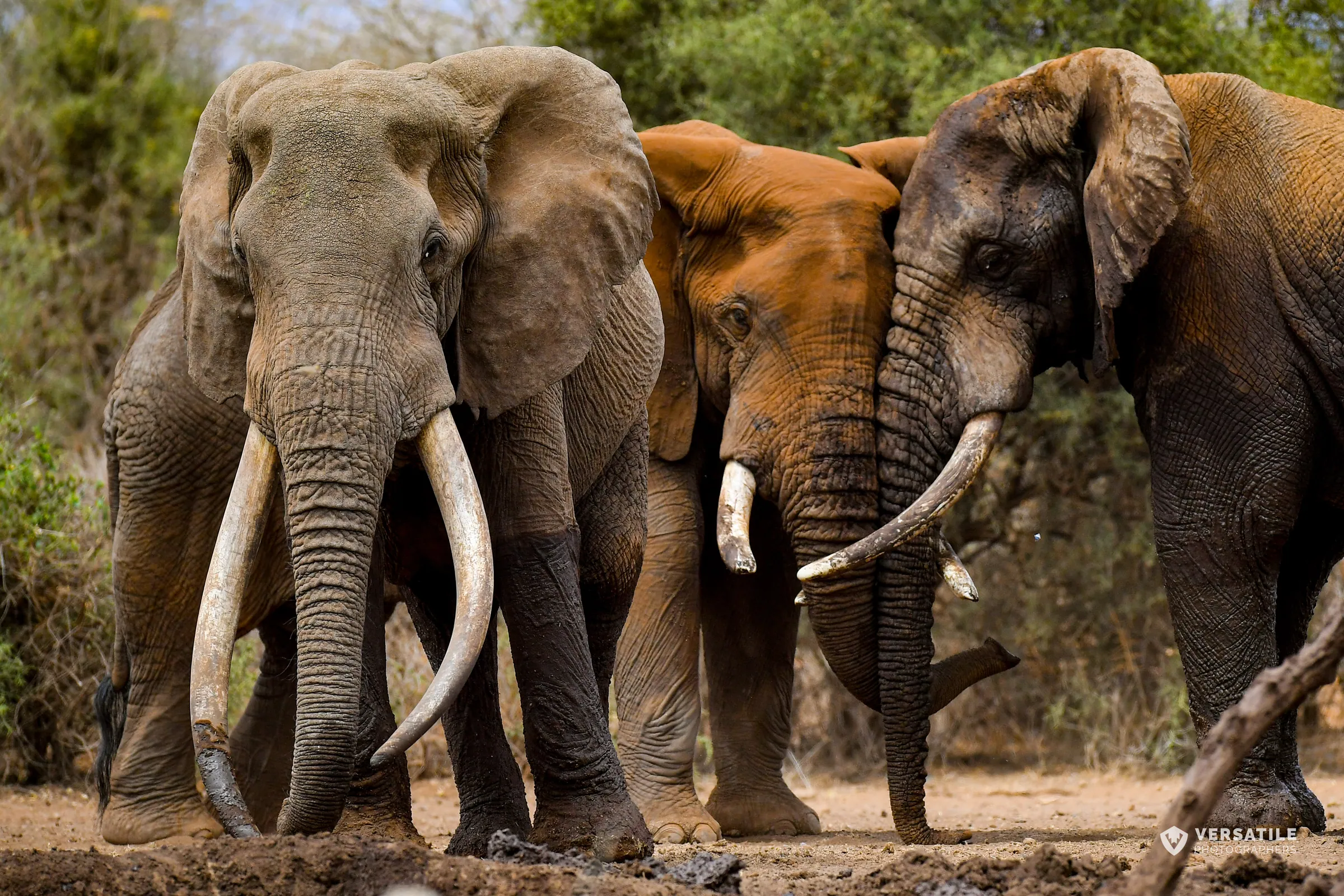
Ask Bei gani? even when the seller speaks perfect English, and count your change out loud in Kiswahili. Then try the numbers on your guide: ask how many elephants are in the herd (Tembo ni wangapi?) and count them together. Lesson 7 explains why it is wangapi.
Next lesson
Lesson 4 takes your numbers to the market: buying fruit by the kilo, asking politely, ordering food and saying it was delicious.