Kiswahili. Updated November 2026. 5 min read.
After the greeting comes the question. Kenyans are curious about visitors and not shy about it: within minutes a driver, a teacher or the person next to you on the Madaraka Express train will want your name, where you come from and what you do. Answering in Kiswahili, even slowly, turns a polite exchange into a real conversation, and it is the moment most visitors discover how much Kenyans enjoy hearing their language.
Three sentences cover most first meetings: Jina langu ni Sarah (my name is Sarah), Ninatoka Marekani (I come from America) and Ninaishi Atlanta (I live in Atlanta). Along the way you will meet the six personal pronouns and the small word ni, which does the work of am, is and are and never changes.
What you will be able to do
- Say your name two ways, and ask someone theirs
- Say where you come from and where you live, and ask the same
- Say what you do: student, teacher, doctor
- Say yes, no, and pleased to meet you
- Use the pronouns I, you, he or she, we, you all and they
The words
| Kiswahili | Say it | Meaning |
|---|---|---|
| Jina langu ni... | JI-na LA-ngu ni | My name is... |
| Ninaitwa... | ni-na-I-twa | I am called... |
| Jina lako ni nani? | JI-na LA-ko ni NA-ni | What is your name? (literally: your name is who?) |
| Unaitwa nani? | u-na-I-twa NA-ni | What are you called? (friendlier, very common) |
| Ninatoka... | ni-na-TO-ka | I come from... |
| Unatoka wapi? | u-na-TO-ka WA-pi | Where do you come from? |
| Ninaishi... | ni-na-I-shi | I live in... |
| Unaishi wapi? | u-na-I-shi WA-pi | Where do you live? |
| Marekani | ma-re-KA-ni | America, the United States |
| Mmarekani / Wamarekani | m-ma-re-KA-ni / wa-ma-re-KA-ni | An American / Americans |
| Mkenya / Wakenya | m-KE-nya / wa-KE-nya | A Kenyan / Kenyans |
| mwalimu | mwa-LI-mu | teacher |
| mwanafunzi | mwa-na-FU-nzi | student |
| daktari | dak-TA-ri | doctor |
| Unafanya kazi gani? | u-na-FA-nya KA-zi GA-ni | What work do you do? |
| lakini | la-KI-ni | but |
| Ndiyo / Hapana | n-DI-yo / ha-PA-na | Yes / No |
| Nimefurahi kukutana nawe | ni-me-fu-RA-hi ku-ku-TA-na NA-we | Pleased to meet you (literally: I am happy to meet with you) |
| Na wewe? | na WE-we | And you? |
Dialogue: on the train to Mombasa
Sarah, a doctor from Atlanta, sits next to Juma, a teacher, on the train to the coast.
- Juma: Habari yako? Mimi ni Juma.
- Sarah: Nzuri, asante. Ninaitwa Sarah. Nimefurahi kukutana nawe.
- Juma: Karibu Kenya! Unatoka wapi?
- Sarah: Ninatoka Marekani. Ninaishi Atlanta. Na wewe?
- Juma: Mimi ni Mkenya. Ninatoka Kisumu, lakini ninaishi Nairobi.
- Sarah: Unafanya kazi gani?
- Juma: Mimi ni mwalimu. Wewe ni mwanafunzi?
- Sarah: Hapana, mimi si mwanafunzi. Mimi ni daktari.
- Juma: Safi sana! Utapenda Mombasa.
Safi sana means great, and utapenda Mombasa means you will love Mombasa; the future tense waits for Lesson 8. Notice that Juma says Mimi ni Juma (I am Juma), a third way to give your name and the quickest of all.
Grammar point: the pronouns and the word ni
Kiswahili has six personal pronouns. There is no he or she: yeye covers both, which English speakers find restful once they stop looking for it. You will also see ninyi spelled nyinyi; both are used in Kenya.
| Pronoun | Meaning | Verb prefix | Example | Meaning |
|---|---|---|---|---|
| mimi | I, me | ni- | ninatoka | I come from |
| wewe | you (one person) | u- | unatoka | you come from |
| yeye | he, she | a- | anatoka | he or she comes from |
| sisi | we | tu- | tunatoka | we come from |
| ninyi | you (several) | m- | mnatoka | you all come from |
| wao | they | wa- | wanatoka | they come from |
Two rules make this work. First, ni means am, is and are, and it never changes: Mimi ni mwalimu (I am a teacher), Yeye ni Mkenya (she is Kenyan), Sisi ni Wamarekani (we are Americans). For the negative, swap ni for si: Mimi si mwanafunzi (I am not a student). There is no separate verb to learn for 'to be' in the present.
Second, verbs carry the person at the front. Ni-na-toka is built from ni- (I), -na- (now, the present tense) and toka (come from). Because the verb already says who, you can drop mimi and simply say Ninatoka Marekani; add the pronoun only for emphasis. In everyday Kenyan speech ninatoka often shrinks to natoka and ninaishi to naishi, and you can do the same.
Finally, a first look at noun classes. Words for people usually start with m- (or mw-) for one and wa- for more than one: Mkenya and Wakenya, Mmarekani and Wamarekani, mwalimu and walimu, mwanafunzi and wanafunzi. Kiswahili sorts its nouns into classes like this, each with its own singular and plural pattern, and Lesson 3 shows why it matters when you count.
Practice
- 1. Say 'My name is...' two ways. Answer: Jina langu ni... and Ninaitwa...
- 2. Ask a group where they come from. Answer: Mnatoka wapi?
- 3. Say 'We are Americans.' Answer: Sisi ni Wamarekani.
- 4. Say 'She is not a student.' Answer: Yeye si mwanafunzi.
- 5. Fill the gap for 'I': ___natoka Houston. Answer: Ni (Ninatoka Houston).
- 6. What is the plural of mwalimu? Answer: walimu.
- 7. Ask 'Where do you live?' and answer 'I live in Chicago.' Answer: Unaishi wapi? Ninaishi Chicago.
- 8. How would you say 'They come from Kenya'? Answer: Wanatoka Kenya.
Cultural note: the questions that come next
Expect follow-up questions that an American stranger would not ask: Umeoa? (have you married?, to a man), Umeolewa? (to a woman), Una watoto? (do you have children?) and Unapenda Kenya? (do you like Kenya?). Family comes up early in Kenyan conversation; it is warmth, not prying, and you can answer as much or as little as you like. Lesson 6 gives you the family words.
Kenyan-Americans have a simple sentence for the question every relative asks: Mimi ni Mkenya, lakini ninaishi Marekani (I am Kenyan, but I live in America). A child born in the U.S. can say Baba yangu ni Mkenya (my father is Kenyan) or Mama yangu ni Mkenya. Black American visitors on heritage trips may well hear karibu nyumbani, welcome home, and it is meant. Names matter too: Kenyans will ask what your name means, and many communities name children for the time of day or the season they were born, which our page on Kenyan names explains.
Say it on your trip
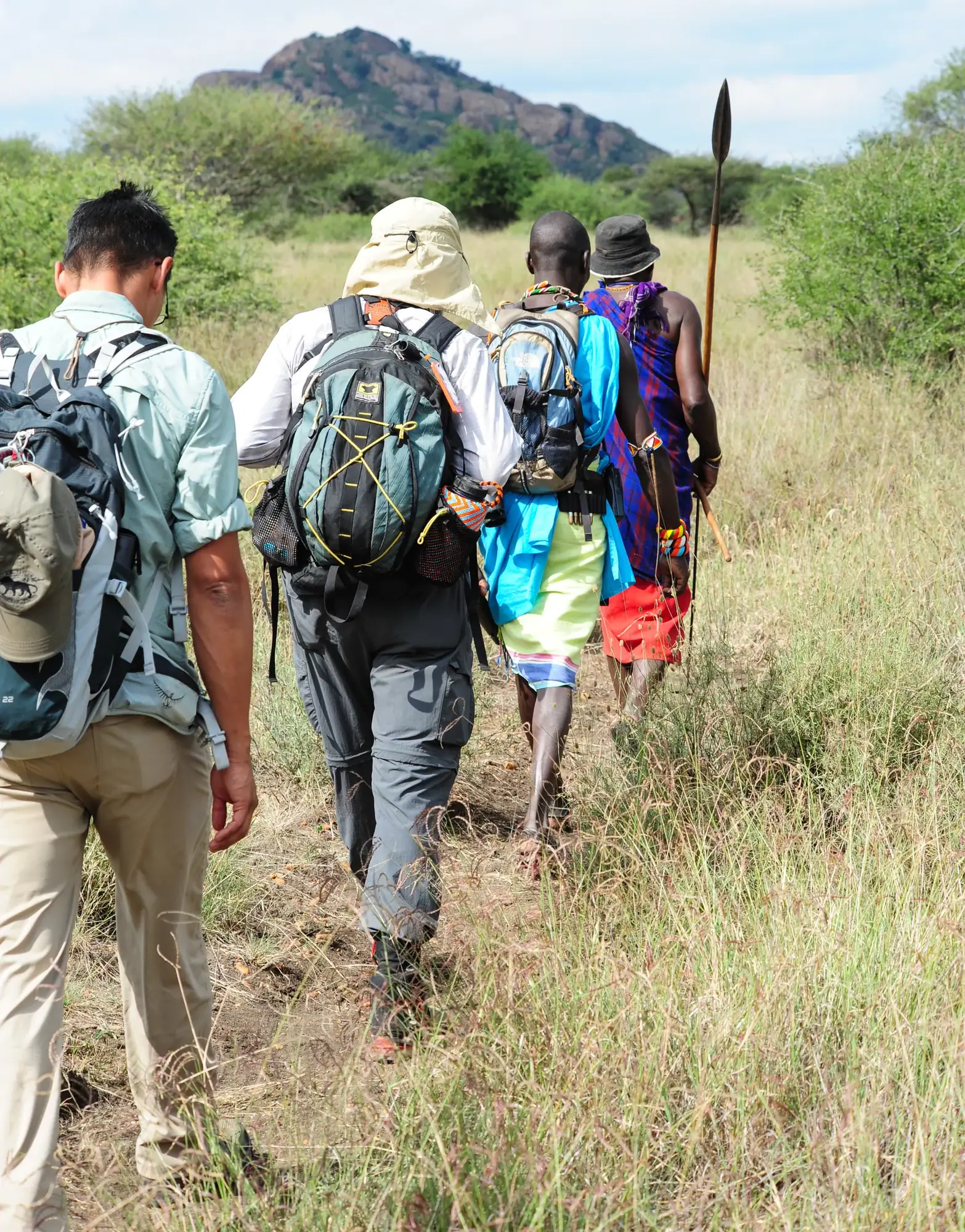
Introduce yourself to your guide on the first morning in Kiswahili: Habari yako? Jina langu ni..., ninatoka... Then turn it around with Na wewe, unatoka wapi? Guides come from every corner of the country, and the story of their home county is often the best conversation of the whole trip.
Next lesson
Lesson 3 is numbers and prices: counting from one to a thousand, asking what something costs and bargaining with a smile.