Travel essentials. Updated November 2026. 4 min read.
Nairobi traffic is a national sport. The good news: a matatu across the city costs less than a New York subway fare, and the ride-hailing apps work well. The great news: the matatus have better sound systems than most clubs.
For most visitors, the answer is an app: Uber, Bolt or Kenya's own Little, at about $3 to $8 across town and $10 to $25 to the airport. Ride a matatu for the experience, by day and without luggage. Skip boda bodas unless you have no other choice. And for a full sightseeing day, a car and driver beats all of them.
The options compared
| Option | Typical cost | Speed | Safety | Use it for |
|---|---|---|---|---|
| Ride-hailing: Uber, Bolt, Little | $3 to $8 across town; $10 to $25 to JKIA | As fast as the traffic allows | Good: the trip is tracked and the driver named | Most journeys, day and night |
| Matatu | KSh 30 to 100 | Fast, then stuck | Fine by day with care for your phone | The experience, short daytime trips |
| Boda boda (motorbike taxi) | Usually less than a car | Quickest through traffic | The riskiest option; helmets rarely offered | Only if you must, and booked through an app |
| Car and driver for the day | Ask us for the day rate | Door to door | The safest and simplest | A sightseeing day, airport runs with bags |
| Walking | Free | Slow but sure | Fine by day in the right areas; not after dark | Karen, Westlands, the CBD by day, Karura Forest |
Ride-hailing apps, step by step
- Download Uber, Bolt or Little before you fly and set up payment. All three take cash or card.
- Order from inside your hotel, restaurant or mall, and wait inside until the car arrives.
- Check the plate number and the driver's name before you get in. If they do not match, do not get in.
- Sit in the back and use the share-trip feature so someone knows where you are.
- If the driver takes the Nairobi Expressway, the toll is added to your fare.
- UberASSIST, for riders who use a wheelchair or need extra help, is offered in Nairobi; request it in the app and allow extra time for a car.
The matatu experience
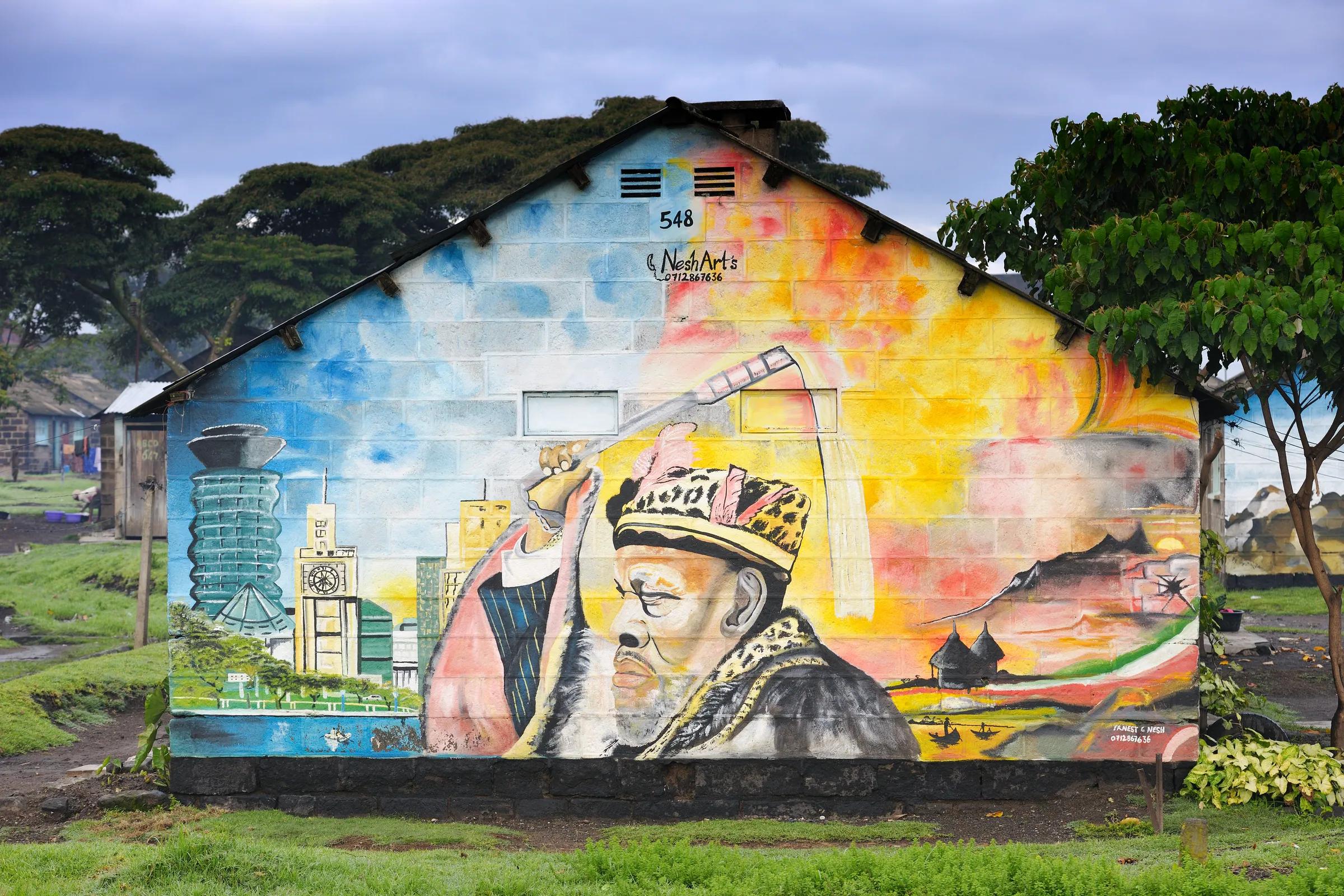
Matatus are Nairobi's privately run minibuses, 14 and 33-seaters on numbered routes, with fares of about KSh 30 to 100. They are loud, fast and the real Nairobi: painted with portraits of footballers, musicians and preachers, fitted with screens and booming sound systems, and given names as proud as racehorses. Matatu art is a whole culture, and a ride is the quickest way into it.
- Ride by day, and not with luggage.
- Keep your phone in your pocket and your bag on your lap.
- Carry small notes and coins for the conductor, the makanga, who collects fares and calls the stops.
- Tell the makanga where you want to get off, and he will shout for the driver.
- Not at night, and not when you are in a hurry to catch a flight.
For diaspora teenagers on a first trip home, a matatu ride with a cousin is often the moment Nairobi clicks. Go with someone who knows the route the first time.
Boda bodas
Boda bodas, the motorbike taxis that weave between stuck cars, are the fastest way through a traffic jam and the riskiest way to travel in the city. Helmets are rarely offered and accidents are common. If you must use one for a short hop, book it through the boda option in a ride-hailing app, so the ride is tracked, and ask for a helmet.
The Expressway, the trains and the airports
The Nairobi Expressway is a 27 km toll road raised above Mombasa Road and Uhuru Highway, running from JKIA to Westlands. It makes the airport run far more predictable outside the worst rush hours, and ride-hailing apps add the toll to your fare. For Wilson Airport, where most safari flights leave, allow 30 to 60 minutes from JKIA and 15 to 30 minutes from Karen.
The Madaraka Express to Mombasa leaves from the Nairobi Terminus at Syokimau, 30 to 45 minutes from the city center, so budget the trip to the station as well as the train. The Nairobi Commuter Rail runs suburban services, and a rail link toward JKIA has been planned; check its current status with Kenya Railways before you rely on it.
Traffic: when to move and when to wait
- Avoid 7 to 9am and 5 to 8pm on weekdays if you can.
- Friday evenings are the worst of the week.
- Rain slows everything, often dramatically.
- Before any flight, allow double the normal journey time.
- Late morning and early afternoon are the easiest times to cross the city.
Walking in Nairobi
Walking is fine in Karen, in Westlands by day, and in the CBD by day with the care you would take in any big city. Do not walk after dark, even short distances: take an app ride instead. For a real walk, Karura Forest, on the city's northern edge, has marked trails for walking, running and cycling under a tall canopy, with a waterfall and caves along the way.
A Nairobi day, with transport
| Time | Stop | Getting there |
|---|---|---|
| 9:30am | Leave a Westlands or city hotel, after the morning rush | Car and driver, or an app ride via the Southern Bypass |
| 11am | Sheldrick Wildlife Trust elephant nursery, public hour (book ahead) | On the edge of Nairobi National Park |
| 12:30pm | Lunch in Karen | A short drive |
| 2pm | Giraffe Centre, for the feeding platform | A short drive |
| 3:30pm | Karen Blixen Museum | A short drive |
| 4:30pm | Head back before the evening rush, or stay for dinner in Karen and return after 8pm | Car and driver, or an app ride |
With your own driver for the day, the plan runs without gaps: the car waits at each stop, your bags stay locked inside, and the driver knows which road is moving. Ask us for the day rate when you book.