Itineraries. Updated November 2026. 7 min read.
Two countries, two sets of rules
Americans need a Kenya eTA and a separate Tanzania visa ($100, multiple entry). The East Africa Tourist Visa does not cover Tanzania. Tanzania asks travelers arriving from Kenya for a yellow fever certificate. Rules and fees change: check both governments' official sites before you book.
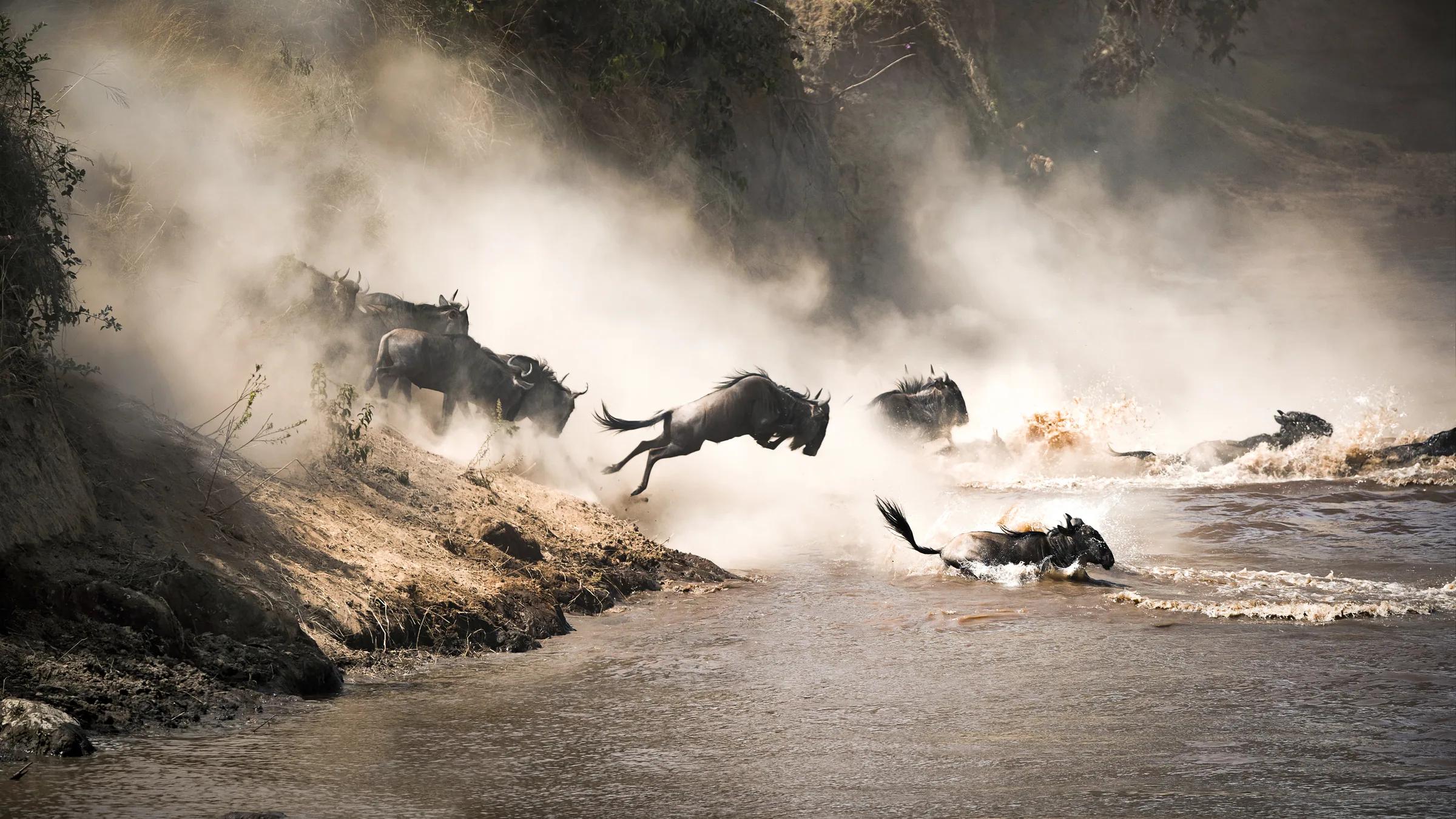
Tanzania eVisa (official)The Maasai Mara and the Serengeti are one ecosystem with a border through the middle. The wildebeest ignore it. You cannot, and that is the whole craft of this trip: crossing at the right place, on the right day, with the right paperwork, so the border costs you one travel day and not three.
Our sample route runs 11 days. A night in Nairobi, a night at Lake Nakuru, three nights in the Mara, a road crossing at Isebania into the Serengeti for three nights, then the Ngorongoro Crater and a last night at Tarangire or Lake Manyara before you fly home from Kilimanjaro. In mid-range camps it starts at about $5,500 per person sharing; in luxury camps, from about $10,000. It is a sample route we tailor to you, not a fixed departure. If you are still choosing between the two countries, our Kenya vs Tanzania guide answers that; this page is for people who want both.
Who this trip suits
- Travelers with 11 days or more who want the whole Mara and Serengeti ecosystem, not half of it
- Second-time safari travelers who have seen the Mara and want the Ngorongoro Crater floor
- Photographers who want the Mara River crossings from both banks between July and October
- Anyone whose flights home work better from Kilimanjaro than from Nairobi
It suits a first safari of a week less well. With fewer than ten days, the border day and the paperwork take too large a share of the trip, and our 7-day Kenya route gives you more time watching animals for the same money.
The border, and the three ways across
The two parks touch, but there is no tourist crossing where they meet, so you go around. There are three ways to do it, and the right one depends on the month, your budget and how you feel about long roads.
| Crossing | How it works | Time | Best for |
|---|---|---|---|
| Isebania by road (our default) | Kenyan vehicle to the Isebania border post, exit and entry formalities on foot, a Tanzanian vehicle and guide on the Sirari side, then via Tarime into the western or northern Serengeti | Most of a day, often 8 hours or more door to door | Keeping the trip overland and the cost down |
| By air via Migori and Tarime | Light aircraft from a Mara airstrip to Migori near the border, a short road crossing, then a Tanzanian light aircraft from Tarime into the Serengeti | Half a day when the schedules line up | Saving the long road; flights are limited and seasonal |
| By air via Nairobi and Kilimanjaro | Mara to Wilson, Wilson to Kilimanjaro or Arusha, then a bush flight into the Serengeti | Most of a day, three flights | January to March, when the herds are far south at Ndutu |
In most packages, ours included, the vehicle changes at the border: a Tanzanian guide meets you on the other side, and your bags move once. The road crossing is the most reliable of the three because it does not depend on light-aircraft schedules that change by season. Whichever you choose, the crossing is your one day without a proper game drive, so we put it in the middle of the trip, when you are glad of a rest from 6am starts.
The paperwork, in plain English
- Kenya eTA: every American needs one for Kenya, applied for online before you fly; about $30 at the time of writing
- Kenya's inbound health insurance: since October 2026, $44 plus fees, bought on eCitizen before you fly. It is a basic policy and does not replace evacuation cover or your own travel insurance
- Tanzania visa: U.S. citizens pay $100 for a multiple-entry visa, applied for online before the border day. The East Africa Tourist Visa does not help here: it covers Kenya, Uganda and Rwanda, not Tanzania
- Yellow fever: Tanzania asks travelers arriving from Kenya for a yellow fever certificate. Get the vaccine at least six weeks before you travel; the certificate is valid from 10 days after the shot
- Kenya re-entry: if you come back into Kenya, by the Namanga road or by leaving the airport in Nairobi, you need a valid eTA for that entry. Flying home from Kilimanjaro avoids the question
- Zanzibar: if you add the island at the end, it has its own insurance rule; our Kenya and Zanzibar page explains it
| Fee or document | Cost for a U.S. adult | Notes |
|---|---|---|
| Kenya eTA | About $30 | Online, before you fly to Nairobi |
| Kenya inbound health insurance | $44 plus fees | eCitizen, before you fly |
| Tanzania visa | $100, multiple entry | Online, before the border day |
| Yellow fever vaccine | Clinic price varies | At least 10 days before you enter Tanzania |
| Serengeti park fee | About $70 to $80 a day, plus 18 percent VAT | Included in our price |
| Ngorongoro Crater service fee | About $295 per vehicle per descent | Included in our price, on top of per-person entry fees |
One thing the table explains: Tanzania's park fees are higher than Kenya's, so a night in the Serengeti costs more than a similar night in the Mara even when the camps are alike. That, plus the second vehicle and guide, is why this trip starts higher than a Kenya-only trip of the same length.
Which part of the Serengeti, by month
| Months | Where the herds usually are | Where we put your Serengeti nights |
|---|---|---|
| January to March | Southern Serengeti and Ndutu, for the calving | Ndutu, reached by air via Kilimanjaro rather than across Isebania |
| April and May | Long rains; herds moving north through the centre | Central Serengeti; several camps close, and we rarely sell this route then |
| June | The western corridor and the centre | Central or western Serengeti |
| July to October | Northern Serengeti and the Maasai Mara, with river crossings | Northern Serengeti near the Mara River, or the centre for variety |
| November and December | Moving south through the east and centre | Central Serengeti |
Our honest note on the peak months: from July to October you are watching the same herds from both sides of the border. Photographers love that, because the light, the banks and the crossing points differ. Some travelers find it repetitive. If that is you, put your Serengeti nights in the centre, around Seronera, for its big cats and granite kopjes, and keep the river for the Mara. From January to March the herds are far south for the calving, so the Kenyan half of the trip is about resident lions, cheetahs and elephants rather than the migration. Our Maasai Mara vs Serengeti guide goes month by month.
Why this order
Kenya first, Tanzania second, for three reasons. Lake Nakuru breaks the long road from Nairobi to the Mara and adds rhinos you are unlikely to see on the Mara's plains. The Mara-to-Isebania crossing puts you straight into the Serengeti without a flight. And Ngorongoro, Tarangire and Lake Manyara all sit on the road to Kilimanjaro airport, so the trip runs in one direction and never doubles back. If your flights work better the other way, we reverse it: fly into Kilimanjaro, cross at Isebania into the Mara, and fly home from Nairobi.
Two variations we build often: drop Nakuru and fly Nairobi to the Mara to save a road day, or finish by road through the Namanga border and spend two nights in Amboseli under Kilimanjaro before flying home from Nairobi. The Namanga option needs a valid Kenya eTA for your second entry.
When to go
June to October is the best overall window for this route: dry, with the herds in the north and good game viewing everywhere else. It is also the busiest season on both sides of the border, so book about nine months ahead. Late December to March is the other good window, with the calving at Ndutu and green, quieter parks in Kenya. April and May are the long rains on both sides; roads get slow and some camps close.
What is included
- Airport pickup in Nairobi and transfer to Kilimanjaro airport at the end
- Ten nights in the tier you choose, full board on safari
- A private Kenyan vehicle and driver-guide in Kenya, and a private Tanzanian vehicle and guide in Tanzania
- The border handover at Isebania, or the flights on the fly-across version
- Park, reserve and conservancy fees in both countries, including the Ngorongoro Crater service fee
- Drinking water in the vehicles and our 24-hour support throughout
What is not included
- International flights
- Kenya eTA, Kenya's inbound health insurance, the Tanzania visa and the yellow fever vaccine
- Your own travel insurance with medical and evacuation cover
- Optional extras: a balloon flight in the Mara or the Serengeti, village visits
- Tips for guides and camp teams in both countries, premium drinks and personal items
How to book
Send us your dates and the month you want to be in the Serengeti, and we will tell you plainly which crossing suits it and where the herds should be. We tailor the route, match the border day to your camps, and send a written quote that lists every fee, including the government ones you pay yourself. Fees and fares change, so we price on the day you ask. You can pay in full or monthly with no deposit.