Travel essentials. Updated November 2026. 6 min read.
Information, not medical advice
This page summarizes CDC and Kenya Ministry of Health guidance at the time of writing. Your travel clinic decides what you need, based on your health, your age and your route. Open the CDC page on the day you book your appointment.
CDC Travelers' Health: KenyaMost Americans going to Kenya need two or three shots, a malaria prescription and a travel-clinic visit about six weeks before they fly. Nothing is required at the border if you fly from the United States nonstop, or connect through Europe or the Gulf. Kenya asks for a yellow fever certificate only if you arrive from, or spend more than 12 hours in transit in, a country with yellow fever risk.
Everything else on this page is a recommendation, not a border rule, and the recommendations come from the CDC's Travelers' Health page for Kenya. We plan trips; we do not give medical advice. Read this as a briefing before your clinic appointment, take your itinerary with you, and let the clinic decide. The CDC page changes whenever the advice does, so it always wins over any guide, including this one.
The short list: required, recommended, situational
Required means a Kenyan border officer can ask to see it. Recommended means CDC advises it for most travelers to Kenya. Situational means it depends on how long you stay, where you sleep and what you do. This is the list most U.S. travel clinics work from for a safari.
| Vaccine or medicine | Status | Who needs it | How far ahead |
|---|---|---|---|
| Yellow fever certificate | Required on some routes | Travelers arriving from, or transiting more than 12 hours in, a yellow fever risk country | The certificate becomes valid 10 days after the shot |
| Yellow fever vaccine | Recommended by CDC for most safari areas | Most travelers heading beyond the cities; CDC may not advise it for some trips limited to Nairobi and parts of the coast | 6 to 8 weeks before you fly |
| Routine vaccines (MMR, Tdap, polio, flu) | Recommended | Everyone: check your records are up to date | At your clinic visit |
| Hepatitis A | Recommended | Most travelers | 6 to 8 weeks before you fly |
| Typhoid | Recommended | Most travelers, especially if you eat outside lodges | 6 to 8 weeks before you fly |
| Hepatitis B | Situational | Long stays, medical or volunteer work, anyone who may need treatment | Ask early: it can be a series |
| Rabies | Situational | Long stays, children, rural work, cavers and anyone around animals | Ask early: it is a series of shots |
| Meningococcal | Situational | Some longer or rural trips; your clinic will say | At your clinic visit |
| Cholera | Situational | Rural travel where clean water is uncertain | At your clinic visit |
| Malaria pills | Prescription advised | Most Kenya itineraries | Prescription at least 4 weeks before you fly |
Two notes on the table. Yellow fever certificates have been valid for life since July 11, 2016, so an old yellow card from a previous trip still counts: bring the original, not a photo. And recommended means exactly that. Your clinic will weigh your age, your health, your previous shots and your route, and may well skip something on this list or add something that is not on it.
Malaria in plain words
Malaria is present across most of Kenya at the altitudes where safari lodges sit, and on most trips it is the health risk that matters most. The risk is lower in Nairobi, above about 1,700 meters, but CDC still advises preventive pills for most itineraries, because a safari can move you between zones in a single day. The options U.S. clinics prescribe are atovaquone-proguanil, doxycycline and mefloquine, and the clinic chooses. Stopping bites at dawn and dusk matters as much as the pills. Our malaria page covers risk by region, the pill schedules and what to do about a fever.
Your timeline, from eight weeks out to departure day
| When | What to do |
|---|---|
| 8 weeks out | Book the travel clinic appointment. Find your vaccination records, including any old yellow fever card. Check your passport is valid for six months after arrival. |
| 6 weeks out | Clinic visit: routine boosters, hepatitis A, typhoid, yellow fever if advised, and a decision on malaria pills. Ask about rabies or hepatitis B if you will stay long or work in rural areas. |
| 4 weeks out | Malaria prescription in hand at the latest. Buy Kenya's inbound health insurance on eCitizen and apply for your eTA. Buy travel insurance with medical evacuation cover. |
| 1 week out | Pack medicines in their original packaging with copies of prescriptions, plus repellent, sunscreen and a small first-aid kit. Start your malaria pills when your clinic says: some start two weeks before travel, others a day or two before. |
| Departure day | Yellow fever card if your route needs it, eTA and insurance confirmation on paper and on your phone, all medicines in your hand luggage. |

What Kenya asks for at the border
For most Americans, Kenya's border checks are about documents, not vaccines. You need an approved eTA from the official portal and a passport valid for at least six months. The yellow fever card is checked only if your route triggers the rule. A traveler who flies New York to Nairobi nonstop, or connects through London, Amsterdam, Doha or Dubai, does not need one. A traveler who spends two days in Ethiopia or Uganda on the way may.
New since October 2026, Kenya requires inbound travel health insurance, bought on eCitizen before your eTA is issued. At the time of writing it costs about $44 plus processing fees. It is a Kenyan entry requirement, not a substitute for your own travel insurance: it does not replace medical evacuation cover, and it will not fly you home. Buy both. Our entry requirements page walks through the eTA itself, and the Ministry of Health publishes the official rules.
Health on the ground
- Water: drink bottled or filtered water. Camps and lodges provide it, usually in refillable bottles, because single-use plastic bottles are banned in national parks.
- Food: lodge and camp kitchens cook for visitors every day. In towns, the usual traveler habits apply: food served hot, fruit you peel, busy places.
- Sun: Kenya sits on the equator and much of it is high, so the sun burns faster than it feels. Wear a hat, sunglasses and a high-factor sunscreen, even on cool mornings.
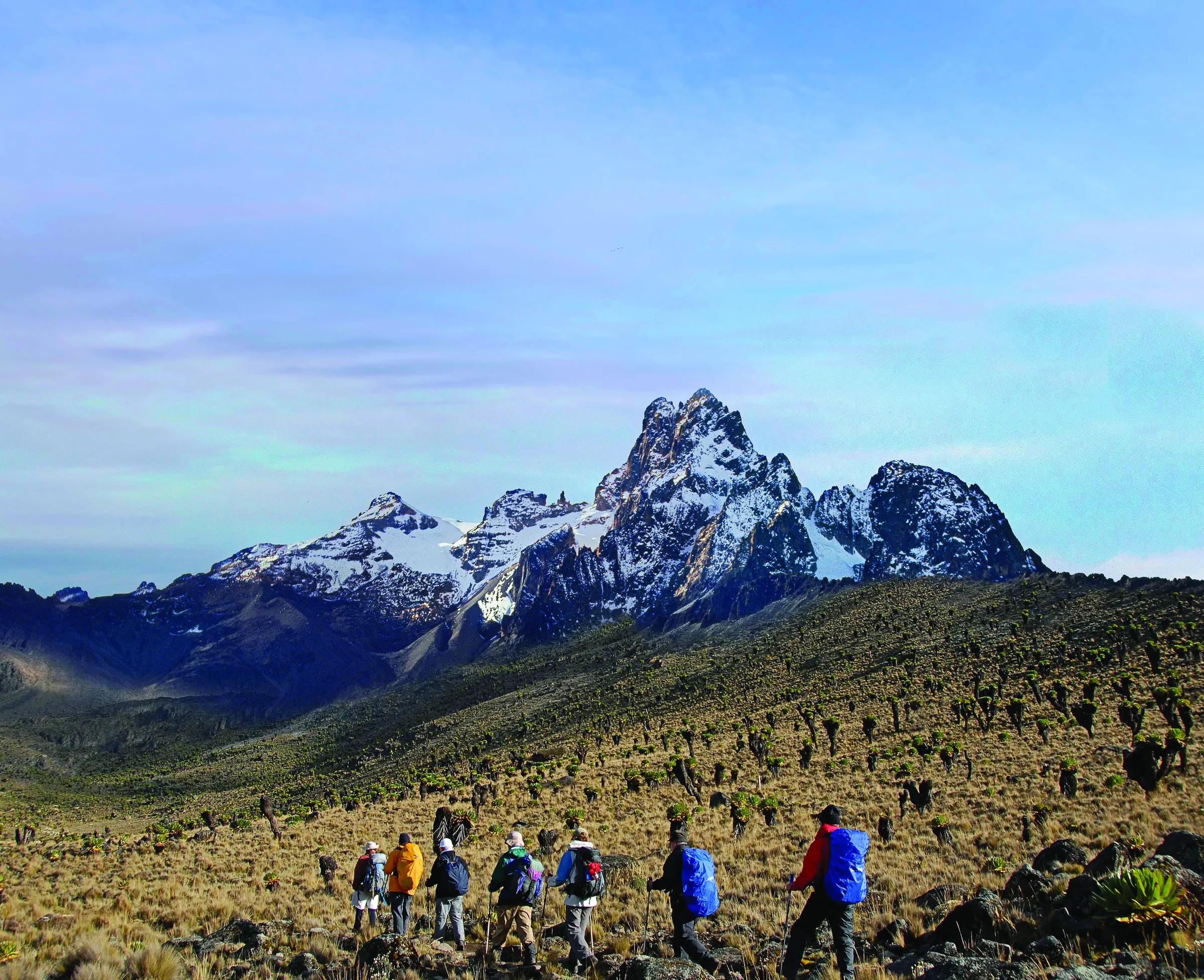
- Altitude: Nairobi is 1,795 meters, which most people barely notice. Mount Kenya is a different matter: read our altitude page before a Point Lenana trek.
- Hospitals: Nairobi has good private hospitals, including Aga Khan University Hospital, The Nairobi Hospital and The Karen Hospital. Serious cases from the parks are flown there.
- Evacuation: in the bush the nearest hospital is a flight away. AMREF Flying Doctors runs air evacuation in Kenya and sells short-term memberships to visitors; check the current rate with them. Every trip we run includes emergency evacuation cover through a flying-doctor service, and we still ask you to carry travel insurance with medical and evacuation cover.
Check the latest health advice the week you fly
Health advice for any country can change between the day you book and the day you fly. In the week before departure, open CDC's Travelers' Health page for Kenya and its travel health notices list, and look at the Kenya Ministry of Health's site for local updates. If anything on them affects your route or your medicines, call your travel clinic, and tell us: we adjust plans and keep you informed.
Questions to take to your travel clinic
- Which of the CDC-recommended vaccines do I still need, given my records?
- Does my routing trigger Kenya's yellow fever certificate rule, and do I need the vaccine for the areas I am visiting?
- Which malaria medicine suits me, and exactly when do I start and stop it?
- What should I carry for an upset stomach, and what do my children need?
- Is my itinerary fine for my health at altitude, especially if it includes Mount Kenya?
Take your itinerary to the appointment. Clinics advise far better when they can see every park, town and beach on your route, with dates, than when they hear the word safari and guess.