
Wildlife. Updated November 2026. 3 min read.
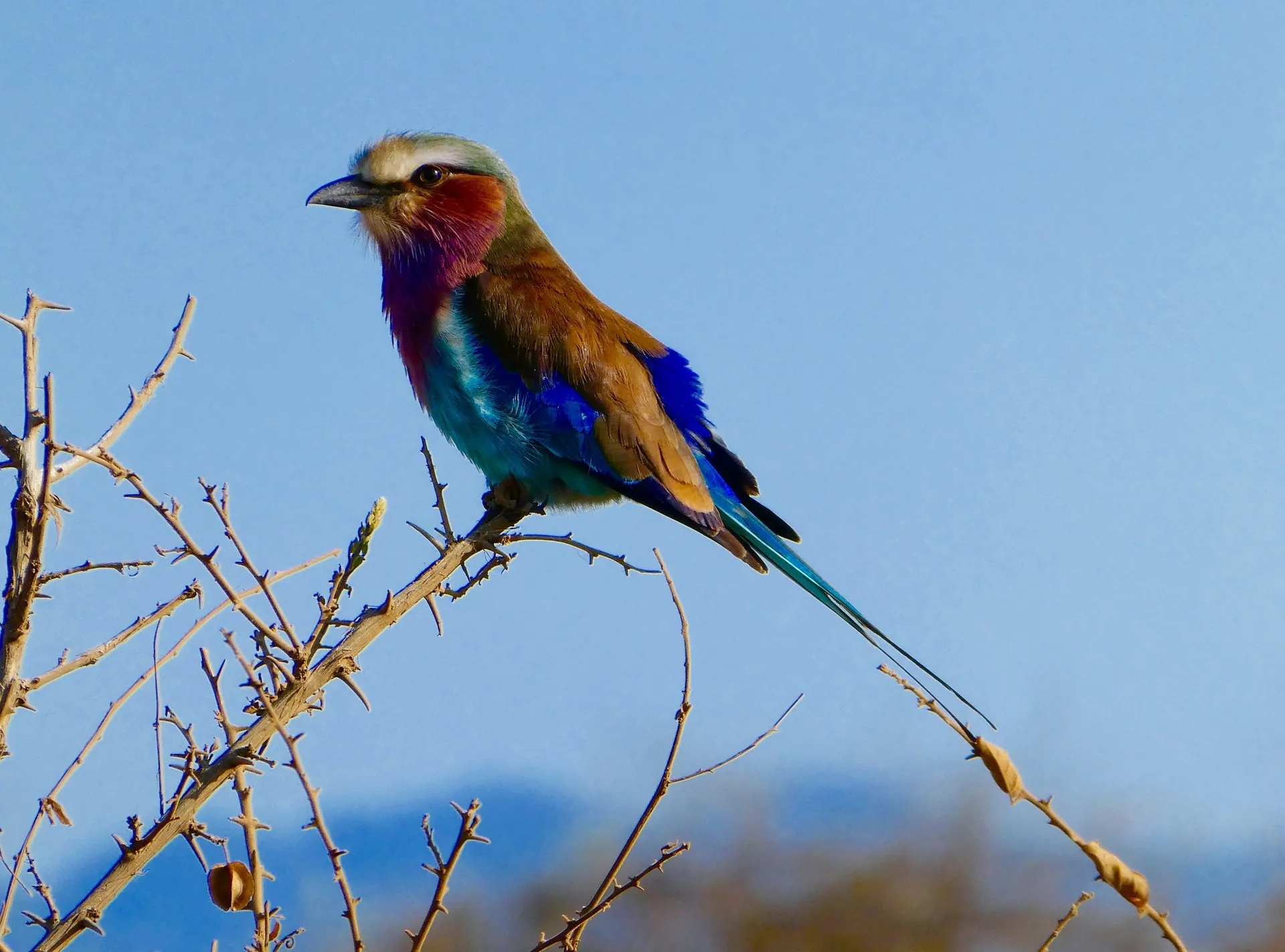
A big black-and-white forest hornbill with a huge cream casque on the bill. Silvery-cheeked hornbill (Bycanistes brevis) is 75 cm long and common and not threatened. Its wingbeats sound like a steam engine; heard before it is seen.
Where to see Silvery-cheeked hornbill
- Mount Kenya: Africa's second-highest mountain: Point Lenana for trekkers, Batian and Nelion for climbers, and forest and moorland for everyone else.
- Aberdare National Park: Moorland, waterfalls and the tree hotels where elephants come to the floodlit waterhole at night.
- Arabuko-Sokoke Forest: The largest coastal forest in East Africa: Sokoke scops owl, Clarke's weaver, golden-rumped sengi and forest elephants.
- Nairobi: The safari capital: a national park inside the city limits, elephant orphans, giraffes and the best food and nightlife in East Africa.
- Kakamega Forest: Kenya's last rainforest: 400 bird species, blue monkeys, colobus and 400 kinds of butterfly.
Flies noisily over the canopy in groups, feeding on figs. It is widespread enough that a standard safari finds it without trying; the best months are Jan, Feb, Aug, Sep.
How to identify it
A big black-and-white forest hornbill with a huge cream casque on the bill. Size: about 75 cm, crow-sized or larger. Family: hornbills. Flies noisily over the canopy in groups, feeding on figs.
Status and conservation
Silvery-cheeked hornbill is common and not threatened. No special measures are needed to see it, and your park fees support the habitats it uses.
On a Kenya Experience trip
Our guides carry binoculars and the East African field guide in every vehicle, and our birding itineraries put a specialist bird guide in the front seat. For Silvery-cheeked hornbill we would start at Mount Kenya and Aberdare National Park. Tell us the species on your list and we build the days around them.