
Wildlife. Updated November 2026. 3 min read.
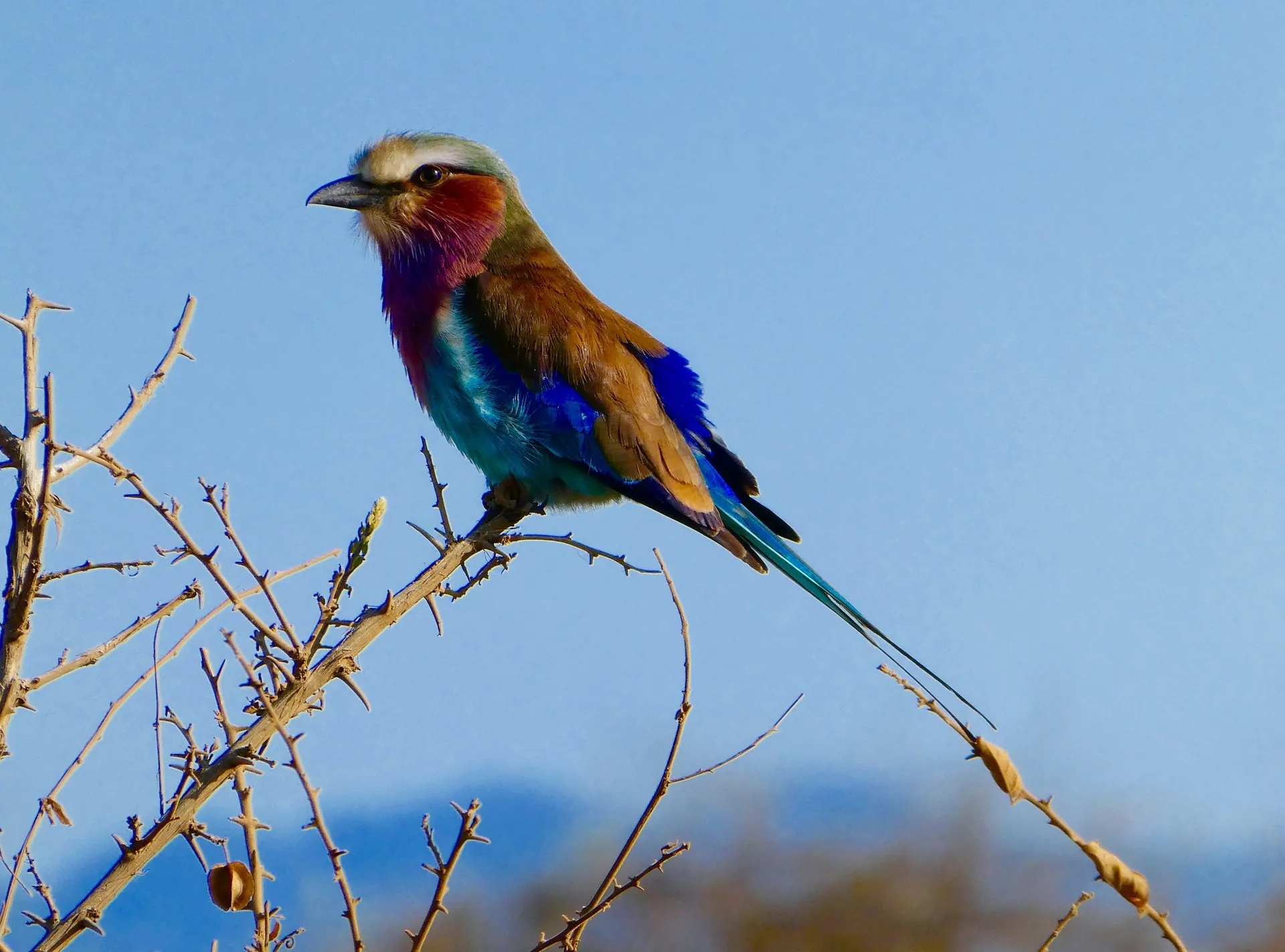
A blue-and-grey kingfisher with a red bill and no black in the wing. Mangrove kingfisher (Halcyon senegaloides) is 24 cm long and common and not threatened. A coastal speciality of the creeks from Kilifi to Lamu.
Where to see Mangrove kingfisher
- Mida Creek: A mangrove boardwalk, crab plovers and sunset canoes on the tidal creek behind Watamu.
- Watamu: A marine park, turtle nesting beaches, the Gedi ruins and the best deep-sea fishing on the coast.
- Kilifi: A creek town of boatyards, bioluminescent night swims and quiet beaches halfway between Mombasa and Watamu.
- Lamu: The oldest living Swahili town, a UNESCO site of donkeys, dhows and carved doors, with Shela's beach next door.
Hunts crabs in mangroves on the coast; moves inland to breed. It is widespread enough that a standard safari finds it without trying; the best months are Jan, Feb, Mar, Sep, Oct, Nov, Dec.
How to identify it
A blue-and-grey kingfisher with a red bill and no black in the wing. Size: about 24 cm, thrush-sized. Family: kingfishers. Hunts crabs in mangroves on the coast; moves inland to breed.
Status and conservation
Mangrove kingfisher is common and not threatened. No special measures are needed to see it, and your park fees support the habitats it uses.
On a Kenya Experience trip
Our guides carry binoculars and the East African field guide in every vehicle, and our birding itineraries put a specialist bird guide in the front seat. For Mangrove kingfisher we would start at Mida Creek and Watamu. Tell us the species on your list and we build the days around them.