Who travels. Updated November 2026. 7 min read.
Kenya is one of the easiest countries in Africa for a woman traveling alone, and Nairobi is still a city where you take an Uber after dark instead of walking. Both are true, and holding both in your head is most of the skill. This is the version Kenyan women give their friends from abroad: where it is easy, where it takes care, and the small habits that make the difference.
The short answer: on safari you are rarely alone and rarely at risk, because a guide, a vehicle and a staffed camp surround you from the airport to the airstrip. In the cities, the risks are the ordinary ones of any big city, petty theft and a man who will not take no for an answer in a market, and you manage them with ride-hailing, a local SIM and a hotel in the right neighborhood. On the coast, dress and persistent beach sellers are the main things to plan for. Before you book, check the current U.S. State Department advisory for Kenya and confirm your travel insurance covers your route.
The honest safety picture
Most harassment women meet in Kenya is verbal: comments, a hand on the arm, a request for your number, a seller who follows you down the street. It happens most in busy markets, bus stages, matatus and on public beaches, and it is rare inside lodges, camps and good hotels, where staff notice everything and take guests' comfort seriously. A firm, polite "hapana, asante" (no, thank you) and walking on usually ends it. Kenyan women deal with the same thing, and they will often step in on your behalf if a man persists.
Serious crime against visitors is uncommon but real, and it follows patterns. Snatch thefts happen through open car windows in slow Nairobi traffic, phones disappear from back pockets in crowds, and walking in the city center after dark is the one thing every Nairobian will tell you not to do. Drink spiking is reported in nightlife areas, as it is in American cities. None of this calls for fear; it calls for the same habits you would use in any large city, applied without exceptions.
The safari answer
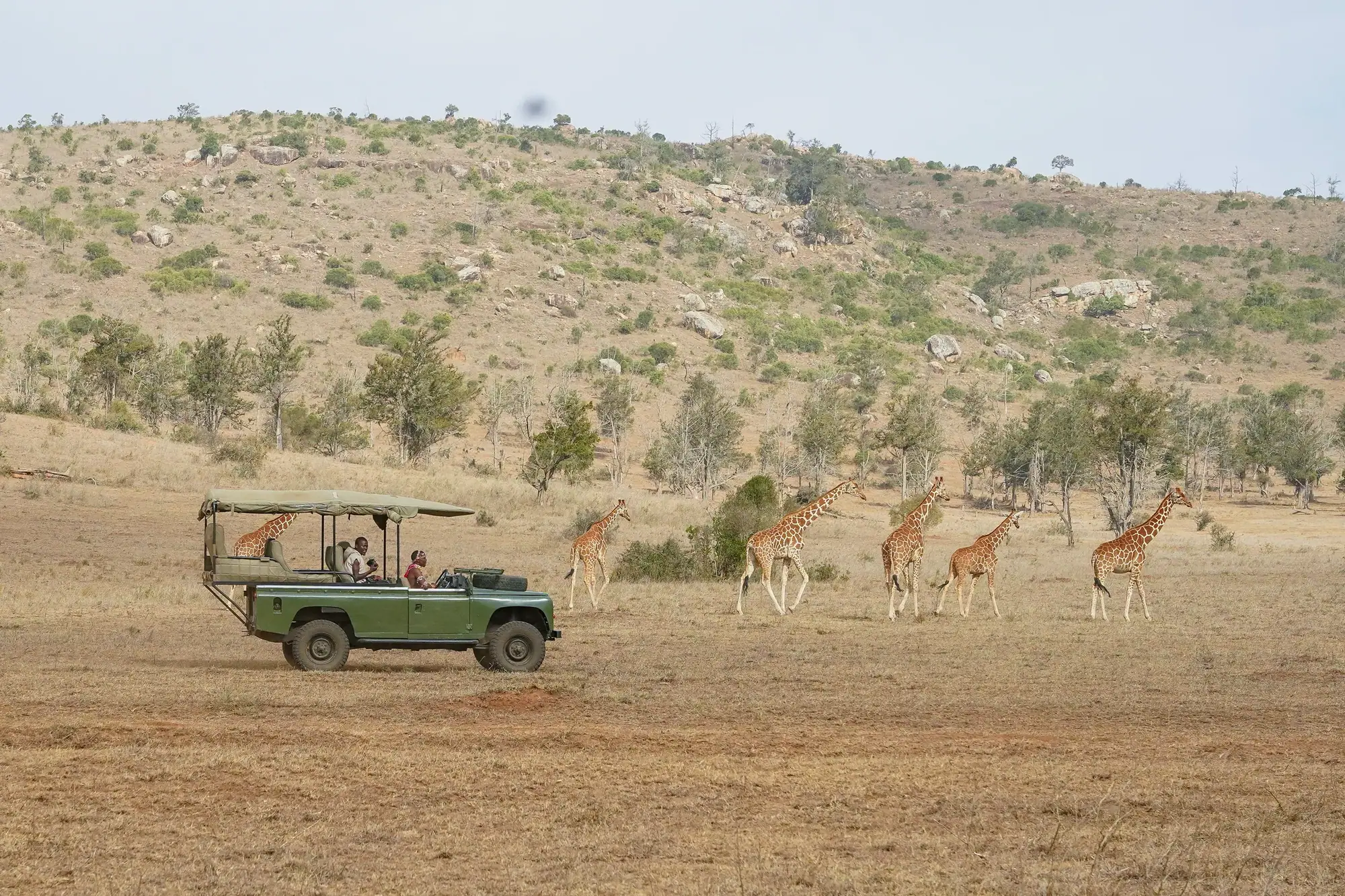
A safari is the easiest way for a woman to travel Kenya alone. Your driver-guide meets you at arrivals with a name board, stays with you for the whole trip and knows every lodge manager on the route. Camps are staffed day and night, and after dark an askari, a camp guard, walks every guest to their tent with a torch, partly because elephants and buffalo wander through. Meals are often at a shared table or with your guide, so the dinner-alone problem mostly disappears.
The real cost of going solo is the single supplement: lodges price rooms for two, and many charge a single traveler 20 to 30 percent more. Our cost guide has the full numbers. There are three ways to soften it.
| Way to go | How it works | Who it suits |
|---|---|---|
| Join a group departure | A dated trip on our trips page: shared vehicle, shared meals, a fixed price | Women who want company and a set itinerary; ask whether a room share is possible on your departure |
| Shared safari | A seat in a vehicle with other travelers, booked by the seat rather than the vehicle | Budget travelers; you give up control of the pace |
| Private safari | Your own vehicle and guide; the most expensive per person when you are alone | Photographers, first-timers who want to set the pace, and anyone who values privacy |
| Green-season dates | Some camps waive or cut the single supplement in quieter months | Flexible travelers; ask us which camps do it on your dates |
Nairobi: where to stay and how to move
Choose a hotel with a guarded gate, a driveway where cars pull right up to the door and a front desk that can call you a car. Westlands and Kilimani put you near restaurants and cafes; Karen is quieter, greener and close to Wilson Airport for safari flights. Our Nairobi where-to-stay guide names hotels at three budgets. Avoid sleeping in the central business district if you plan to be out in the evening.
For getting around, use Uber or Bolt, or Little, the Kenyan app. Switch on trip sharing so a friend can follow the ride, check the plate and the driver's name before you get in, sit in the back and keep your phone off your lap when the car is stopped in traffic. Across town costs about $3 to $8 at the time of writing. Matatus, the minibuses, are how Nairobi commutes; ride one in daylight with a Kenyan friend for the experience, and skip them at night and at rush hour, when they are crowded and pickpockets work.
Nairobi is very good for a woman on her own in daylight. The Giraffe Centre, the Sheldrick Wildlife Trust's elephant orphans, the Nairobi National Museum and Karura Forest, a gated urban forest with rangers and walking trails, are all easy solo mornings. Kazuri Beads in Karen, a ceramic bead workshop started in 1975 to give work to single mothers, lets you watch the women at work and buy straight from the shop.

The coast
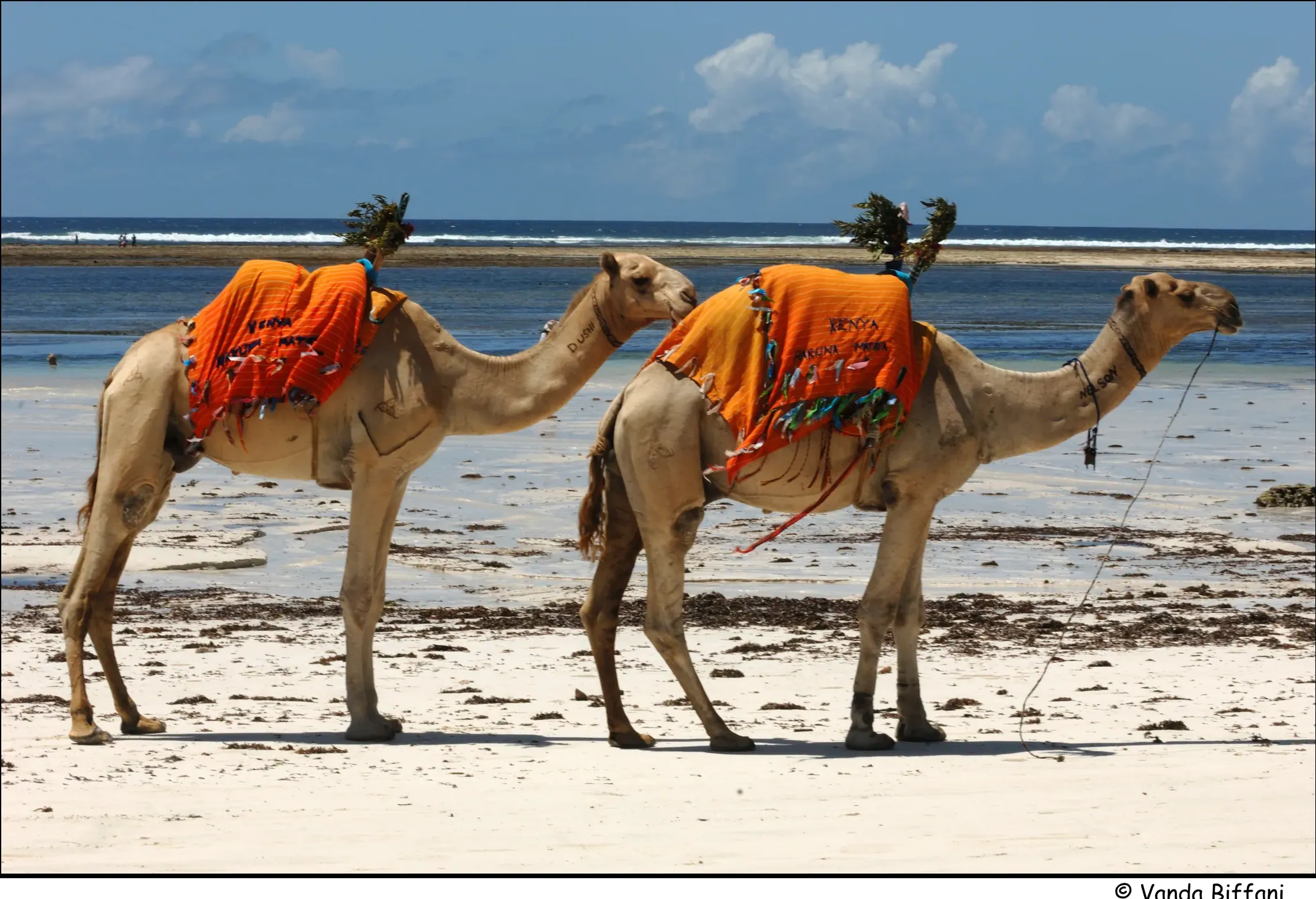
The coast is more conservative than Nairobi, and largely Muslim in the old towns. In Mombasa Old Town and town centers, cover your shoulders and knees; a light scarf or a kanga, the printed cotton wrap, does the job and doubles as a beach cover-up. Swimwear is fine at hotel pools and on the beach, but put something over it when you walk into town or a shop. Our what-to-wear guide covers the details.
Diani is the easiest beach base for a woman alone: long, busy with hotels and well served by tuk-tuks and taxis. The beach sellers, known locally as beach boys, offer boat trips, snorkeling and friendship, and the friendship sometimes comes with a romance that turns out to be a business. Book trips through your hotel or through us, walk the beach in daylight, and do not walk it alone after dark.
What to pack
- Period products: pads are sold in every supermarket, but tampons are mainly found in Nairobi and Mombasa supermarkets and pharmacies and are scarce upcountry and absent in the bush, so bring your own supply, or a menstrual cup or period underwear
- A kanga or light scarf for the coast, mosques and cool game drives
- A small headlamp: camp paths are dark and generators often go off at night
- A cross-body bag that zips, and a phone strap if you film from vehicles
- Photocopies of your passport and eTA, with the originals in the hotel safe
- A power bank and a Safaricom SIM or eSIM, bought at the counter in the JKIA arrivals hall, so WhatsApp and maps work from day one
Ten habits Kenyan women swear by
- Greet first. "Habari" or "mambo" with a smile changes how people treat you, in shops, at gates and in traffic
- Have your hotel or host call your car, and wait inside until it arrives
- Keep car windows up and phones out of sight in slow traffic
- Carry small notes and use M-Pesa so you never open a full wallet in public
- Decline drinks you did not watch being poured, in any bar, anywhere
- Say "hapana, asante" once, clearly, and keep walking; you owe no one a conversation
- Let the camp askari walk you to your tent after dark; it is the rule, not a fuss
- Share your plans with someone at home and enroll in the State Department's STEP program
- If a man is bothering you, ask a woman nearby for help; she will understand at once
- Trust the staff: hotel, camp and guide teams look after their guests and will move a table, a room or a plan if you ask
Experiences led by women
Some of the best days in Kenya are spent with women. Maasai and Samburu women's beadwork groups teach their craft and sell their own work, so the money goes to the maker. Our Samburu beadwork workshop is one example, and Kazuri in Karen is another. Women farmers' groups, tea and coffee smallholders and Nairobi's women chefs and designers are all part of trips we plan; tell us what you are curious about.

Coming home alone: for Kenyan women abroad
Kenyan women returning from the U.S. alone face a different set of questions: the relatives who want to know when you will marry, the long drive upcountry by yourself, and the expectation that you will stay with family when you might prefer a hotel. A booked driver for the upcountry legs, a Nairobi apartment as your own base and a few days of safari or coast that are just for you can make the visit easier for everyone. Our diaspora pages have more.
How we plan solo trips
We do not run women-only departures at the time of writing, but many women travel with us alone, on group departures and on private trips. Tell us your dates and what matters to you, and a specialist replies within two business days with an itemised plan: named hotels and camps, the supplement if there is one, and the transfers that mean you never wait alone at an airstrip. You can pay in full or monthly, with no deposit.