Who travels. Updated November 2026. 5 min read.
Laws, court cases and advisories change
This page reflects Kenyan law, the court cases and the U.S. State Department's guidance at the time of writing, November 2026. Read the State Department's current Kenya page before you book and again before you fly.
U.S. State Department: KenyaKenya criminalises sex between men, and we know of no case in which a tourist has been prosecuted for it. Both facts matter. Here is the law, the reality on the ground and how LGBTQ+ travelers visit Kenya, with the sources, so that you can make your own decision with clear eyes.
The short answer: thousands of LGBTQ+ travelers take safaris in Kenya, and the parks, conservancy camps and international hotels where visitors spend their time are discreet, professional and used to same-sex couples sharing a room. What you need to plan for is public behavior, not your booking. Kenya is a conservative, largely religious country, public affection between any couple is uncommon outside a few Nairobi neighborhoods, and the law and politics around sexuality are live issues that change. Keep a low profile in public, choose your hotels and transport carefully, and read the current U.S. guidance before you go.
What Kenyan law says
Kenya's Penal Code dates from 1930, under British rule. According to the Human Dignity Trust's Kenya profile, last updated on September 30, 2026, three sections apply to sex between men:
| Section | What it covers | Maximum penalty |
|---|---|---|
| 162, unnatural offences | "Carnal knowledge against the order of nature", applied to sex between men | 14 years in prison |
| 163 | Attempting an offence under section 162 | 7 years |
| 165, indecent practices between males | "Gross indecency" between men, including procuring or attempting it | 5 years |
The law does not explicitly criminalise sex between women. Kenya does not recognise same-sex marriages or partnerships: Article 45 of the 2010 Constitution defines marriage as between persons of the opposite sex, so a marriage from the U.S. has no legal standing in Kenya.
How the law is enforced
Prosecutions under these sections are rare. Human Rights Watch reported in 2019 that it knew of only two prosecutions, against four people, under section 162 in the previous ten years. Where police do target LGBT Kenyans, the Human Dignity Trust reports that they more often use laws on loitering, soliciting, impersonation and public order. In 2018 Kenya's Court of Appeal ruled that forced anal examinations, once used as evidence, are unconstitutional.
For visitors, the practical risk is less about prosecution and more about harassment, extortion and the attention a public scene can draw. Kenyan rights groups have long reported cases of men being lured through dating apps and then robbed or blackmailed. That is the risk to plan around.
The court cases and the bill to watch
- May 24, 2019: Kenya's High Court ruled that sections 162 and 165 do not breach the Constitution. The petitioners appealed
- The appeal at the Court of Appeal has been adjourned several times, including in February and November 2025 and February 2026, and had not been decided at the time of the Human Dignity Trust's September 2026 update
- February 2023: the Supreme Court ruled that the National Gay and Lesbian Human Rights Commission must be allowed to register as an NGO, on the constitutional right of association, and in September 2023 it rejected a challenge to that ruling
- April 2023: a member of parliament proposed a Family Protection Bill that would impose a minimum ten-year sentence for consensual same-sex relations, the death penalty for what it calls aggravated homosexuality, and criminalise LGBT advocacy. At the time of writing it has not been passed, and it remains a proposal. If its status changes, we will update this page
What the U.S. government says
The U.S. State Department's Kenya page is the official U.S. source on local laws and safety, including the laws that affect LGBTQI+ travelers. We do not paraphrase that guidance here, because it changes. Before you book, check the current U.S. State Department advisory for Kenya and confirm your travel insurance covers your route; then enroll in STEP so the U.S. Embassy in Nairobi can reach you, and keep the embassy's American Citizen Services contact in your phone.
The reality on safari and in hotels
Safari is the most comfortable part of a Kenya trip for LGBTQ+ travelers. Lodges, conservancy camps and international hotels host guests from all over the world, and staff are trained to be discreet. Two men or two women asking for a double bed is routine at the camps we use, and nobody will ask why. A private vehicle and guide give you space for the whole trip, and on a conservancy you may see no one but your own guide all day.
Outside the lodge, the rule is the one that applies to every couple in much of Kenya: keep affection private. Kenyans of all kinds rarely kiss or hold hands in public outside a few Nairobi neighborhoods, so restraint is less a disguise than ordinary manners here.
Nairobi and the coast
Nairobi has a quiet, mostly private queer scene: house parties, arts events and word of mouth rather than bars with rainbow flags. Kenya's LGBTQ+ community is active, and its rights organisations, artists and writers are part of the city's cultural life, but the scene is not marketed to visitors, and you should not expect it to be. Stay in Westlands, Kilimani or Karen, use Uber or Bolt rather than street taxis, and meet people you do not know only in public places.
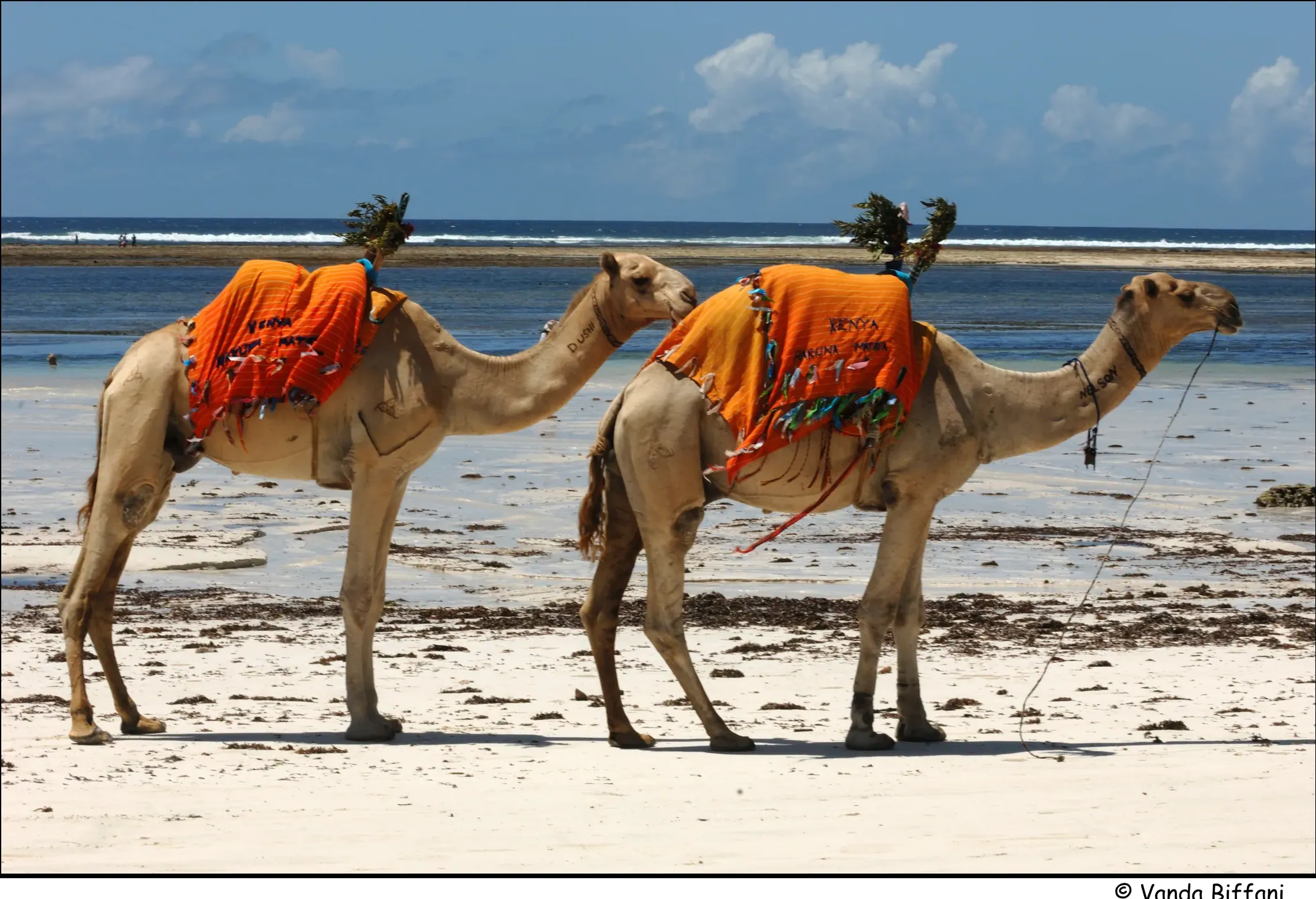
The coast is more conservative, especially Mombasa Old Town and the Swahili towns, where most people are Muslim and dress and behavior in public are more formal. Diani's resorts and villas are used to international guests and are comfortable for couples who keep a low profile in town.
Practical precautions
- Be careful with dating apps: meet in a public place, tell a friend where you are, and never bring a new acquaintance back to your room
- Do not carry or post anything you would not want a stranger to see, and lock your phone
- If someone threatens to expose you or asks for money, do not pay; contact your hotel, your guide or us, and the U.S. Embassy
- Trans and non-binary travelers: passports are checked at airports, hotels and park gates, so carry documents that support your travel identity, and tell us anything you want us to plan around
- Choose properties with a track record of discretion; we can suggest them
- Buy travel insurance with medical and evacuation cover, as every traveler must
How we look after LGBTQ+ guests
We welcome and protect all our guests. We book the room you ask for, a double or twins, without comment, and we tell a lodge only what you want it to know. We steer you to hotels and camps we know to be discreet and welcoming, plan private vehicles and transfers so you are never left waiting on a street, and brief your guide only as far as you want. If anything feels wrong on the trip, call our 24-hour line. Tell us your plans and your concerns, and a specialist will answer honestly within two business days.