Who travels. Updated November 2026. 5 min read.
Kenya is one of the few places where you can watch elephants on a Saturday and take a Monday call from New York without changing your sleep pattern much. Since late 2024 it has also had a permit made for remote workers: the Class N digital nomad permit, for people who earn from outside Kenya and want to live here for a while.
The short answer: for a few weeks, most American remote workers come on an eTA and work quietly for their U.S. employer, but the eTA is a visitor's authorisation, so read the official rules on what it allows. For months, apply for the Class N permit, which lets you live in Kenya and work remotely for a foreign employer or foreign clients, but never for a Kenyan one. Base yourself in Kilimani or Westlands for the city, or Diani, Kilifi or Watamu for the coast, rent somewhere with fibre and a backup power supply, and plan your day around the time zone.
The Class N digital nomad permit
Kenya added the Class N permit to its immigration regulations in October 2024 and opened applications in the months after. It is for three kinds of people: employees of companies outside Kenya who work remotely, owners of businesses outside Kenya, and freelancers whose clients are outside Kenya. It does not allow any employment or income-earning work in Kenya.
Law firms that follow Kenyan immigration, such as CM Advocates, list these documents for an application:
- A cover letter explaining what you do and why you want to live in Kenya
- A letter from your employer, or proof of your business or freelance work outside Kenya
- Your employment contract or client contracts
- Three months of bank statements
- Proof of where you will live in Kenya, such as a lease
- A no-objection letter from your country's embassy, as listed in the requirements
- A valid passport and passport photos
The income threshold and the fees are where the published sources disagree, so check them with the Directorate of Immigration Services before you apply. The 2024 regulations set an income requirement reported at $55,000 a year, and some law firms have since reported a lower figure. Fees reported by law firms include a processing fee of about $200 and an annual issuance fee, quoted at different amounts. Applications go through the government's official immigration portal, and the permit is reported as valid for one year at first and renewable.
| Option | Best for | What to know |
|---|---|---|
| eTA | A trip of a few weeks, tourism with some work for a U.S. employer | About $30 at the time of writing; visitor status, usually for stays of up to about 90 days; plus the inbound health insurance |
| Class N permit | Living in Kenya for months while working for foreign employers or clients | Documents above; income threshold and fees to confirm with Immigration; no local work |
| Work permit, other classes | A job with a Kenyan employer | A different process, usually led by the employer |
Where to base yourself
In Nairobi, most remote workers live in Kilimani, Kileleshwa or Lavington, residential neighborhoods with serviced apartments, supermarkets, gyms and cafes, or in Westlands, the busiest district for restaurants and nightlife. Karen is greener and quieter, but far from everything at rush hour. Our Nairobi where-to-stay guide describes each area.
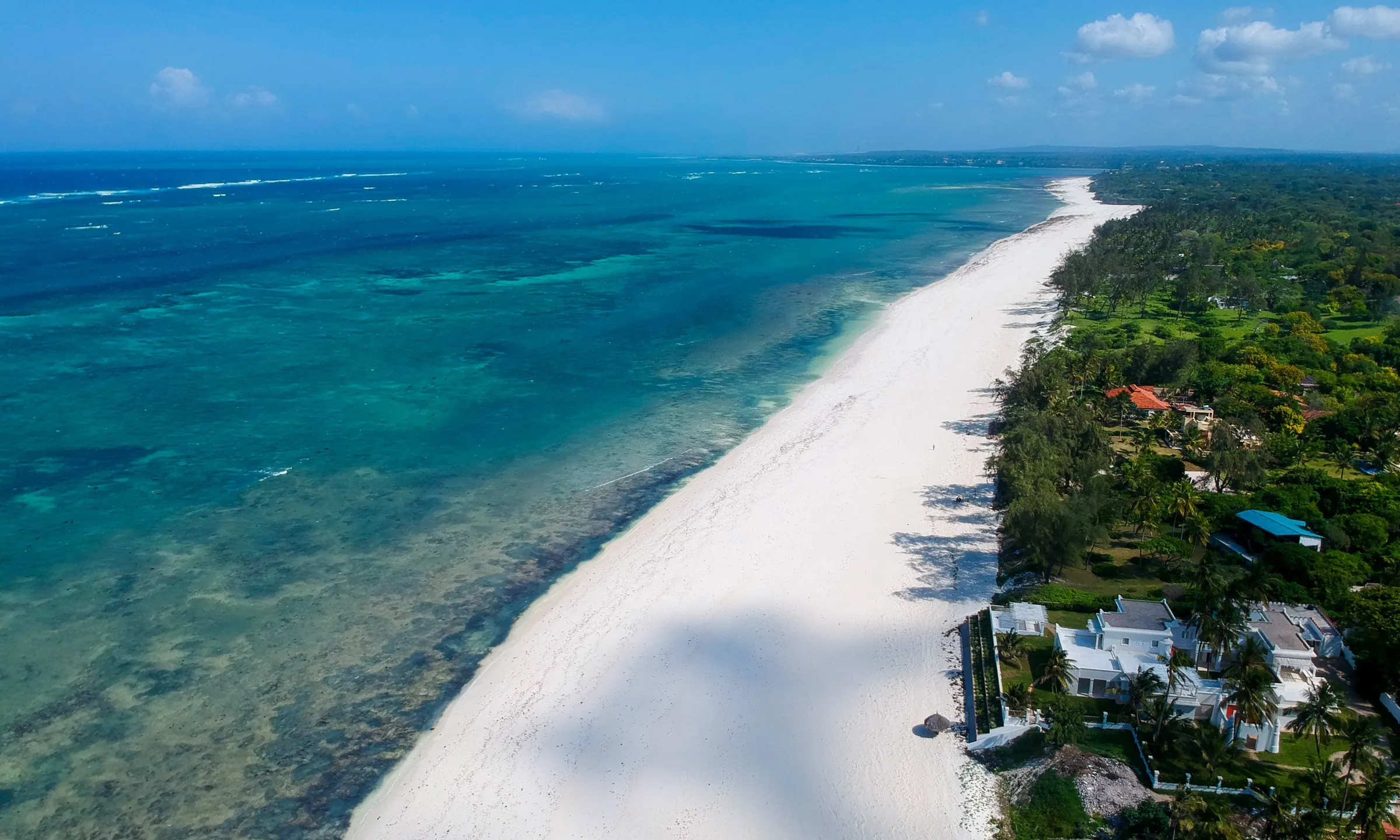
On the coast, Diani has the longest beach, the most rentals and a small community of remote workers and kitesurfers. Watamu is quieter, with a marine park on the doorstep, and Kilifi is a creek town with a creative scene between Mombasa and Watamu. Further north, Lamu and Shela suit people who want a slow island town with no cars, where you get around on foot, by donkey or by boat; check the connection of any house you rent there before you commit. Before you book, check the current U.S. State Department advisory for Kenya and confirm your insurance covers your base.
Internet, power and coworking
Home fibre from Safaricom and other providers is available across Nairobi's residential neighborhoods and in the main coast towns, and Safaricom's 5G covers much of Nairobi and other major towns. Ask any landlord for a recent speed test and the provider's name before you sign. Power cuts happen, so choose a building with a generator or an inverter, and keep a Safaricom data bundle on your phone as a backup hotspot. Our connectivity page explains SIMs and eSIMs.
Nairobi has a mature coworking scene, including Nairobi Garage, and iHub, the hub that helped start the city's tech boom. Diani and Watamu have smaller coworking spaces and many cafes with workable Wi-Fi; for important calls, rely on your own connection.

The time-zone advantage
Kenya is on UTC+3 with no daylight saving. It is 8 hours ahead of New York in winter and 7 in summer, and 11 hours ahead of California in winter and 10 in summer. For East Coast work, a 9am meeting in New York is 5pm in Nairobi in winter, and a U.S. day ending at 5pm finishes at 1am. Many remote workers take the Kenyan morning for a run, the beach or a game drive, start at 2 or 3pm and finish around midnight. West Coast schedules are harder and suit people whose work is mostly asynchronous.
What it costs
Costs depend almost entirely on where you live and how you live. Some numbers are fixed at the time of writing: the eTA at about $30, Kenya's inbound health insurance at about $44 plus fees, and the permit fees above. Everyday Nairobi is cheaper than an American city if you live like a Kenyan professional and expensive if you live like an expatriate: a plate of local food costs a dollar or two, a ride across town about $3 to $8, and imported groceries, wine and international schools cost as much as at home or more. Serviced apartments in Kilimani and Westlands, and furnished houses in Diani, price by the month; ask us for current figures for your dates.

Health, safety and money
- Malaria: the coast and many upcountry areas have it, Nairobi has very little. See a travel clinic before you go
- Insurance: a long stay needs international health insurance, not just a trip policy; check that it covers evacuation
- Safety: enroll in STEP and follow the usual Nairobi habits: ride-hailing at night, phones out of sight in traffic
- Money: open M-Pesa on your Safaricom SIM, and use a U.S. card with no foreign transaction fees for larger payments
- Tax: earning abroad while living in Kenya can raise tax questions in both countries; ask a tax adviser before a long stay
How we help
We do not process permits, but we plan the first weeks for people relocating: airport pick-up, a short-stay apartment while you look for a lease, a driver for viewings, and the safari weekends and coast trips that make a long stay worth it. Tell us your dates and your base, and a specialist replies within two business days.