The coast. Updated November 2026. 4 min read.
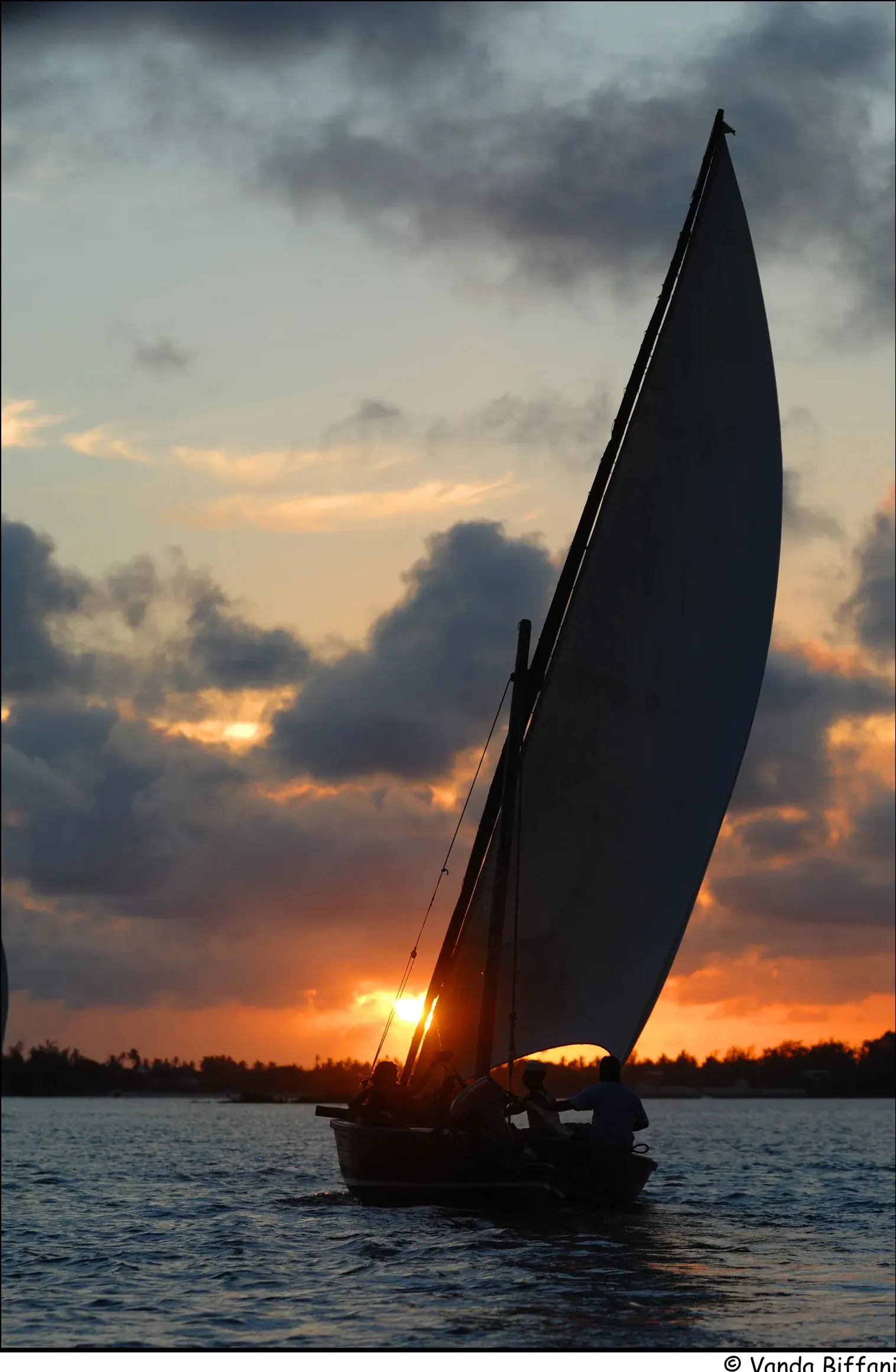
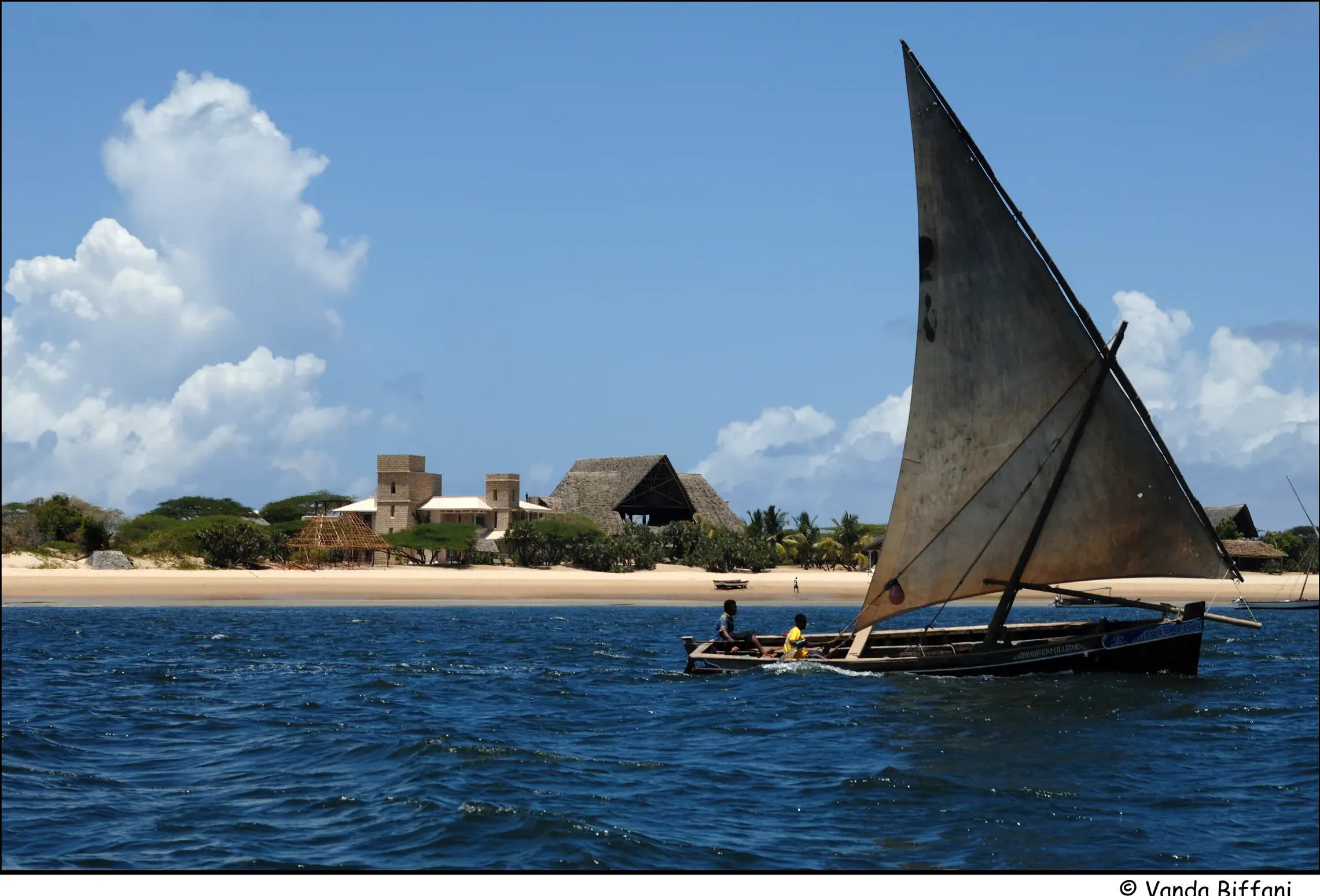
Most people meet Wasini at lunchtime. They have spent the morning on a dhow watching dolphins and snorkeling the reef at Kisite, and they come ashore salty and hungry to a long table under the trees, a plate of crab and a view of the channel. Then the boat leaves, and the island goes back to its own pace. It is worth staying longer.
The short answer: Wasini is a small coral island just off Shimoni, at the southern end of Kenya's coast, with a Swahili fishing village, no cars and a community boardwalk over fossil coral flats. Most visitors see it as the lunch stop on the Kisite-Mpunguti dhow day, and our Kisite-Mpunguti page covers the marine park, the dolphins and choosing a boat. This page is about the island itself: the village, the boardwalk, the food, the Shimoni caves on the mainland, and how to give it an afternoon of its own.
The island and its village
Wasini is a low island of coral rag, baobabs and scrub, a few kilometers long, separated from the mainland at Shimoni by a narrow channel. Its people are Swahili fishing families with a dialect and history of their own, linked to Vanga further down the coast. The main village has coral-stone and thatched houses, mosques, old tombs among the trees and a waterfront where outrigger canoes are pulled up on the sand. Fresh water has always been scarce here, and you will see rainwater tanks beside the houses. There are no roads: people walk, and goods arrive by boat.
Walk the village with a local guide, who will be easy to find at the landing. Dress with shoulders and knees covered, ask before you photograph anyone, and buy your water and snacks from village shops, so that your visit puts money where you are.
The coral garden boardwalk
Wasini's best-known sight is its coral garden: a stretch of ancient, raised coral reef, now dry land, threaded with pools and edged with mangroves. A raised wooden boardwalk, built and run by a local women's group, carries you over it, with a small fee that goes to the community. The coral formations are sculpted and sharp, the pools hold small fish and crabs, and the mangroves fill with birds. Go at low or mid tide, when the pools are clear, ask at the landing about the timing, and wear a hat: there is little shade.
The Swahili lunch
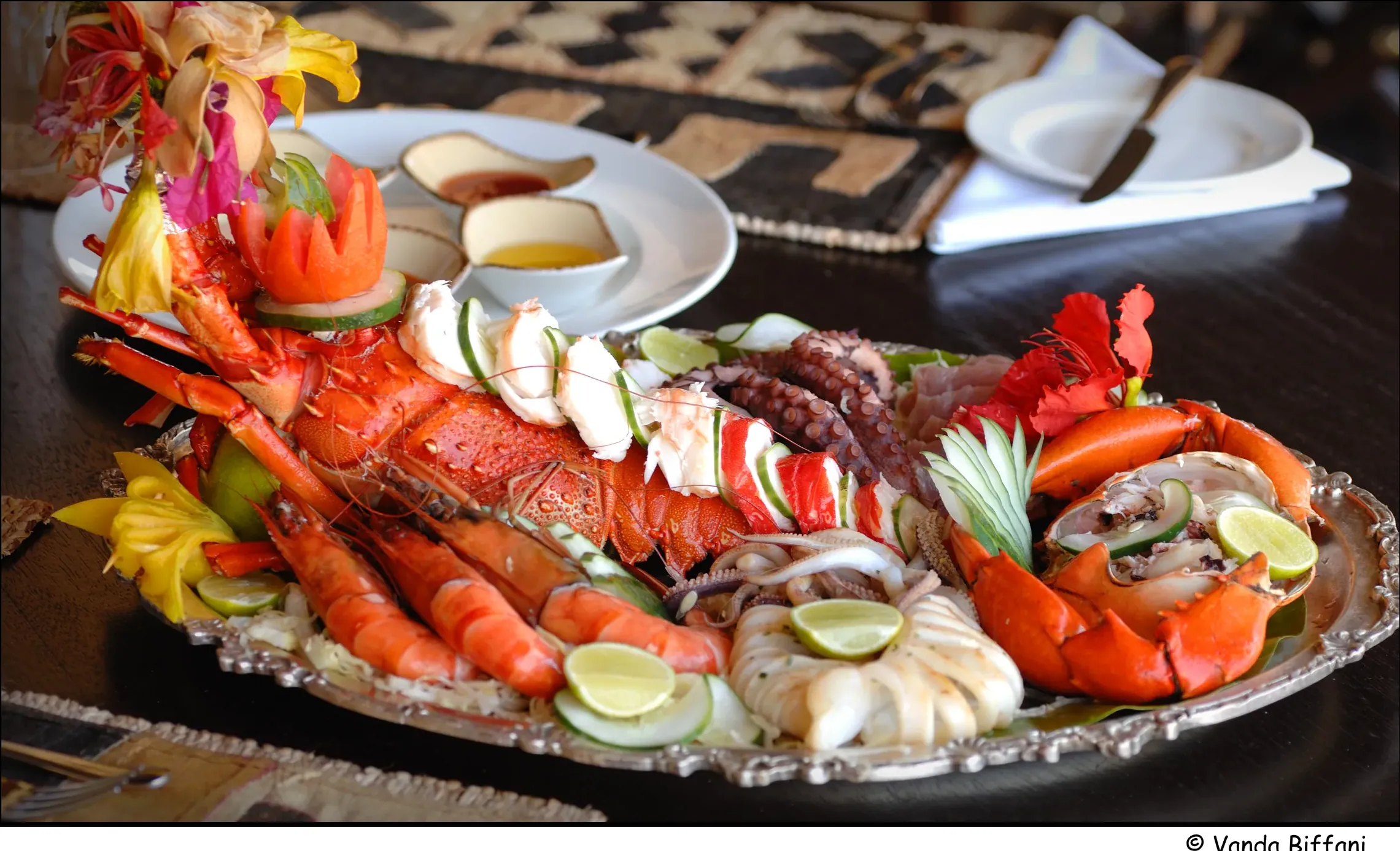
The lunch is the other reason Wasini is famous. Restaurants on the shore, including one run by the island's women's cooperative, serve the coast's seafood at its simplest: whole fish grilled or in coconut sauce, crab, octopus curry, coconut rice, chapati and fresh fruit, with a cold soda or a madafu, a green coconut. On a Kisite day trip, lunch is usually included. Tell your operator in advance about vegetarians, allergies and children who want plain rice.
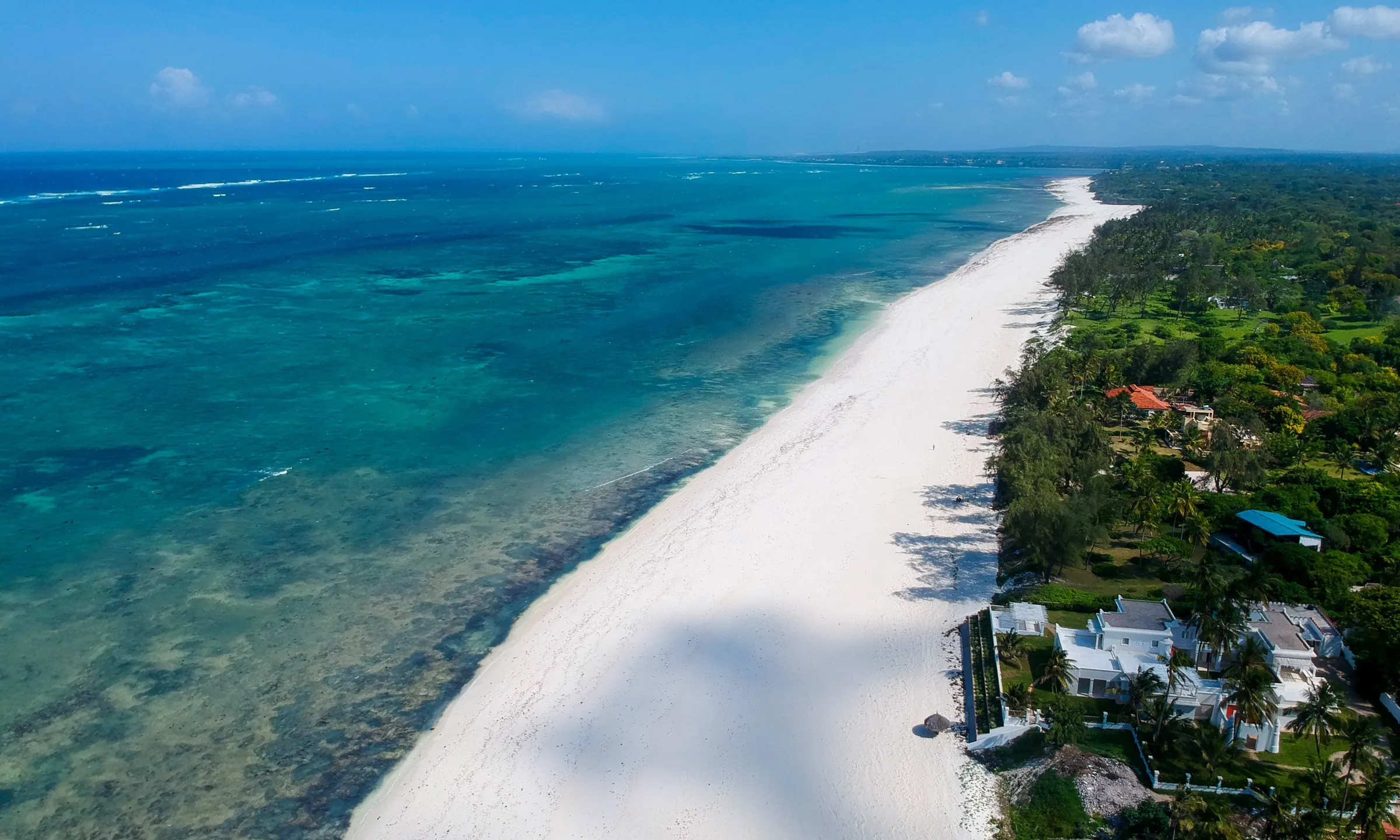
A typical dhow day
| Time | What happens |
|---|---|
| 7 to 8am | Leave Diani by road for Shimoni |
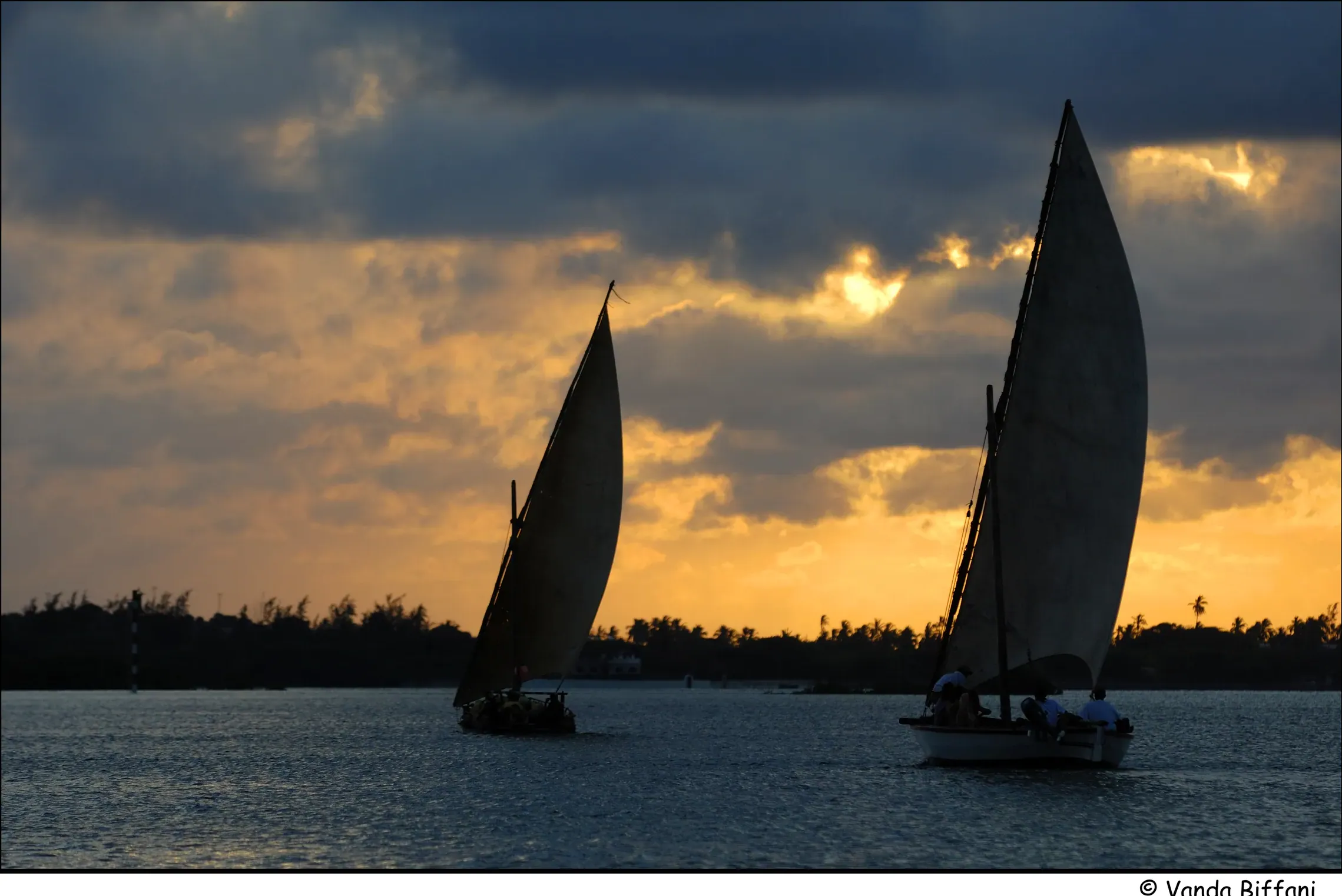
| About 9am | Board the dhow or motorboat at Shimoni jetty |
| Morning | Look for dolphins, then snorkel the reef in Kisite-Mpunguti Marine Park |
| About 1pm | Seafood lunch on Wasini |
| Afternoon | The coral garden boardwalk, or the Shimoni caves on the way back |
| 4 to 5pm | Back in Diani |
Shimoni and the caves
Shimoni means 'at the hole' in Kiswahili, and the name comes from its coral caves, which run back from the shore under the trees. Local history ties them to the 19th-century slave trade, when captives are said to have been held here before being shipped across to Zanzibar and beyond. A guided visit takes about 30 to 45 minutes, is run by the local community for a small fee, and is a sobering stop for anyone tracing the coast's history. It is one of the places on our heritage trip, which follows the story of the African diaspora from Kenya.
Giving Wasini more time
- Take a private boat instead of a shared day trip, so you can stay on Wasini into the late afternoon
- Do the boardwalk in the cool of the late afternoon and watch the light change over the channel
- Ask for a village walk with a local guide to see the mosques, tombs and fish landing
- Stay the night: Wasini and Shimoni have a few simple places to stay, though most visitors base themselves in Diani or Msambweni
- On a clear day, look south-east across the channel: Pemba Island, in Tanzania, lies on the horizon
When to go
The sea is usually calmest and clearest from about October to March, the best time for the boat crossings and the reef. From about June to September the south-east kusi wind can make the open water choppy, though the channel at Wasini stays more sheltered, and humpback whales pass offshore from about July to October. The long rains, roughly April to June, bring wet, grey days and fewer boats.

Getting there
Shimoni is about 55 km south of Diani, an hour to an hour and a half by road, and about 30 minutes from Msambweni. From the jetty, boats cross to Wasini in a few minutes, and most dhow trips go to the reef first and the island second. From Mombasa, allow two hours or more. Our things-to-do guide for Diani shows how a Wasini day fits a beach week.
Why plan with us: Kenya Experience is Kenyan-led, with two U.S. companies behind it and Kenyan guides on the ground. You can pay in full or monthly with no deposit, and a specialist replies within two business days.