Food and drink. Updated November 2026. 4 min read.
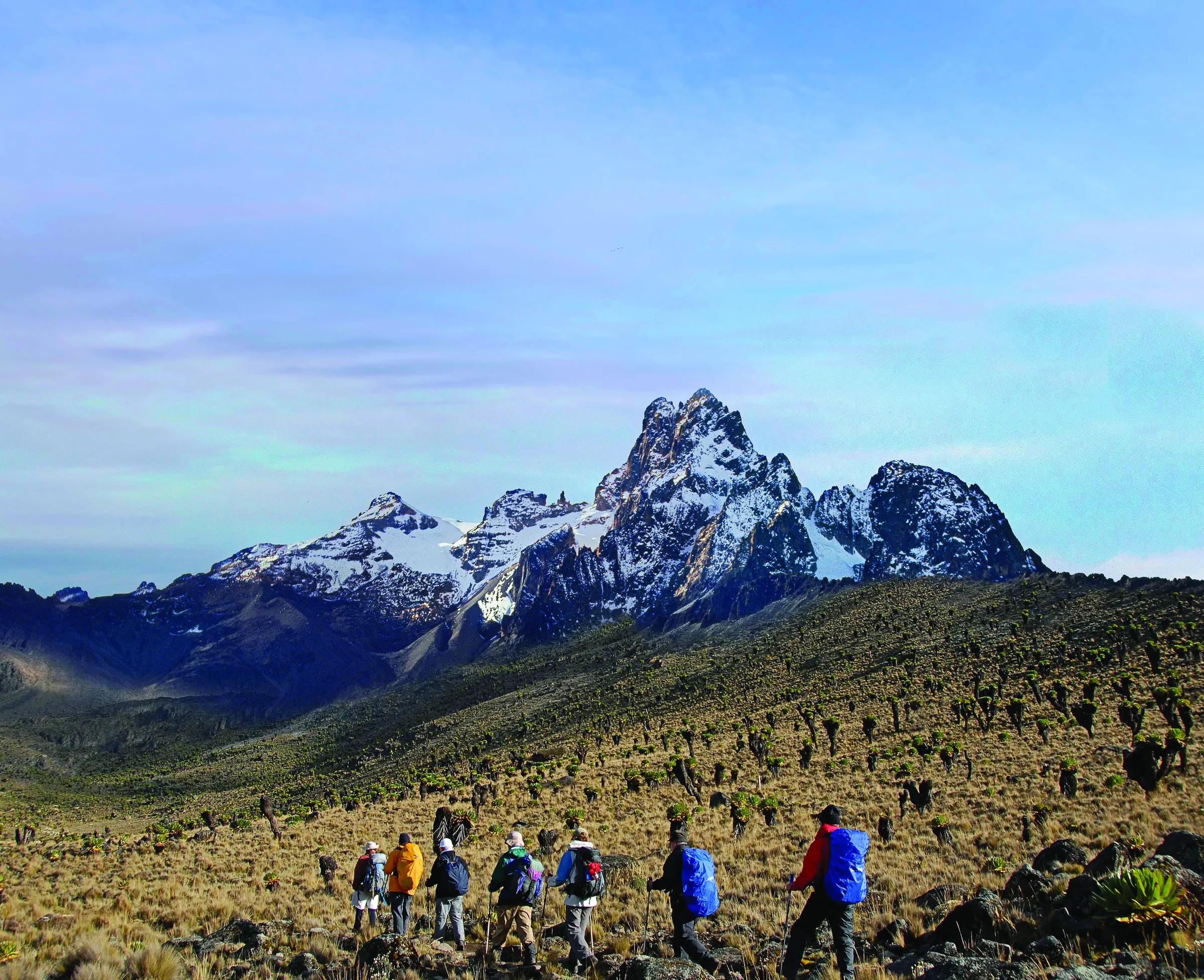
Kenyan AA is the coffee that specialty roasters compete for: bright, juicy and blackcurrant-sharp, grown at around 1,700 meters on the slopes of Mount Kenya by farmers who mostly drink tea. Ask a coffee buyer to name the most distinctive washed coffees in the world and Kenya will be on the short list, for a cup that tastes of berries, citrus and sometimes tomato, with an acidity that wakes you up.
This page is about the coffee itself: why it tastes the way it does, what the grades on the bag mean, how it is sold and what to buy. If you want to stand in a coffee farm and follow the cherry through the factory to a cupping table, that is our coffee farm visit; read this first and the visit will make more sense.
A short history
Coffee came to Kenya with French Catholic missionaries in the 1890s, who planted it at their missions, including St Austin's near Nairobi. Under colonial rule coffee became a settler crop, and for decades Africans were barred from growing it. Smallholders won the right to plant coffee in the 1930s and in larger numbers from the 1950s, and today most Kenyan coffee is grown by smallholder families who belong to cooperatives. Yet Kenya remains a tea-drinking country: most of its coffee is exported, and coffee drinking at home is a recent, city habit.
Why it tastes the way it does
- Altitude: high, cool slopes slow the ripening of the cherry, building sugar and acidity
- Soil: deep red volcanic soils around Mount Kenya and the Aberdares
- Varieties: SL28 and SL34, selected in Kenya by Scott Agricultural Laboratories in the 1930s, known for their complex, fruity cup
- Processing: almost all Kenyan coffee is washed, often with a double fermentation and soak that gives a clean, bright taste
- Drying: beans dry slowly on raised tables in the sun, turned by hand
Newer varieties, Ruiru 11 and Batian, were bred in Kenya to resist coffee berry disease and leaf rust, two diseases that hit the classic SL varieties hard. Many farms now grow a mix. Roasters often list the variety on the bag.
What AA, AB and PB mean
Kenyan grades describe the size and shape of the bean, not directly its flavor, though bigger, denser beans from good farms tend to fetch the highest prices. The grade is decided after the coffee is hulled, by passing it through screens.
| Grade | What it means | What to expect |
|---|---|---|
| AA | The largest beans, caught on the biggest screens | The famous grade, often the priciest lot from a factory |
| AB | The next size down, the bulk of Kenya's crop | Often excellent value, with the same character |
| PB | Peaberry: a single round bean that forms when one seed develops in the cherry | Prized by some roasters for an intense, sweet cup |
| C, E, TT, T | Smaller, larger 'elephant', lighter and broken beans | Mostly sold for blends |

Where Kenyan coffee grows
| Region | Known for |
|---|---|
| Nyeri | Between Mount Kenya and the Aberdares; some of the most sought-after factories in the country |
| Kirinyaga | Mount Kenya's southern slopes; bright, juicy, intense coffees |
| Murang'a | Steep hills and many cooperatives; balanced and fruity |
| Kiambu | Just north of Nairobi; old estates and smallholders, easy to visit |
| Embu and Meru | The eastern slopes of Mount Kenya; growing reputation with specialty buyers |
| Western Kenya | Smaller volumes from Kisii, Bungoma and the slopes of Mount Elgon |
From cherry to auction
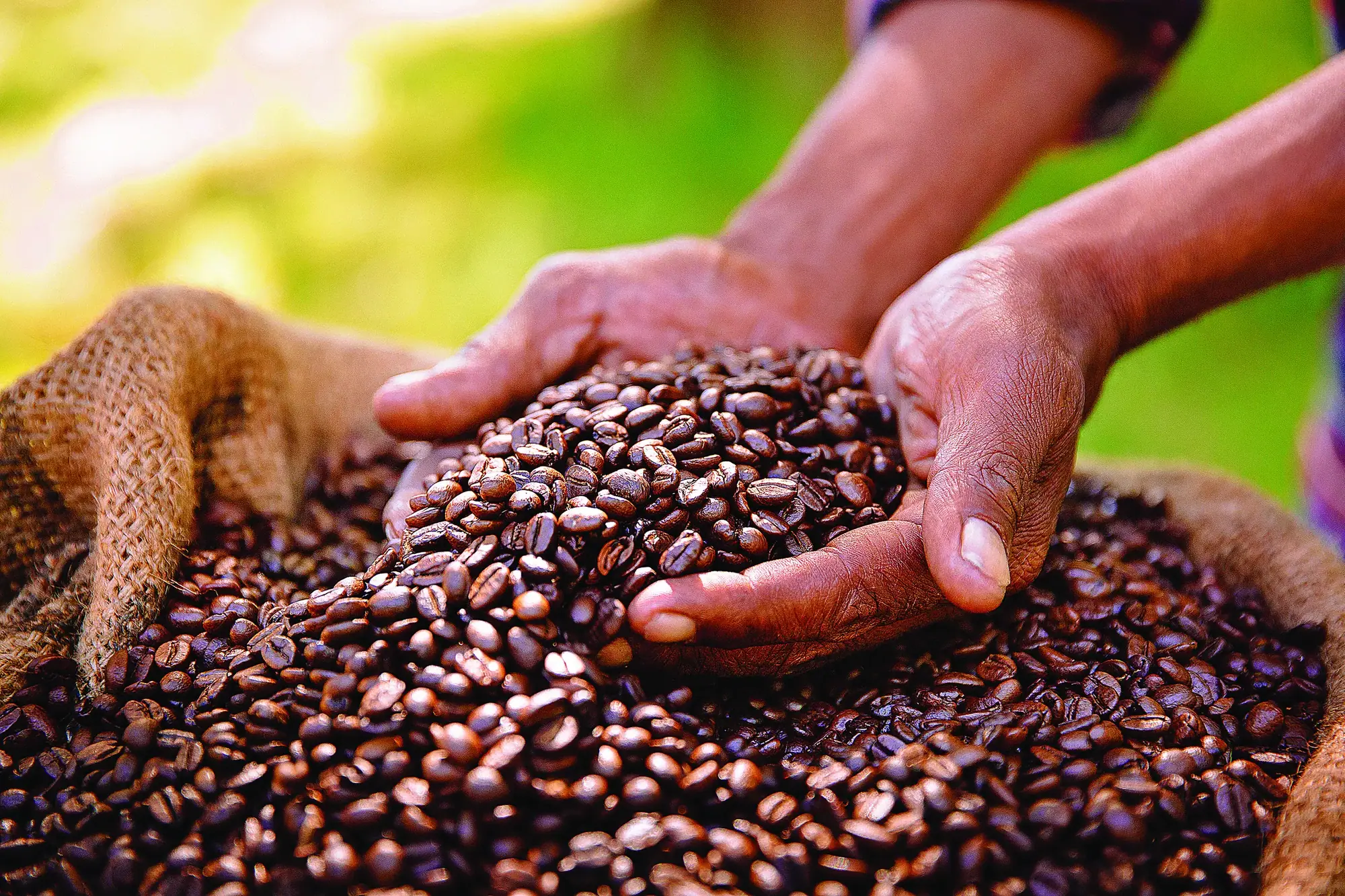
A smallholder picks ripe red cherry by hand and carries it to the cooperative's factory, which in Kenya means a wet mill. There the cherry is sorted, pulped, fermented, washed and soaked, then dried on raised beds. The dried parchment coffee goes to a dry mill to be hulled and graded. Most Kenyan coffee has long been sold through the weekly auction at the Nairobi Coffee Exchange, where licensed marketing agents offer each lot to exporters after sampling. Some coffee is sold directly to foreign buyers, and the rules on direct sales and farmer payments have been reformed several times in recent years; the Agriculture and Food Authority publishes the current rules.
Fair trade and direct trade
Some Kenyan cooperatives are Fairtrade certified, which guarantees a minimum price and a premium for community projects. Specialty roasters often go further, buying a single factory's lot year after year and publishing what they paid. If you care where your money goes, buy from roasters who name the factory or cooperative and say how they buy. Farmers' earnings depend heavily on world prices and on how quickly payments reach them, and that has been a long-running grievance in Kenyan coffee.
Drinking coffee in Kenya
Nairobi has a real cafe culture now. Java House, founded in Nairobi in 1999, grew into a regional chain, and Dormans has roasted coffee in the city for decades; independent cafes in Westlands, Kilimani and Karen serve pour-overs from named Kenyan factories. On the coast, the old drink is kahawa chungu, bitter coffee spiced with cardamom and poured from brass pots on the street in Mombasa and Lamu. Upcountry, outside towns, you are more likely to be offered chai than coffee. Safari camps usually serve Kenyan coffee at breakfast and with the dawn wake-up call.
What to buy and how to carry it
- Buy roasted whole beans from a Kenyan roaster or a cooperative you visit, with the region and grade on the bag
- AB is often better value than AA, with very similar character
- Look for a roast date; Kenyan coffee is best within a few weeks of roasting
- Pack it in checked luggage; roasted coffee is generally allowed into the U.S., but declare food items and check the CBP rules
- Green, unroasted coffee for commercial import goes through licensed channels; trade buyers should ask us to set up meetings
Say it in Kiswahili
| Kiswahili | English |
|---|---|
| Kahawa | Coffee |
| Kahawa chungu | Bitter coffee, the coast street coffee |
| Kahawa na maziwa | Coffee with milk |
| Shamba la kahawa | Coffee farm |
| Mkulima | Farmer |