Towns and places. Updated November 2026. 4 min read.
Mfangano is the island Rusinga used to be: no causeway, almost no cars, footpaths between fishing villages and a forested hill in the middle. On its rock shelters, red and white geometric paintings left by hunter-gatherers thousands of years ago are still visible, and some are still part of local ritual life. It is one of the least visited and most rewarding corners of western Kenya.
The short version: Mfangano is a boat ride from Mbita, and a full day gets you to the rock art, the community peace museum and a fishing village, with a picnic lunch on the shore. Stay a night if you want to climb the hill or watch the omena boats go out with their lanterns after dark. Come with a local guide; the sites are spread out and the paths are not signposted.
The rock art
Mfangano's best-known sites are Kwitone and Mawanga. The paintings are mostly concentric circles, spirals and other geometric forms in red and white pigments, and archaeologists attribute them to Twa hunter-gatherers who lived around the lake long before the Bantu-speaking and Luo communities arrived. They are thought to be up to several thousand years old. The National Museums of Kenya protect the sites as national monuments, and conservation work with the Trust for African Rock Art helped the community open them to visitors.
At Kwitone, a shelter high above the water, the circles are clearest in the morning light and the walk up is short but steep. Mawanga has long been used by Suba clans for rain-making ceremonies, which is a reminder that these are living sacred places, not museum pieces. A community guide unlocks each site, explains the stories and collects a small fee. Never touch the paintings or wet them to make them brighter: skin oils and water destroy the pigment. Ask before photographing anyone at a ritual site.
The Abasuba Community Peace Museum
The island's community museum was set up by Suba elders and teachers to keep Suba heritage and language alive and to use tradition as a tool for resolving disputes. It holds objects, photographs and oral history, and it is often the best place to arrange a rock-art guide. Opening hours are informal, so we call ahead. A visit pairs naturally with the Rusinga Cultural Festival in December, when Suba culture is celebrated on the next island.
Fishing villages and the lake at night
Most of Mfangano's people live from the lake. By day, the landing beaches are busy with boat builders, net menders and the women who buy, dry and sell fish. At night, the omena fleet goes out with lanterns to attract the small silver fish, and from the shore the lake fills with lights. If you stay over, this is the sight to stay for. Fishing boats work right up to the Uganda border in the lake, which runs not far west of the island.
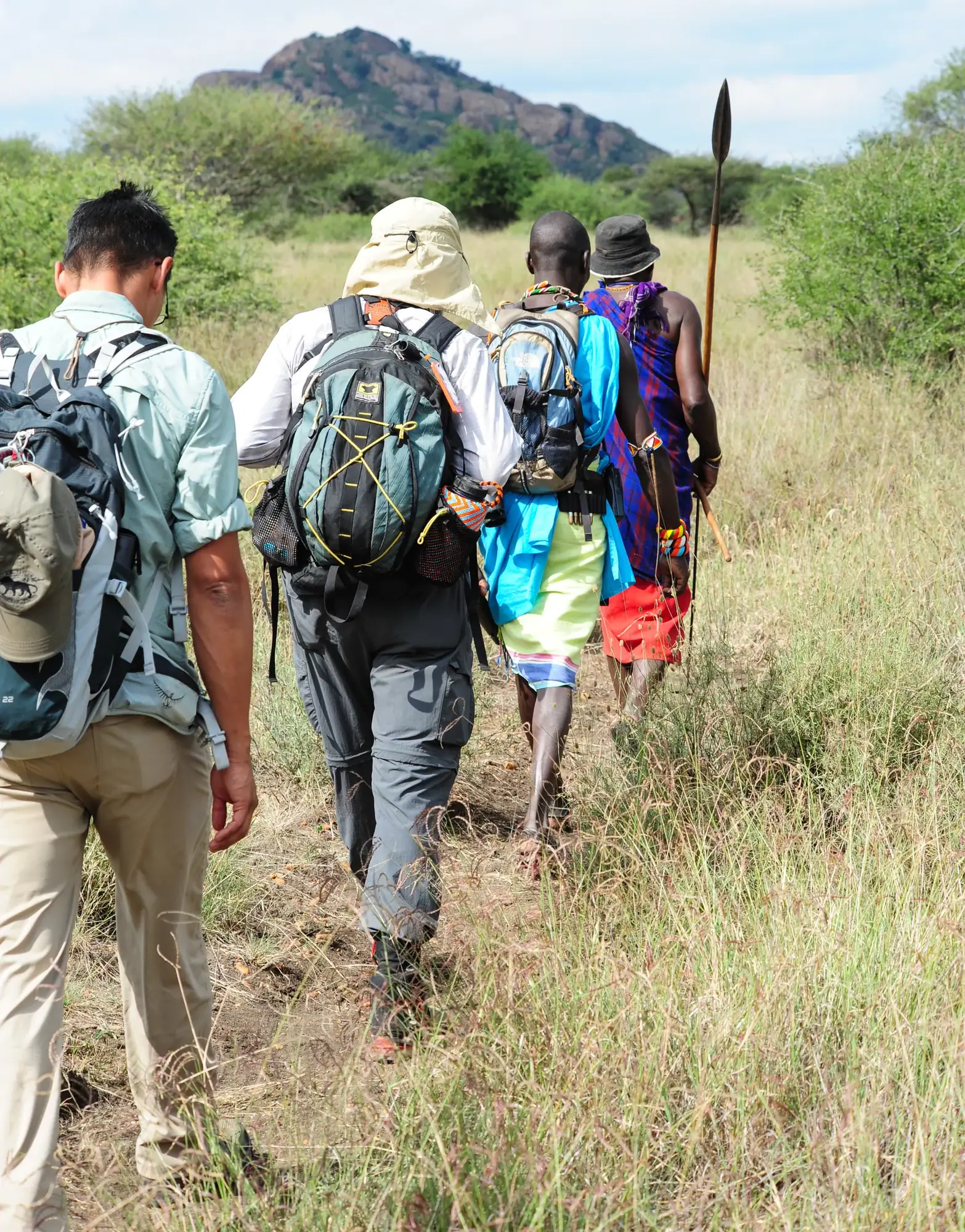
- Walk a stretch of the shore path between villages with your guide, greeting people as you go
- Visit a landing beach in the morning, when the boats come in
- Climb the island's central hill, a few hours' round trip on foot with a guide, for views over the islands toward Uganda's waters
- Eat fried tilapia or omena with ugali at a beach kitchen; our Lake Victoria fish page explains the fish
- Take a boat on to Takawiri, a small island with a sand beach, on the way back to Rusinga
Getting there and where to stay
| Boat | From | Roughly | Notes |
|---|---|---|---|
| Public boat | Mbita | About an hour | Cheap and crowded; few life jackets; we do not use them for guests |
| Private speedboat | Mbita or Rusinga | 30 to 45 minutes | Life jackets provided; go early before the afternoon wind |
Rusinga is the usual base: Rusinga Island Lodge or a guesthouse in Mbita, with Mfangano as a long day out. A small upmarket camp has operated on Mfangano itself, and the island has simple local guesthouses; ask us what is open when you travel. Bring cash in small notes for guide fees and donations, sun protection, water and closed shoes for the rock-art paths. Malaria and bilharzia risks are the same as on Rusinga: nets and repellent, and no swimming off the beaches.
Is Mfangano for you?
Mfangano suits travelers who like walking, history and quiet: people who loved Lamu's lanes, students of archaeology or anthropology, and Kenyan-Americans with Suba or Luo roots who want to see the island villages. It does not suit anyone who needs smooth roads, air-conditioning or a full itinerary. Our western Kenya itinerary builds it in with Rusinga, Kisumu and Kakamega, and our Rusinga page covers the larger island next door.