The coast. Updated November 2026. 4 min read.
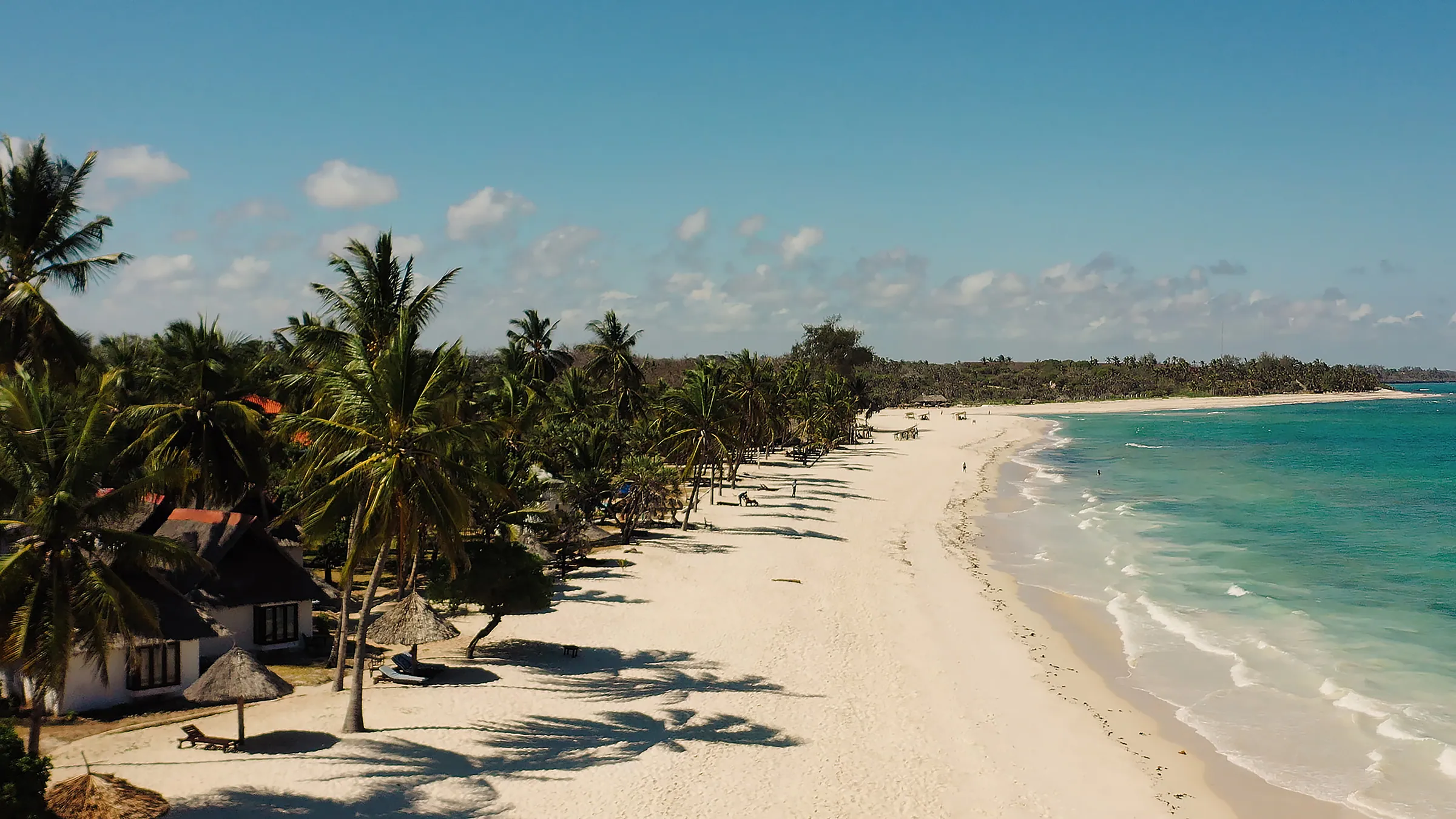
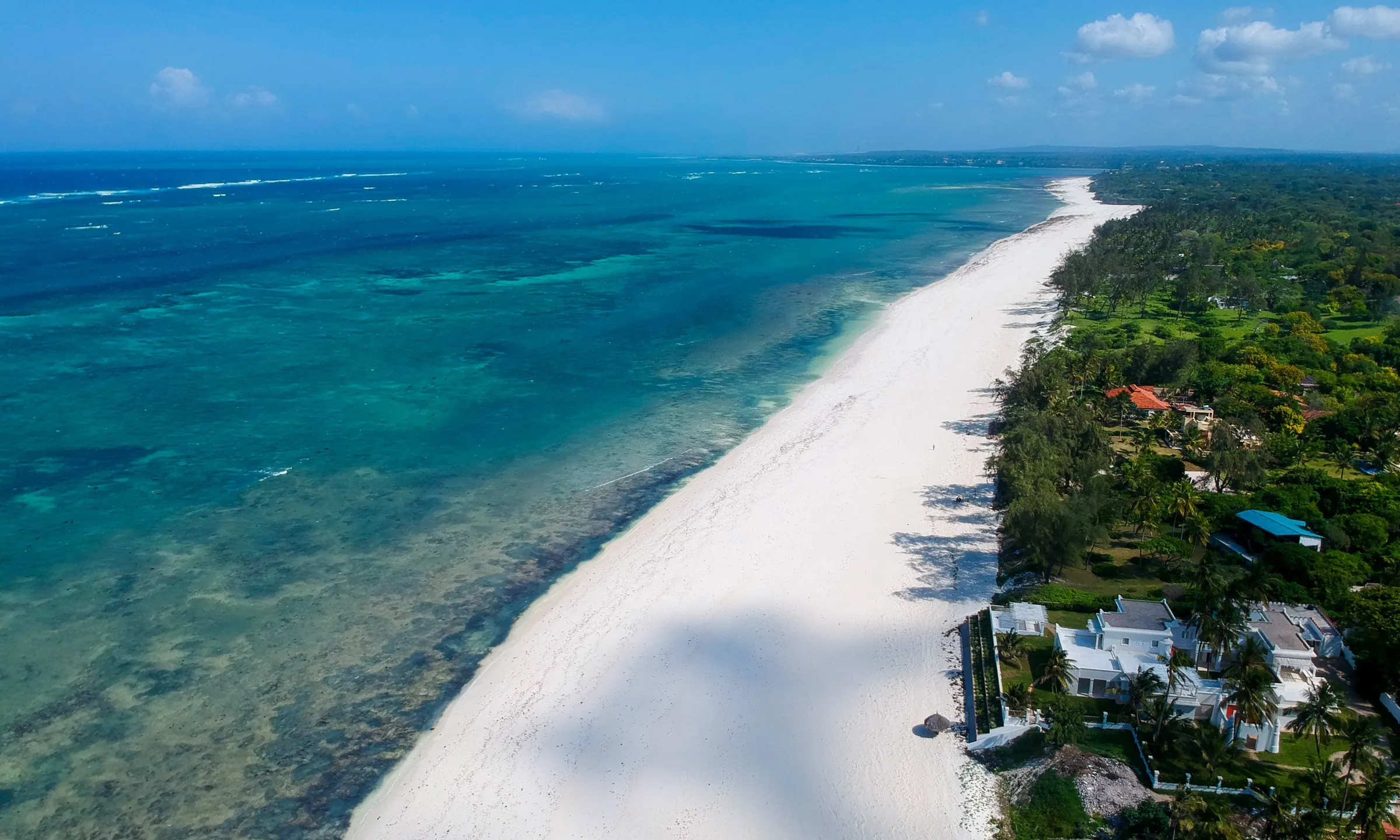
Keep walking south along Diani beach and something changes. The big hotels fall behind, the sand widens, the beach vendors thin out, and the sky fills with kites. Galu is Diani's southern continuation, and for two seasons of the year it is one of the best places to learn kitesurfing in East Africa.
The short answer: stay at Galu if you want to kitesurf, if you want Diani's white sand with more space and less noise, or if you are a group renting a villa. You lose the restaurants on foot of central Diani, but they are ten minutes away by tuk-tuk. Come between December and March or June and September for wind, and any time outside the long rains for quiet. Our Diani page covers the whole beach; this one is about its quiet end.
Where Galu is
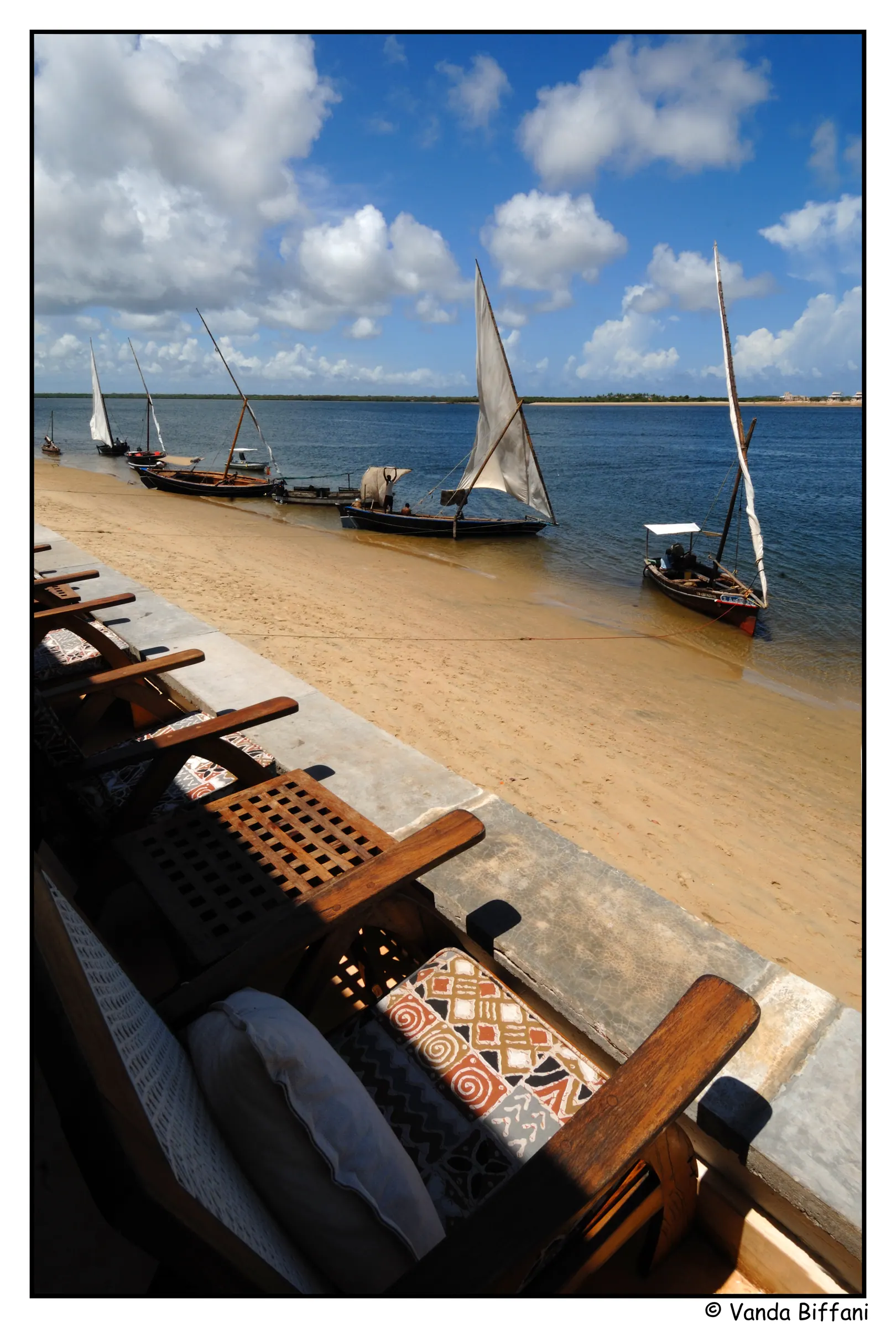
Galu begins where the central Diani strip ends and runs south toward Kinondo, in Kwale County. The beach road continues behind it with a handful of lodges, villas behind high walls and stretches of coastal bush where colobus monkeys cross on rope bridges. Ukunda's airstrip, banks and supermarkets are 15 to 20 minutes north.
Kitesurfing at Galu
Two trade winds make Galu a kite beach. The kaskazi blows from the north-east from about December to March: warm, steady and the main season. The kusi blows from the south-east from about June to September: stronger and cooler, better for riders who already know what they are doing. Behind the reef, the lagoon gives flat, shallow water at mid to high tide, which is ideal for learning. At low tide it drains, so the schools time lessons by the tide table, and on some days you will ride at dawn and on others after lunch.
| Months | Wind | What it means for you |
|---|---|---|
| December to March | Kaskazi, north-east | The main season: warm, steady wind and calm seas for everything else |
| April and May | Light and changeable; the long rains | Unreliable for kiting; some lodges close for part of May |
| June to September | Kusi, south-east | The second season: stronger, cooler, best for confident riders |
| October and November | Changing over | Patchy wind; good for snorkeling and quiet beach days |
Most schools teach beginners in a course of several sessions over three to five days, starting on the sand with a trainer kite before you go in the water. Ask whether the instructor is certified by an international body such as IKO, whether radio helmets and rescue boats are used, and what the price includes. Experienced riders can rent kit and ride the outer reef with a local guide. Bring a rash vest and reef shoes, and plenty of reef-safe sunscreen.
Beyond the kite: the reef and the low tide
- Walk the reef at low tide: rock pools, starfish, small octopus and sea cucumbers; wear reef shoes and touch nothing
- Snorkel at high tide in the lagoon, or take a boat to the outer reef with a licensed operator
- Paddleboard or kayak on the flat lagoon water early in the morning
- Look for whale sharks offshore from about November to February, on a trip that keeps its distance
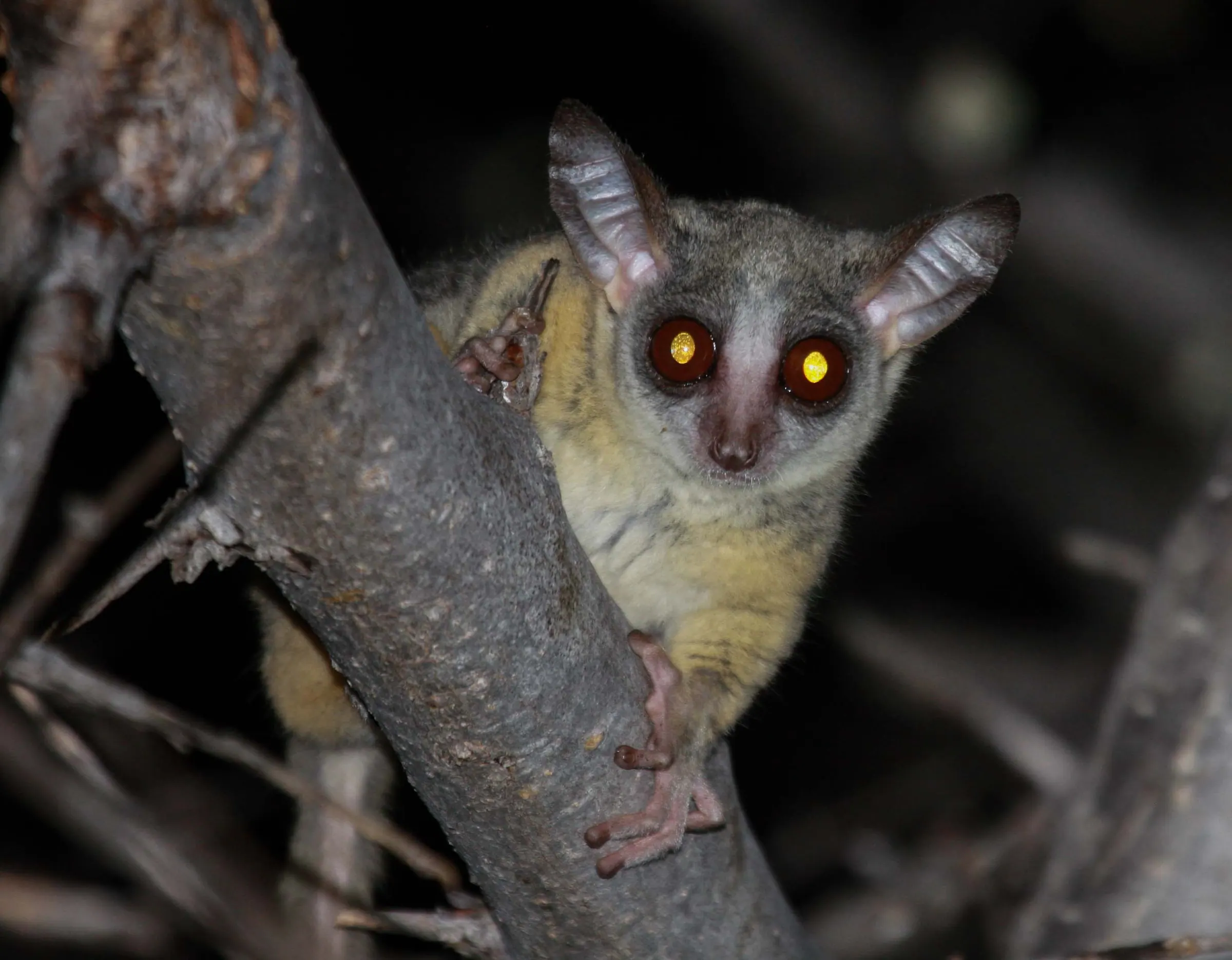
- Watch for bushbabies in the trees at dusk, and colobus monkeys in the gardens by day
Kinondo village and Kaya Kinondo
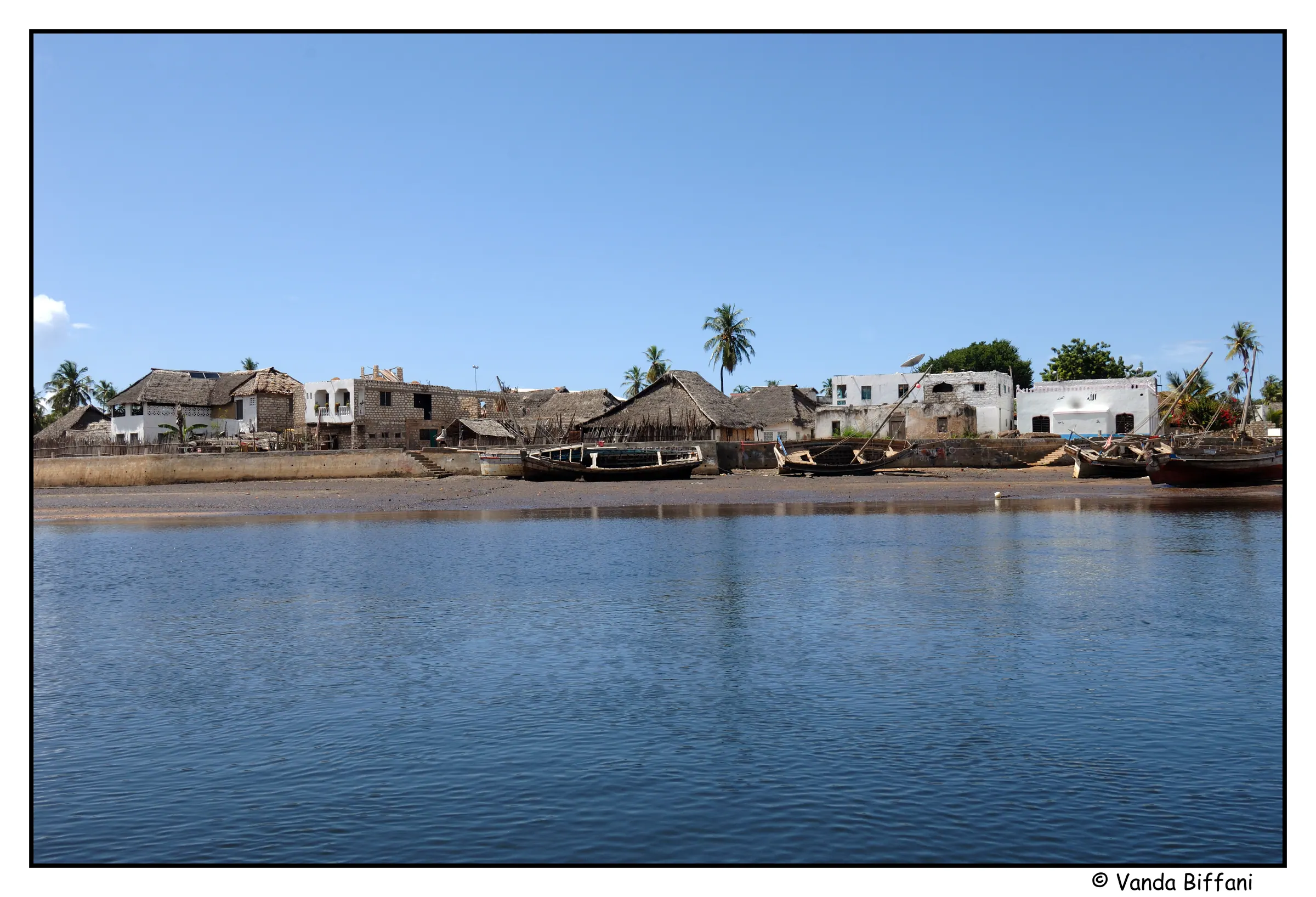
Just south of Galu is Kinondo, a Digo farming and fishing village, and behind it a block of tall forest that is Kaya Kinondo, one of the sacred Mijikenda forests on UNESCO's World Heritage list. The Digo community runs guided visits: you wrap a cloth around your waist at the entrance, follow your guide's rules, and learn why the forest has survived when so much of the coast's woodland has not. Our page on the kaya forests explains their history; for a Galu stay, it is a two-hour morning that most visitors remember longest. Village walks with a local guide are also possible; dress modestly and buy your fruit and snacks there.
Where to stay
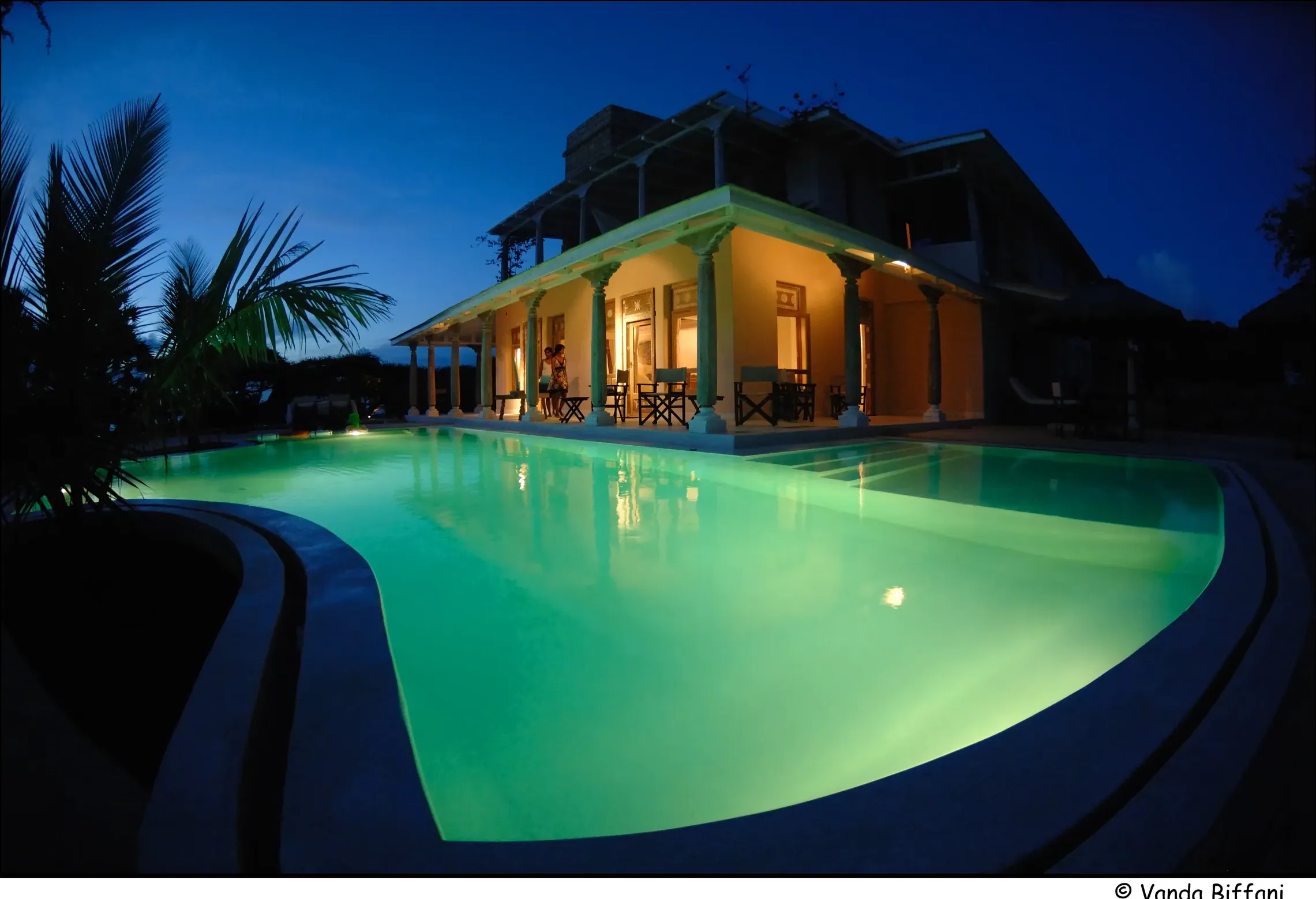
Galu's places to stay are small. Kenyaways is a relaxed kitesurf lodge, in the budget to mid-range band, with a school on the beach. Galu Sea Lodge is a mid-range beach lodge for quiet beach time. Private villas with pools and staff suit families and groups who want a house of their own. A little further south, Kinondo Kwetu is a boutique hotel at over $500 a night. Our where-to-stay guide for Diani compares all of them with the rest of the beach.
Galu or central Diani?
Stay central if you want restaurants, bars and shops on foot and do not plan to hire a driver. Stay at Galu if the wind, the space or a villa matters more. The two are about ten minutes apart, and tuk-tuks run along the beach road all day, so you can sleep at Galu and eat in the middle of Diani without trouble.
Getting there
| From | How | Time |
|---|---|---|
| Nairobi Wilson | Scheduled flight to Ukunda airstrip, then road | About 1 hour 15 in the air, then 15 to 20 minutes |
| Maasai Mara airstrips | Direct flights to Ukunda in season | About 90 minutes, then 15 to 20 minutes |
| Mombasa airport | Road via the Dongo Kundu bypass or the Likoni ferry | About 1.5 to 2 hours |
| Central Diani | Tuk-tuk or car along the beach road | About 10 minutes |
Practical notes
- Kites and swimmers share the lagoon: swim away from the launch areas
- Tides matter for every activity, so keep a tide table on your phone
- Many lodges close for maintenance in May
- Carry shillings for tuk-tuks, tips and village shops
- Take malaria tablets and use repellent at dusk
Why plan with us: Kenya Experience is Kenyan-led, with two U.S. companies behind it and Kenyan guides on the ground. You can pay in full or monthly with no deposit, and a specialist replies within two business days.