
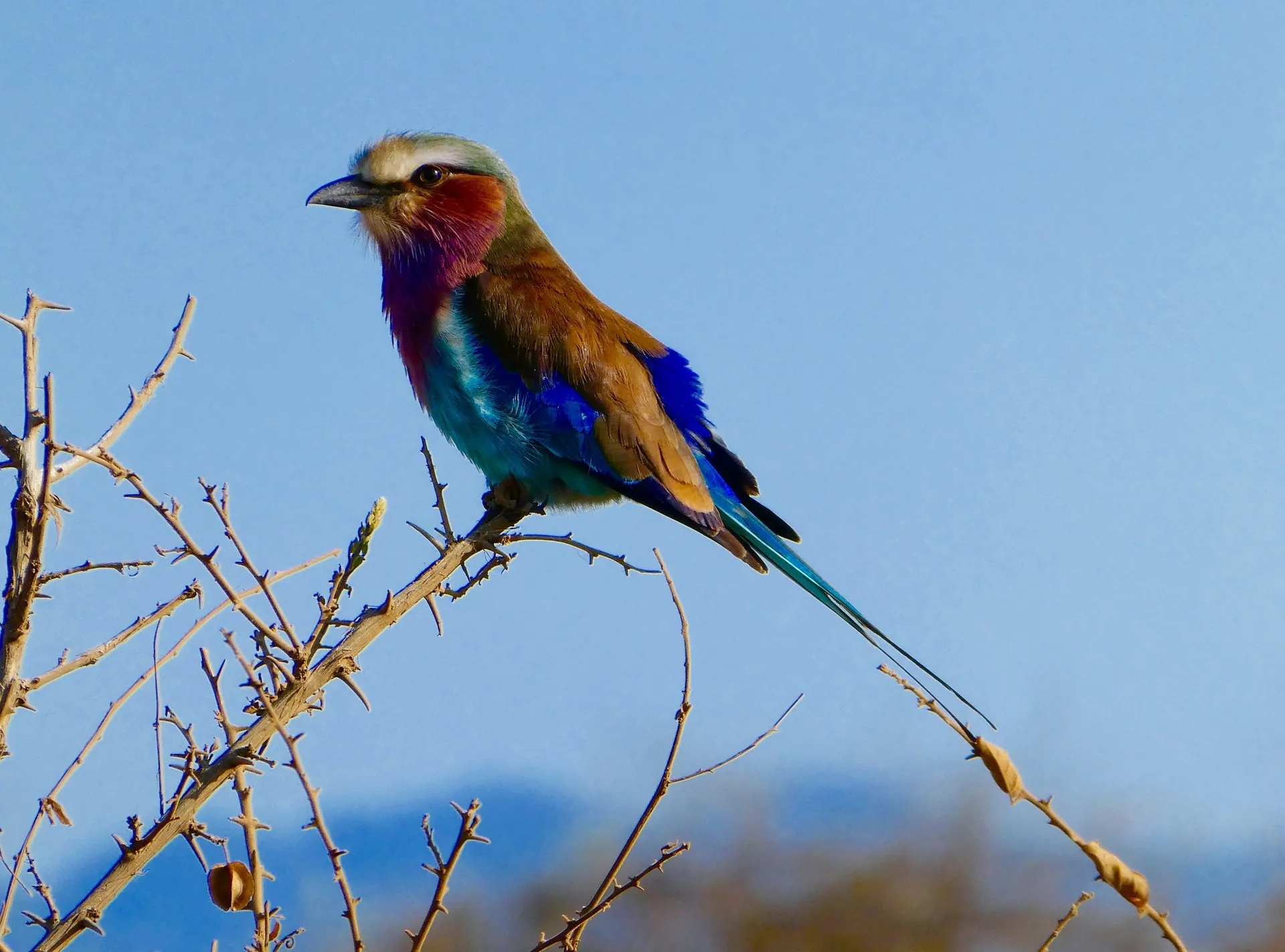
Wildlife. Updated November 2026. 3 min read.
A brown, hammer-headed wader with a flat bill and a backward crest. Hamerkop (Scopus umbretta) is 56 cm long and common and not threatened. Its nest can be two metres across and weigh 50 kg; many African traditions treat the bird as unlucky to harm.
Where to see Hamerkop
- Lake Naivasha: A freshwater lake of hippos, fish eagles and flower farms, and the easiest weekend out of Nairobi.
- Maasai Mara: Kenya's most famous reserve: the Great Migration from July to October and the densest big-cat country in Africa all year.
- Nairobi: The safari capital: a national park inside the city limits, elephant orphans, giraffes and the best food and nightlife in East Africa.
- Kisumu: Kenya's lake city: fresh tilapia at Dunga, boat trips to Ndere Island and the gateway to Rusinga, Mfangano and Kogelo.
- Samburu: The dry north: the Samburu Special Five, elephants on the Ewaso Nyiro and the red-robed Samburu people.
Hunts frogs in shallow water; builds an enormous domed nest of sticks and rubbish in a tree. It is widespread enough that a standard safari finds it without trying; the best months are Jan, Feb, Mar, Jun, Jul, Aug, Sep, Oct.
How to identify it
A brown, hammer-headed wader with a flat bill and a backward crest. Size: about 56 cm, crow-sized or larger. Family: hamerkop. Hunts frogs in shallow water; builds an enormous domed nest of sticks and rubbish in a tree.
Status and conservation
Hamerkop is common and not threatened. No special measures are needed to see it, and your park fees support the habitats it uses.
On a Kenya Experience trip
Our guides carry binoculars and the East African field guide in every vehicle, and our birding itineraries put a specialist bird guide in the front seat. For Hamerkop we would start at Lake Naivasha and Maasai Mara. Tell us the species on your list and we build the days around them.