KESCA. Updated November 2026. 7 min read.
You are about to put your sixteen-year-old on a plane to Kenya without you. Maybe you grew up there and know exactly what the roads are like. Maybe you have never been and everything you know comes from the news. Either way, the question is the same: who will be with my child, and what happens if something goes wrong? This page answers that as plainly as we can, before you pay anything.
The short answer. KESCA is run by Kenya Experience, a collaboration of two U.S. companies: GCK Travel, which handles groups, schools and the program team, and Roundtrip Safaris, which prepared the 2027 itinerary and runs operations in Kenya. Staff come from both the United States and Kenya. Participants aged 16 and 17 travel only with a parent or guardian's written consent, in a chaperoned cohort with supervised rooms, a named program lead and safeguarding contact, vetted hosts and vehicles, and a 24-hour line. Before you book, check the current U.S. State Department advisory for Kenya and confirm your travel insurance covers your route.
The route, county by county
Knowing exactly where your child will be each night is the first thing most parents ask for. The 2027 itinerary moves through eight counties, and the itinerary page lists every overnight. We send families the confirmed list before departure, with the emergency contact sheet.
| KESCA stop | County | Nights, roughly |
|---|---|---|
| Nairobi | Nairobi | On arrival and before the flight home |
| Naivasha and Nakuru | Nakuru | Days 3 to 8 |
| Lake Bogoria | Baringo | Day 9 |
| Iten or Eldoret | Elgeyo-Marakwet or Uasin Gishu | Days 10 and 11 |
| Kericho | Kericho | Day 12 |
| Kisii, for Nyanchonori and Nyankoba | Kisii | Days 13 and 14 |
| Maasai Mara | Narok | Days 15 to 17 |
| Mombasa | Mombasa | Days 18 and 19 |
Before you book, check the current U.S. State Department advisory for Kenya and confirm your travel insurance covers your route. Our page on school trip safety covers how we think about risk for young travelers in more depth.

Supervision for 16 and 17 year olds
The program agrees its safeguarding arrangements in writing before departure, and final age bands and staff ratios are confirmed before enrolment, so ask us for them when you book. What is fixed:
- A named program lead and a named safeguarding contact for the cohort
- Chaperoning at all times for under-18s, with no free time without an adult
- Supervised accommodation and rooming, with curfews and room checks
- Headcounts and buddy groups at every move, and a transport roster for every vehicle
- Emergency contacts and response procedures agreed before anyone flies
- Host school activities run under that school's own safeguarding policy
- Program rules on supervision and conduct form part of the booking, and a participant whose behavior puts others at risk can be sent home
Where they sleep, who they meet, how they travel
Properties are chosen for the cohort size, dietary needs, supervised rooming and access. The named proposals include Lake Naivasha Sopa Resort and Voyager Beach Resort in Mombasa, or equivalents, with a Nairobi hotel with secure access at the start and end, and hotels or lodges in Nakuru, near Bogoria, Iten or Eldoret, Kericho, Kisii and the Mara. During the village days, the group sleeps in a Kisii hotel; household visits happen only by invitation, and there is no unsolicited home entry. No property has been reserved yet.
Transport is by vetted vehicles, and the transport provider confirms every leg against the actual roads and stops. Drive times on the itinerary are planning allowances, and optional activities are never added to already full travel days. The group flies from the Mara to Mombasa, possibly through Nairobi, and back to Nairobi before the international flight, with an extra night in Nairobi to protect the international departure.
Activities, and the right to sit one out
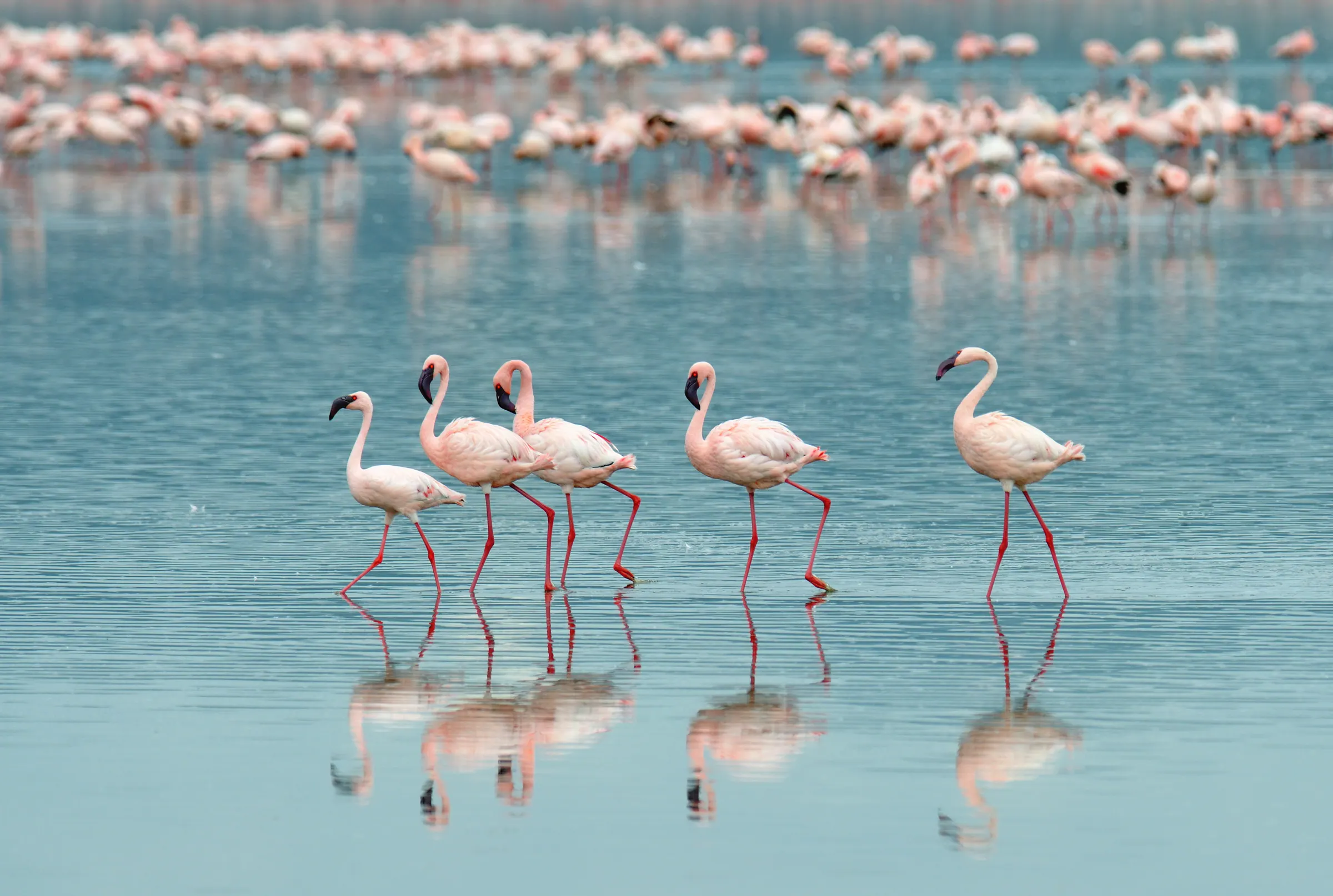
- Boat trips on Lake Naivasha with a licensed operator, correctly fitted life jackets and approved passenger limits; no swimming in the lake
- The geothermal spa at Olkaria is optional, with a non-bathing option always available
- Hell's Gate walking or cycling only if park staff approve the conditions and the group has the equipment and ability
- Running in Iten is optional and easy-paced; your child can observe instead
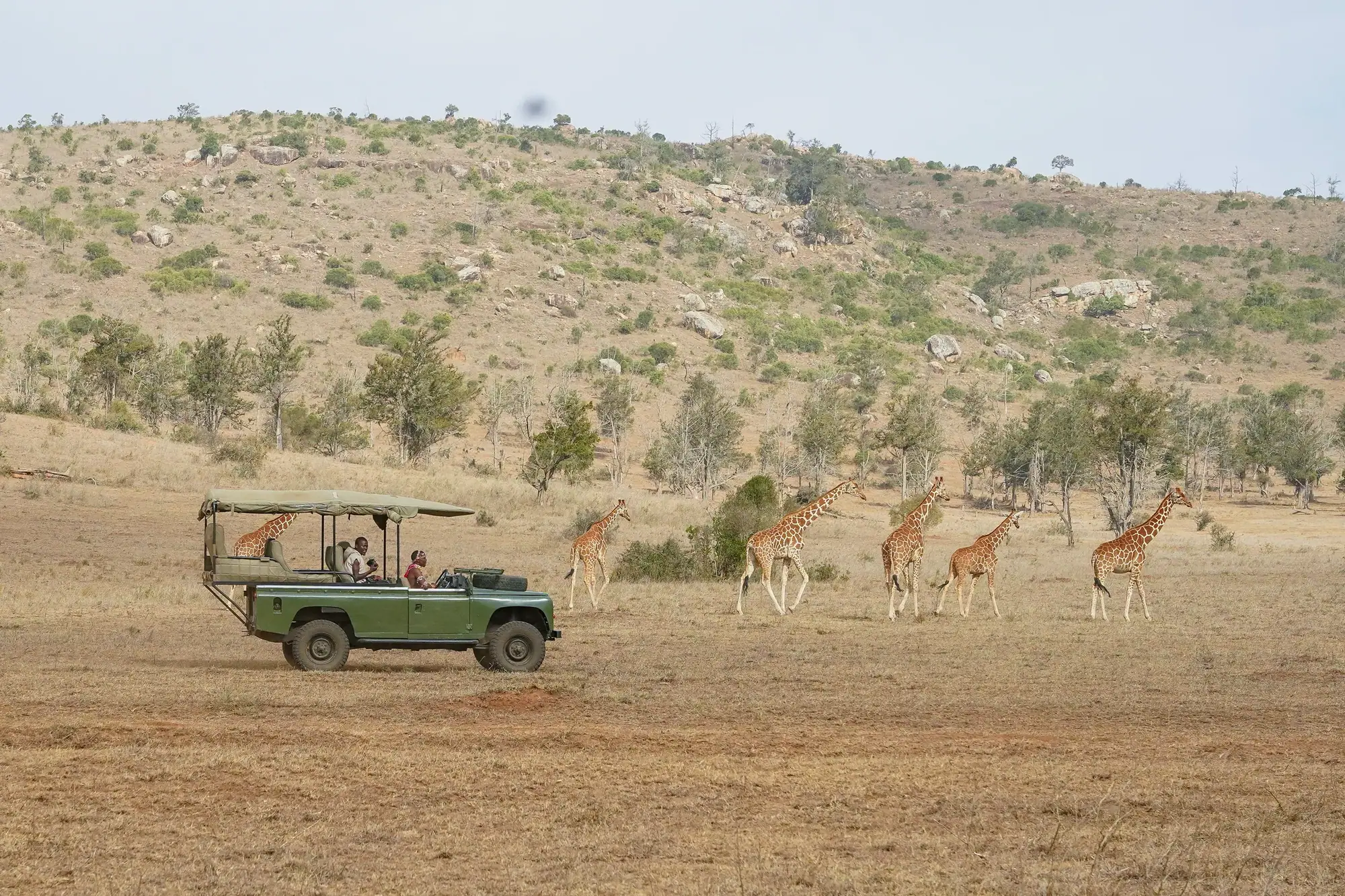
- Game drives follow the guide's rules; nobody approaches wildlife on foot outside approved places
- Ballooning in the Mara is an optional extra only for eligible participants, with separate price, age and insurance checks
- No spear activities, livestock handling or participation in sacred practices is assumed, and taking part in any cultural activity is never required
Health and medical cover
Book a travel health consultation well before departure, ideally 6 to 8 weeks out, to review the itinerary, routine immunizations, malaria prevention and yellow fever. Prescribed medication travels in its original packaging, in hand luggage, with enough for the whole trip. Tell the program team about allergies, dietary needs and any condition you want staff to know about; we ask only for what keeps your child safe.
Kenya Experience trips include emergency evacuation cover through a flying-doctor service and a 24-hour line. That does not replace insurance. Since October 6, 2026 every visitor to Kenya, children included, must also buy Kenya's inbound health insurance on eCitizen, about $44 plus fees at the time of writing, before the eTA is issued. And buy comprehensive travel insurance that covers medical treatment, emergency evacuation and repatriation, cancellation, baggage and the activities on the itinerary; our Booking Conditions ask for the policy details before travel. Our travel insurance guide explains how the three layers fit together.
How you will hear from us
| When | What you get |
|---|---|
| After you pay | A Stripe receipt straight away and our confirmation email with your reference; every later email to a participant under 18 copies you |
| Before departure | A pre-departure briefing, the dates, the emergency contact sheet and the family communication schedule |
| In Kenya | A managed WhatsApp group, set up with your consent and your child's, with updates on the agreed schedule |
| If your child is unwell or hurt | A call from the program team, not a group message |
| If plans change for safety | A message to every family, with the reason |
| When you need someone now | The 24-hour line |
Personal information stays out of public posts, and no photograph in which your child can be identified is used in our marketing without your consent. Enroll your child's trip in STEP, the State Department's free alert service, so the U.S. Embassy in Nairobi can reach them too.
The paperwork
| Document | What to do |
|---|---|
| Passport | Valid for at least six months after entry with at least one blank page. At 16 and 17, U.S. passports are adult-style but the application is made in person, with parental awareness |
| Kenya eTA | Needed by most non-exempt visitors, children included, on the official etakenya.go.ke portal only. A child with a valid Kenyan passport checks their own exemption |
| Kenya inbound health insurance | Bought on eCitizen before the eTA is issued, about $44 plus fees at the time of writing |
| Guardian consent | The program's written consent form, signed by a parent or guardian, who also accepts the Booking Conditions for the child |
| Travel consent letter | A signed letter from both parents or guardians allowing the child to travel without them, ideally notarized; airlines and immigration can ask for it |
| Insurance | Your comprehensive policy details, sent to the program team before travel |
| Contacts and health | Emergency contacts, and any medical or dietary information you choose to share |
What to pack
The itinerary page has the full list. The essentials: passport and copies, prescribed medication in original packaging, phone, charger and plug adapters, a reusable water bottle and bags, sun protection, insect repellent, a journal and a small day pack, with everything for the first 48 hours in carry-on. Clothes: layers for cold highland mornings, a light rain jacket, walking shoes, modest everyday clothes for villages and Mombasa's Old Town, and swimwear for pools and supervised beach time. Small aircraft may have lower baggage limits, and Kenya bans plastic carrier bags, so pack in soft bags without plastic.
The cost in plain words
At the time of writing the program fee is $6,900 per participant; the itinerary page always shows the current fee. It covers the academy, transport in Kenya, accommodation, meals, park fees and the conference. International flights are booked separately with our help, and the eTA, the Kenyan health insurance, travel insurance, vaccinations, tips, drinks and spending money are extra. You pay in full, or in equal monthly payments starting the day you book and finishing by May 1, 2027, with no deposit, no interest and no fee.
If you cancel, our Booking Conditions apply: 91 days or more before departure, a refund of everything paid minus a $250 administration fee and any supplier costs we cannot recover; 61 to 90 days, 50 percent of the price; 60 days or fewer, 100 percent. On a monthly plan, the remaining payments stop when you cancel, and we never ask for more than you have paid. If we cancel, you choose a comparable alternative or a full refund.
What your child gets
Three weeks of Kenya that is neither a family visit nor a tourist trip: Kenyan peers, community hosts, the Rift Valley, tea country, a village that chose its own service project, the Mara and the Swahili coast. Practical Swahili most days. A journal and portfolio. A capstone presented at the Ideas Exchange, the KESCA Certificate of Completion at the Vyeti Awards, and a place in the alumni network.