
Comparisons. Updated November 2026. 3 min read.
Amboseli or Samburu? Choose Amboseli if you have less time: it is the shorter drive from Nairobi; choose Samburu if you want the dry-north species: Grevy's zebra, reticulated giraffe, gerenuk. They are in different parts of Kenya, so doing both means a flight or a long drive between them. Here is the side-by-side: what each is for, what it costs, when to go, how you get there and how they combine.
| Amboseli | Samburu | |
|---|---|---|
| Best for | Big-tusked elephants crossing dry lakebeds under Kilimanjaro, clearest at dawn. | The dry north: the Samburu Special Five, elephants on the Ewaso Nyiro and the red-robed Samburu people. |
| Wildlife | big elephant herds; lions, leopards and cheetahs; exceptional birding | the Samburu Special Five; big elephant herds; lions, leopards and cheetahs |
| Daily fee | $90 per adult per day | $70 per adult per day (county reserve) |
| From Nairobi by road | 230 km, 4.5h | 345 km, 6h |
| Flights | about 40 min from Wilson | about 75 min from Wilson |
| Best months | Jan, Feb, Jun, Jul, Aug, Sep, Oct | Jan, Feb, Mar, Jun, Jul, Aug, Sep, Oct |
| Climate | Hot and dry for most of the year, with short sharp rains that turn the dust green within days | Hot, dry and bright, with the rivers deciding where the wildlife is |
| Malaria risk | moderate | moderate |
| Where to stay | Lodges inside the park, tented camps on the Kimana and Selenkay group ranches to the east, and budget camps outside the gates. | Riverside lodges and tented camps in Samburu and Buffalo Springs, plus a luxury camp or two in Shaba. |
Choose Amboseli if
- You have less time: it is the shorter drive from Nairobi.
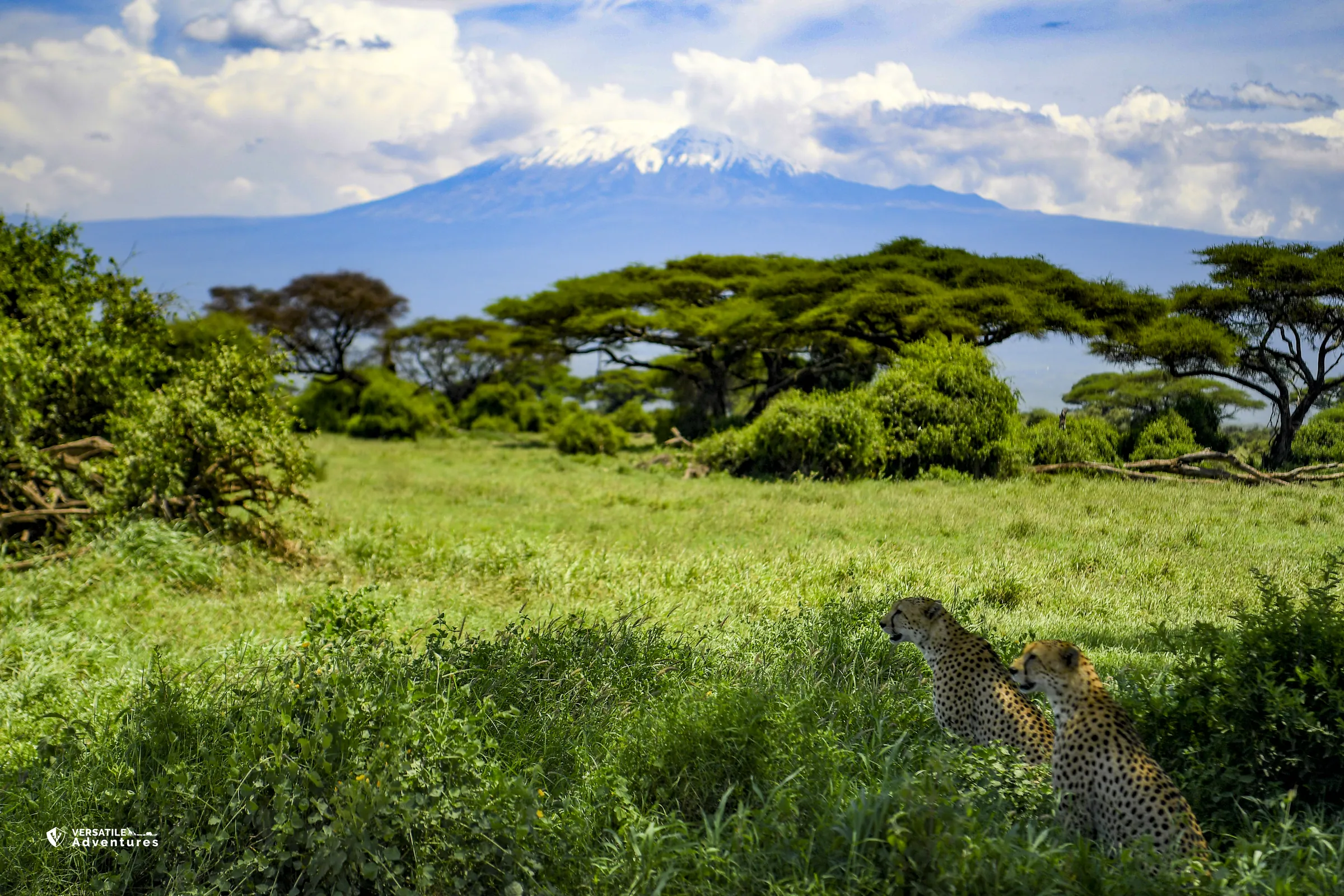
Big-tusked elephants crossing dry lakebeds under Kilimanjaro, clearest at dawn. The things people go for: elephant herds at the Enkongo Narok swamp; kilimanjaro views from Observation Hill at dawn; birding on the lake flats; a Maasai homestead visit outside the park.
Choose Samburu if
- You want the dry-north species: Grevy's zebra, reticulated giraffe, gerenuk.
The dry north: the Samburu Special Five, elephants on the Ewaso Nyiro and the red-robed Samburu people. The things people go for: grevy's zebra, reticulated giraffe, beisa oryx, gerenuk and Somali ostrich; elephants bathing in the Ewaso Nyiro; leopards along the river; a Samburu village visit.
When to go to each
Amboseli's best months are Jan, Feb, Jun, Jul, Aug, Sep, Oct; Samburu's are Jan, Feb, Mar, Jun, Jul, Aug, Sep, Oct. Both are at their best in January, February, June, July and more, so a trip that includes both works in those months. The weather differs: Amboseli and Tsavo is hot and dry for most of the year, with short sharp rains that turn the dust green within days, while Samburu and the northern rangelands is hot, dry and bright, with the rivers deciding where the wildlife is. Each place's month pages give the detail for your exact dates.
Cost
Daily fees: $90 per adult per day at Amboseli, against $70 per adult per day (county reserve) at Samburu. Beyond the fee, the lodge tier you choose decides the cost: budget camps run about $150 to $300 per person per night, mid-range $300 to $600 and luxury $600 to $1,500, in either place. Spending a day at either costs about the same once the lodge is chosen. Both have airstrips, so flying is possible to either.
Doing both
Amboseli and Samburu are far apart. The practical pairing is a flight between them or a night in Nairobi in the middle, which most 10-day itineraries can absorb; on a week or less, pick one.