Month by month. Updated November 2026. 3 min read.
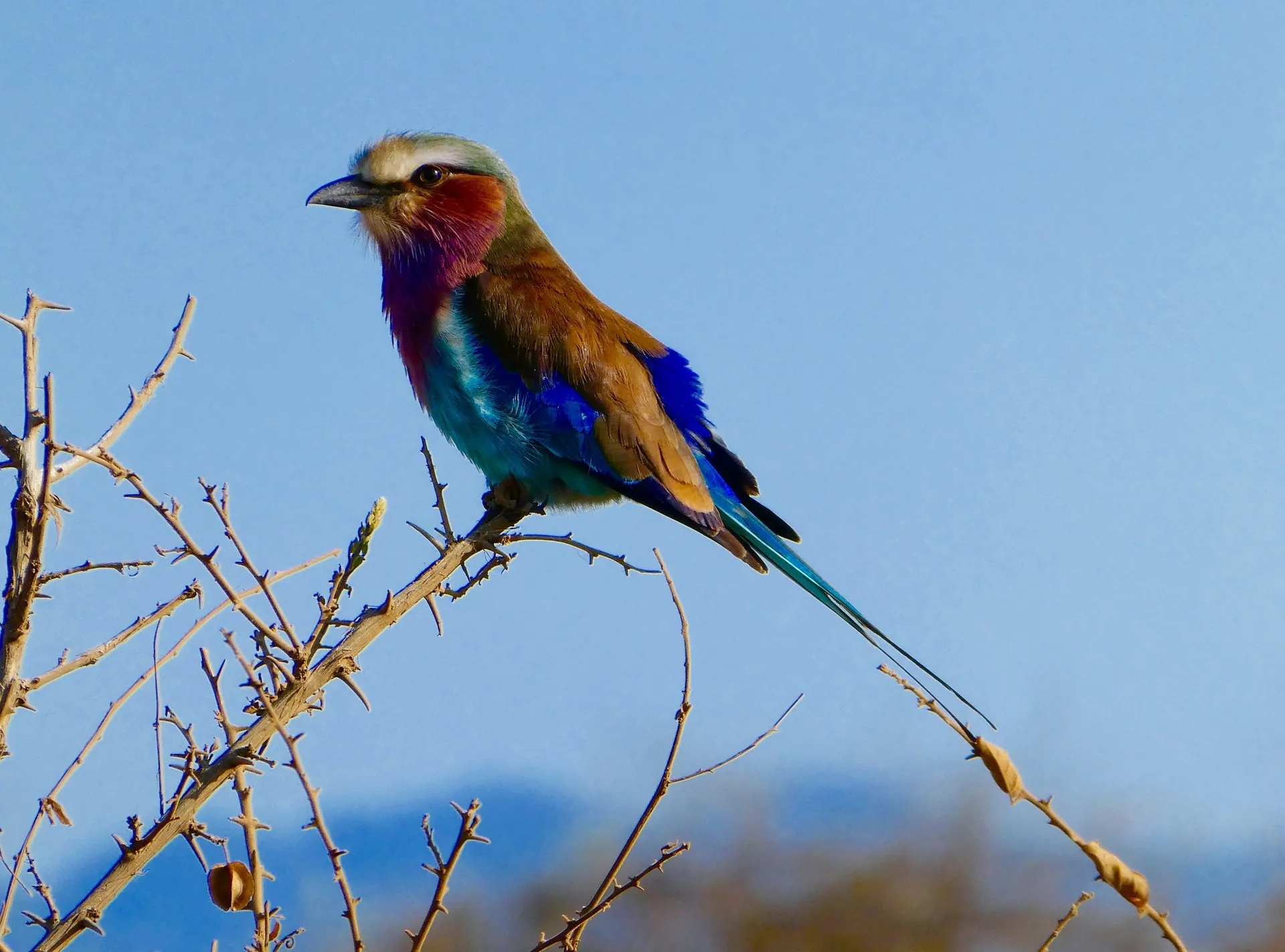
February is a strong month for birdwatching in Kenya. Lake Baringo, Lake Nakuru, Kakamega Forest, Arabuko-Sokoke, Mida Creek, Samburu are at their best. Across the country it is a quiet month with low lodge rates. Here is the weather where it matters for birdwatching, the places that work in February, what is on, and how to plan it.
February weather where it matters for birdwatching
| Region | Day / night | Rain | Feel |
|---|---|---|---|
| The Rift Valley lakes | 82°F / 51°F | 1.8 in | A few showers |
| Western Kenya and the lake basin | 88°F / 63°F | 3.5 in | Some afternoon showers |
| The Indian Ocean coast | 91°F / 75°F | 0.6 in | Almost no rain |
| Samburu and the northern rangelands | 94°F / 69°F | 0.4 in | Almost no rain |
Where to go for birdwatching in February
- Lake Baringo (best month): A freshwater Rift lake of 470 bird species, hippos, crocodiles and boat trips to the Njemps islands.
- Lake Nakuru (best month): Kenya's surest rhino sighting, a soda lake of pelicans and flamingos, and tree-climbing lions.
- Kakamega Forest (best month): Kenya's last rainforest: 400 bird species, blue monkeys, colobus and 400 kinds of butterfly.
- Arabuko-Sokoke Forest (best month): The largest coastal forest in East Africa: Sokoke scops owl, Clarke's weaver, golden-rumped sengi and forest elephants.
- Mida Creek (best month): A mangrove boardwalk, crab plovers and sunset canoes on the tidal creek behind Watamu.
- Samburu (best month): The dry north: the Samburu Special Five, elephants on the Ewaso Nyiro and the red-robed Samburu people.
What is on in February
- The Magical Kenya Open golf (usually February or March)
- The warmest, driest weeks of the year
Planning birdwatching in February
The Palaearctic migrants are in, so species counts peak; the Rift lakes and the coast's creeks are at their fullest. The month page for each place above has the detail.