KESCA. Updated November 2026. 5 min read.
You are nineteen, a sophomore, and your Kenya is the one in your parents' stories and the family group chat. You know the food and some of the words. What you have not had is Kenya as an adult: a university seminar with Kenyan students your age, a day in a tea factory asking how the price of a kilo of leaf is set, an evening in a Mara camp arguing about who conservation is for. That is what the college track is built to give you.
In short: the KESCA college and university track is for ages 18 to 23. It shares the 21-day 2027 itinerary with the other tracks, but the emphasis is peer leadership and study pathways, with service learning and research exposure along the route. KESCA was developed with the University of Nairobi as part of the Kenya Cultural Diplomacy Initiative, and day three proposes an exchange with its Department of Diplomacy and International Studies. You can book and pay yourself, in full or monthly with no deposit; the fee at the time of writing is $6,900, with flights separate.
The University of Nairobi connection, stated carefully
The University of Nairobi is Kenya's oldest and largest public university, and the KESCA program was developed with it. On the 2027 itinerary, the morning of day three is a proposed exchange with the Department of Diplomacy and International Studies: identity, diaspora connections, civic responsibility and youth leadership, discussed with Kenyan students and faculty. We describe it as confirmed only once the university's current written scope is received, and if the university cannot receive the group that year, a locally hosted youth dialogue takes its place. No institutional endorsement is implied by any visit on the route.
That care is worth noticing as a student. Every school, factory, training camp, village and civic visit on the itinerary needs written permission from its host, with dates, content, fees and photography agreed. You will see how serious exchange is arranged, which is a lesson in itself if you plan to study, work or do research in Kenya later.
What you study on the road
The itinerary is a field course in all but name. Most stops carry a question a college student can take further, and the portfolio you build gives you somewhere to put it.
| Stop | The learning | Fits students of |
|---|---|---|
| Olkaria, Naivasha | A proposed KenGen session on geothermal power and its other uses | Engineering, environmental science, energy policy |
| Hyrax Hill, Nakuru | Archaeological evidence, settlement patterns and how historians read objects and landscapes | History, anthropology, archaeology |
| Menengai Crater | Rift Valley geology, and how geological evidence differs from oral tradition | Geology, geography, African studies |
| Nakuru civic visit | A requested State House visit, or a county civic learning session if it is not approved | Political science, public policy |
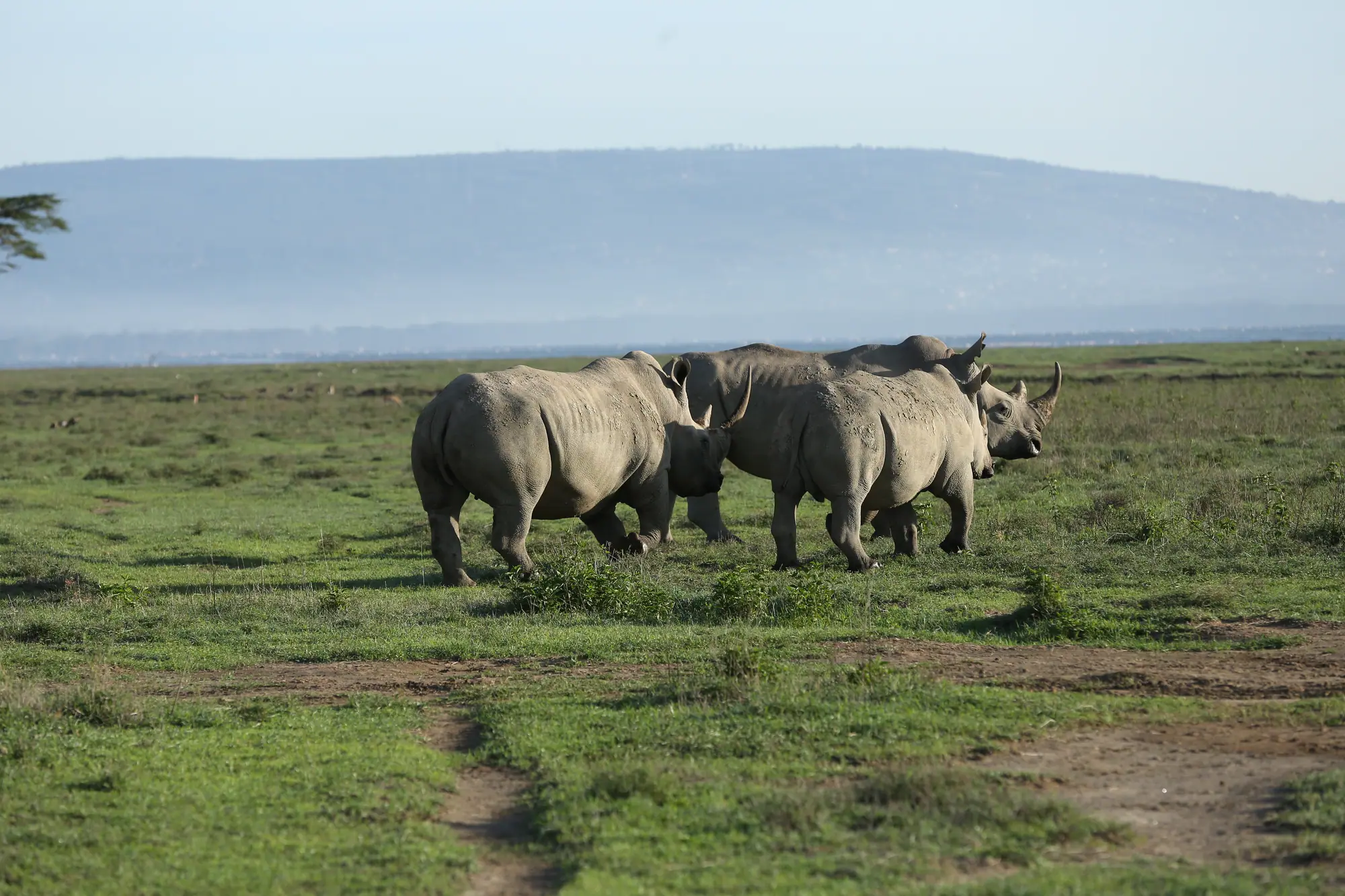
| Lake Nakuru and the Mara | Rhino conservation, habitat management, and the roles of reserves, conservancies and communities | Biology, conservation, development studies |
| Iten | Training routines, education and the business of athletics | Sports science, kinesiology, business |
| Kericho and Nyankoba | The tea chain from smallholder leaf to factory to market, and what weather and trade do to farm incomes | Economics, agriculture, supply chains |
| Fort Jesus and Old Town | Indian Ocean trade and the meeting of Swahili, African, Arab, Asian and European histories | History, religion, architecture |
Peer leadership: what changes at 18
The high school track is chaperoned at every moment. The college track is not, but it is still a group program with agreements, curfews and conduct rules that form part of the booking. What the older track adds is responsibility. Expect to facilitate parts of the daily reflection, to lead conversation in the school and youth exchanges rather than sit in them, and to take a real role in your portfolio team. Your Kenyan peers will often be university students too, and the best exchanges happen when you treat them as colleagues, not hosts.
Credit and your home university
KESCA is not a credit-bearing course on its own, and we do not issue transcripts. Some students do turn it into credit through their own university, usually as an independent study, a service-learning requirement or a directed reading in African studies, history or public policy, assessed by their own faculty. If that is your plan, talk to your department and your study abroad office before you book, not after.
- Ask whether your university needs to approve travel to Kenya. Many universities have an international travel office that reviews student travel, especially if credit or university funding is involved
- Bring the itinerary PDF from the itinerary page, the academy outline and the list of learning stops to the meeting
- Agree in writing what you will submit: the journal, a research paper built on your portfolio, or your capstone
- Ask us for the written route and emergency plan your office will want for an approval file
Swahili at your level
The academy teaches Swahili in three levels, from beginner greetings to conversational Swahili, and in Kenya most learning days include 20 to 30 minutes of practical language, used straight away with hosts and peers. Many heritage students understand far more than they speak. Tell us honestly where you are and we will place you; that is how you get the most out of it. If you want to keep going after the program, our guide to learning Kiswahili covers courses in Nairobi and online.
Service learning and research exposure
The service days in the Nyanchonori and Nyankoba communities follow a principle you will meet in any good service-learning course: the community defines a useful, achievable activity, local people supervise it, and the group records what was done and who maintains it. There is no construction, clinical work or child care role, and no promise of impact that cannot be measured. Research exposure comes through field notebooks at Lake Nakuru and in the Mara, structured observation in markets and factories, and questions you take to guides, hosts and faculty. KESCA does not run formal research projects; if you want to come back to do one, our page on research permits explains the Kenyan process.
After KESCA
Graduates join the KESCA Alumni Network of Kenyan-American leaders, mentors and future program staff. For college students the network is a practical tool: older alumni who have done internships in Nairobi, worked in Kenyan startups or applied to graduate school with a Kenya focus are the people to ask. If you want to return for longer, our pages on internships in Kenya and study abroad in Kenya are the next step.

Cost and the plan, for students paying their own way
At 18 you can book yourself. The fee at the time of writing is $6,900, covering the academy, transport in Kenya, accommodation, meals, park fees and the conference; international flights, the eTA, insurance, tips and spending money are extra. A summer job and the monthly plan together are how many students do it.
| If you book in | Monthly payments | Each payment |
|---|---|---|
| November 2026 | Up to 6 | $1,150 |
| December 2026 | Up to 5 | $1,380 |
| January 2027 | Up to 4 | $1,725 |
| February 2027 | Up to 3 | $2,300 |
| March 2027 | 2 | $3,450 |
| April 2027 | Pay in full | $6,900 in one payment |