
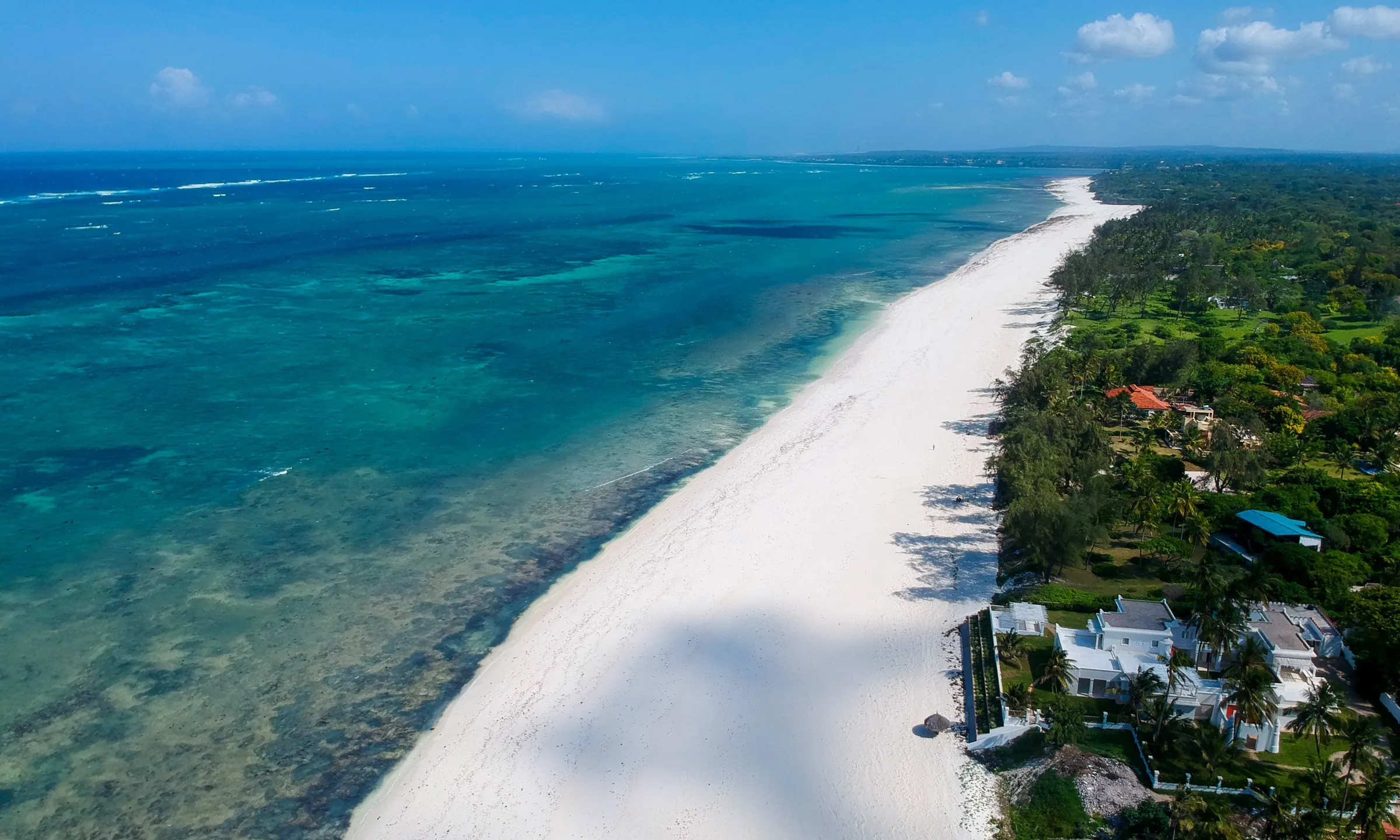
Month by month. Updated November 2026. 3 min read.
August in Watamu is the cool dry season in Kenya: typically warm days around 82°F, warm nights near 70°F and some afternoon showers, about 2.5 inches over the month. For Watamu that makes August one of the best months.
A marine park, turtle nesting beaches, the Gedi ruins and the best deep-sea fishing on the coast. August sits inside the place's best window, so this page covers the weather you will actually get, what the wildlife is doing, how busy and expensive it is, what to pack and whether a different month or a different place would serve you better.
Weather in Watamu in August
The Indian Ocean coast sits at sea level, hot and humid all year, with the heaviest rain in April and May and the clearest water from December to March. In August the typical daytime high is 82°F and the night low 70°F, with roughly 7 days that see rain, mostly brief. Day-to-night swings are moderate. This is the dry season: dusty tracks, clear mornings and the most reliable driving conditions of the year.
| August | July (before) | September (after) | |
|---|---|---|---|
| Daytime high | 82°F | 82°F | 83°F |
| Night low | 70°F | 71°F | 71°F |
| Rainfall | 2.5 in | 3.0 in | 2.6 in |
| Wet days | about 7 | about 8 | about 7 |
| Crowds | busiest | busy | busy |
| Lodge rates | peak | peak | peak |
Wildlife and what to do in Watamu in August
Humpbacks, turtle hatchlings and the steady kusi wind for kitesurfers; comfortable temperatures.
Reliable dry-season birding, with raptors on thermals over the plains.
- Snorkelling the marine park.
- Turtle releases with Local Ocean Conservation.
- The Gedi ruins.
- Mida Creek at sunset.
- Deep-sea fishing for sailfish and marlin.
Crowds and prices in August
Across Kenya, August is the busiest month of the year with peak rates. Entry in Watamu: Watamu Marine Park $17 per adult. Book the camps you want four to six months ahead; the best river and conservancy camps sell out for August. U.S. summer fares are high; the land cost is where the savings are, in the shoulder months either side.
For the full cost picture, including flights from your city, see the Kenya safari cost guide and the cost calculator. Watamu is a malaria area in every month; take prophylaxis.
What to pack for Watamu in August
- Reef-safe sunscreen, a rash vest for snorkelling and something to cover shoulders and knees in town
- Malaria prophylaxis started before you travel, repellent with DEET or picaridin and long trousers at dusk
- Binoculars (8x42 is the safari standard), a headlamp for camp paths and a power bank
Is August the right month for Watamu?
Yes. August is one of the months we recommend for Watamu. If you want the same weather with fewer people, July is the quieter neighbour.