Towns and places. Updated November 2026. 3 min read.
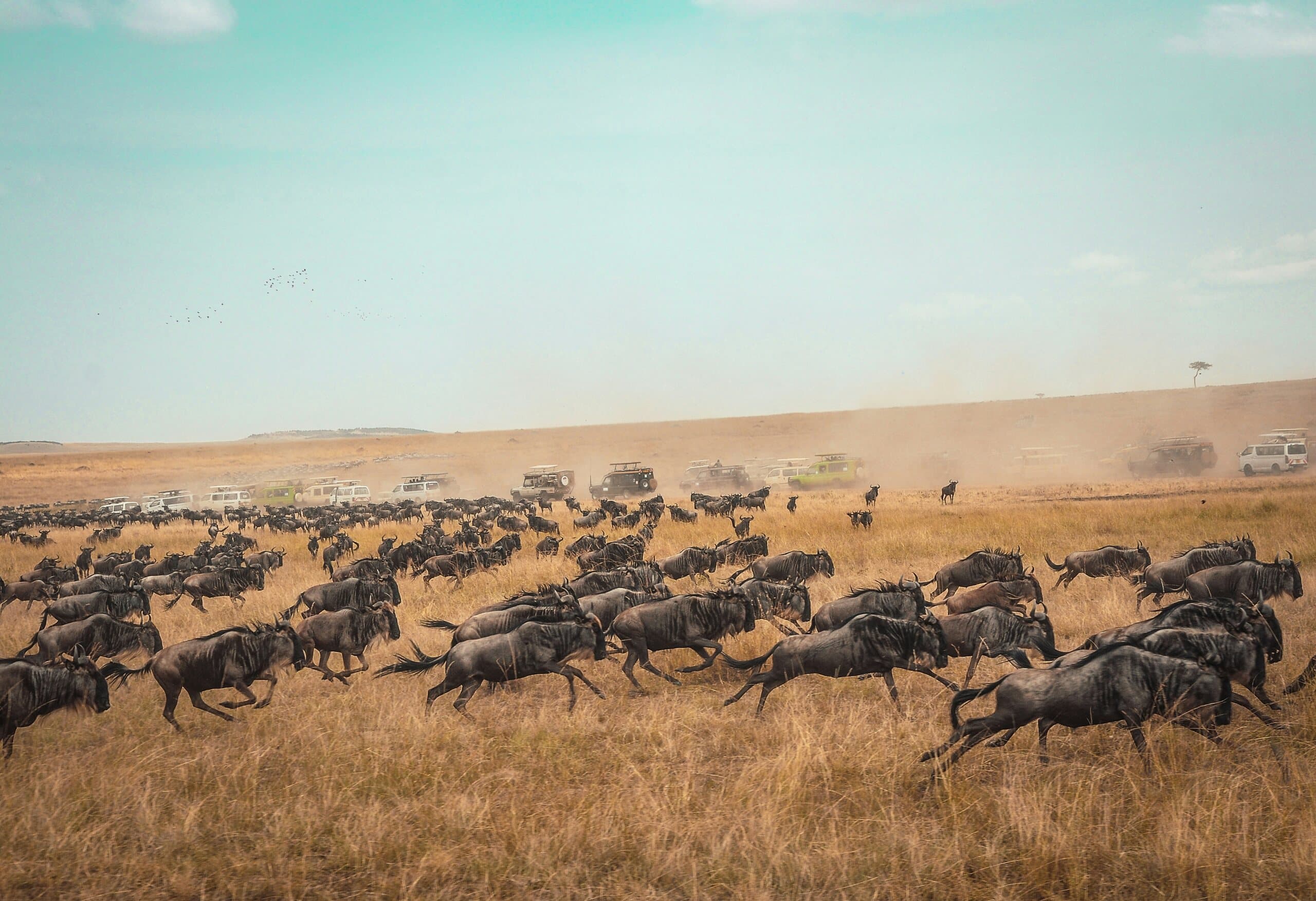
The Great Migration is in the Mara from about July to October, with peak river crossings in August and September. January–February is a quieter dry season with excellent predator viewing. Narok sits at about 6200 ft in the Maasai Mara, mild and often cloudy, with showers possible in any month and cold dawns from June to August. The driest month is typically July and the wettest April; the warmest is February at about 83°F.
Narok month by month
| Month | High | Low | Rain | What it is like |
|---|---|---|---|---|
| January | 82°F | 55°F | 2.5 in | Some afternoon showers; about 7 wet days |
| February | 83°F | 55°F | 2.8 in | Some afternoon showers; about 7 wet days |
| March | 82°F | 57°F | 4.3 in | Regular rain, usually in the afternoon or overnight; about 11 wet days |
| April | 79°F | 58°F | 6.5 in | Regular rain, usually in the afternoon or overnight; about 17 wet days |
| May | 78°F | 57°F | 5.3 in | Regular rain, usually in the afternoon or overnight; about 14 wet days |
| June | 77°F | 54°F | 2.4 in | Some afternoon showers; about 6 wet days |
| July | 76°F | 53°F | 1.8 in | A few showers; about 5 wet days |
| August | 77°F | 54°F | 2.2 in | Some afternoon showers; about 6 wet days |
| September | 79°F | 54°F | 2.6 in | Some afternoon showers; about 7 wet days |
| October | 80°F | 56°F | 3.3 in | Some afternoon showers; about 9 wet days |
| November | 79°F | 57°F | 5.1 in | Regular rain, usually in the afternoon or overnight; about 13 wet days |
| December | 80°F | 56°F | 3.6 in | Some afternoon showers; about 9 wet days |
The seasons
January and February are warm and dry almost everywhere in Kenya, and good months for Narok. The long rains run from late March to May, and they are heavy here: side roads turn to mud and some attractions are harder to reach. June to September is the cool dry season, the most reliable travel weather. October and November bring the short rains, usually as afternoon storms, and December dries out for the holidays, when Kenyans travel home in numbers and transport fills.
Events and harvests
Maasai culture is known for red shukas, fine beadwork and the adumu jumping dance, performed at the Eunoto warrior ceremony. The Maa Cultural Festival rotates among Narok, Kajiado and Samburu. Tourism around the Maasai Mara and livestock lead, with large-scale wheat, barley and maize farming.
What to pack
- Light clothing; evenings are mild.
- A rain jacket and closed shoes if you travel in April or the months around it.
- Repellent for the evenings; malaria risk is lower at this altitude.
- Sun protection year round; the equatorial sun is strong even on cloudy days.