
Towns and places. Updated November 2026. 3 min read.
The Maasai Mara is Kenya's most famous safari destination and the stage for the Great Migration. Narok runs from the Mau Forest down open savannah to the Tanzanian border. It is the heartland of the Maa-speaking peoples, whose lives are closely tied to the wildlife of the plains.
Here are the 8 things to do in Narok County that we would send a visitor to, in rough order of how often our travelers ask for them, followed by how to fit them into a trip.
1. Maasai Mara National Reserve
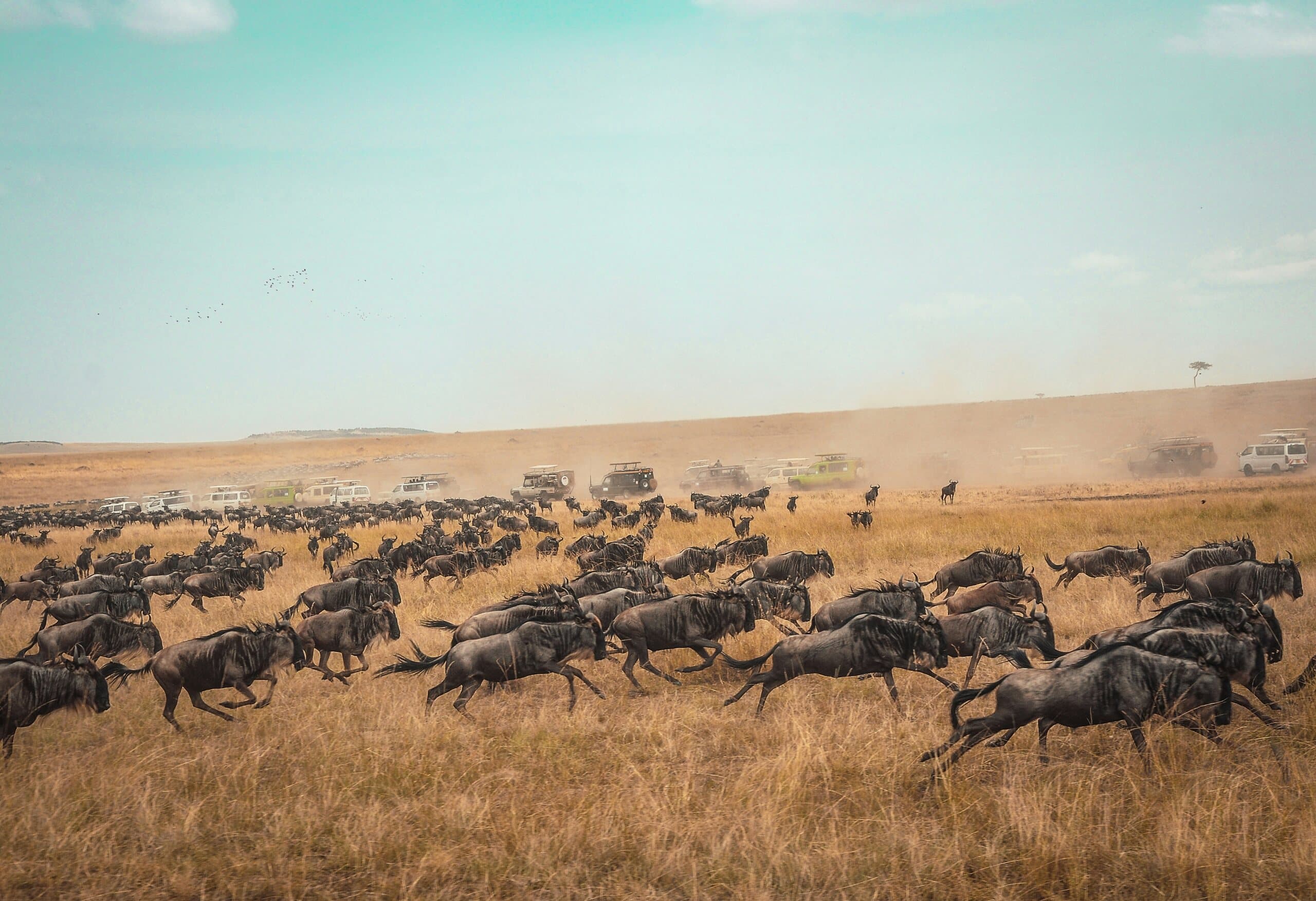
Big Five country, where the Great Migration arrives each year. This is the county's headline stop and the one to anchor a day around.
2. Mara River crossings
Wildebeest and zebra plunge through crocodile-filled waters. Pairs well with Mara Naboisho Conservancy, which is usually done the same day.
3. Mara Naboisho Conservancy
A Maasai-partnered conservancy with abundant wildlife. Pairs well with Olare Motorogi Conservancy, which is usually done the same day.
4. Olare Motorogi Conservancy
A low-density conservancy of gorge and acacia woodland. Pairs well with Ol Kinyei Conservancy, which is usually done the same day.
5. Ol Kinyei Conservancy
Springs, hills and savannah for game drives and walking safaris. Pairs well with Mount Suswa, which is usually done the same day.
6. Mount Suswa
A volcano with lava-tube caves to explore. Pairs well with Loita Hills, which is usually done the same day.
7. Loita Hills
Remote forest and plains for hiking and birdwatching. Pairs well with Narok Museum, which is usually done the same day.
8. Narok Museum
Exhibits on the traditional life of Maa-speaking peoples. A good last stop on the way out of the county.
Culture and daily life in Narok
Maasai culture is known for red shukas, fine beadwork and the adumu jumping dance, performed at the Eunoto warrior ceremony. The Maa Cultural Festival rotates among Narok, Kajiado and Samburu.
Tourism around the Maasai Mara and livestock lead, with large-scale wheat, barley and maize farming.
A day in Narok
| Time | Plan |
|---|---|
| Early morning | Maasai Mara National Reserve: Big Five country, where the Great Migration arrives each year. Go first, before the heat and the crowds. |
| Late morning | Mara River crossings: wildebeest and zebra plunge through crocodile-filled waters. |
| Lunch | Nyama choma from a roadside butchery in Narok or Kajiado, at a local restaurant in Narok or the nearest town. |
| Afternoon | Mara Naboisho Conservancy: a Maasai-partnered conservancy with abundant wildlife. |
| Late afternoon | Olare Motorogi Conservancy: a low-density conservancy of gorge and acacia woodland. |
| Evening | Maasai culture is known for red shukas, fine beadwork and the adumu jumping dance, performed at the Eunoto warrior ceremony. Ask your host where the music or the choma is that night. |
Nearby, and how to fit Narok into a trip
Narok is about 140 km from Nairobi (3 hours by road; see the getting-there page). The attractions above fill two full days comfortably, or one long one if you pick the first three. The best months are the great migration is in the mara from about july to october, with peak river crossings in august and september; the when-to-go page has the month-by-month weather.
- Maasai Mara, in the county: Kenya's most famous reserve: the Great Migration from July to October and the densest big-cat country in Africa all year.
- Olare Motorogi, in the county: The Mara's big-cat conservancy on the reserve's northern edge: five small camps, night drives and off-road driving.
- Mara North, in the county: The largest Mara conservancy, north of the Musiara area: big prides, the Leopard Gorge country and horse riding.
- Naboisho, in the county: Lion prides, walking safaris and fly camping, with the Koiyaki Guiding School training the Mara's guides.
- Ol Kinyei, in the county: The small conservancy that began the Mara model in 2005: two camps, cheetahs and almost nobody else.
- Bomet County, about 90 km away: Bomet holds the headwaters of the Mara River, which keeps the Maasai Mara alive.
- Nakuru County, about 120 km away: Olkaria opened in 1981 as Africa's first geothermal station.
- Kericho County, about 130 km away: Kericho is Kenya's best-known tea region, and tea is one of the country's top exports.
- Kajiado County, about 170 km away: Amboseli is one of the world's best places to see free-roaming elephants.
Who it suits
Safari travelers first; the county's parks and conservancies are the reason most visitors come. The Maasai Mara is Kenya's most famous safari destination and the stage for the Great Migration.