The coast. Updated November 2026. 4 min read.
Every Diani holiday passes through Ukunda, usually at speed: the plane lands at its airstrip, the transfer turns at its junction, and the beach hotels send a driver here for supplies. Stop for an hour and you find the town that actually runs the south coast.
Ukunda is the town behind Diani Beach, on the main road from Mombasa to the Tanzanian border, and it holds what the beach does not: the airstrip, the banks, the market, the matatu stage, the mosques and the homes of most of the people who work in Diani's hotels. For visitors it is useful in three ways: as the airport, as the place to sort out practical things, and as a cheaper base for a long stay. Our Diani guide covers the beach and its hotels, and our things to do in Diani guide covers the activities; this page is about the town.
The airstrip
Ukunda airstrip, often listed as Diani, is a small airport a few minutes from the beach road. Scheduled flights from Nairobi's Wilson Airport take about 1 hour 15 minutes, and in season there are direct flights from Maasai Mara airstrips in about 90 minutes, which makes a safari-and-beach trip simple. Light-aircraft luggage limits apply, usually soft bags only; our safari flight luggage page has the rules. From the airstrip, most hotels are 5 to 20 minutes away.
Getting around
| From Ukunda junction to | How | Time |
|---|---|---|
| Diani Beach hotels | Taxi, tuk-tuk or hotel transfer | About 5 to 20 minutes |
| Likoni ferry | Matatu or taxi north | About 30 to 45 minutes, plus the ferry queue |
| Mombasa Island | Likoni ferry or the Dongo Kundu bypass | About 1 to 1.5 hours |
| Moi International Airport | Dongo Kundu bypass | About 1.5 to 2 hours |
| Shimba Hills (Kwale Gate) | Road inland | About 30 to 45 minutes |
| Shimoni, for Wasini and Kisite | Road south | About 1 hour |
| Lunga Lunga, Tanzanian border | Road south | About 1.5 hours |
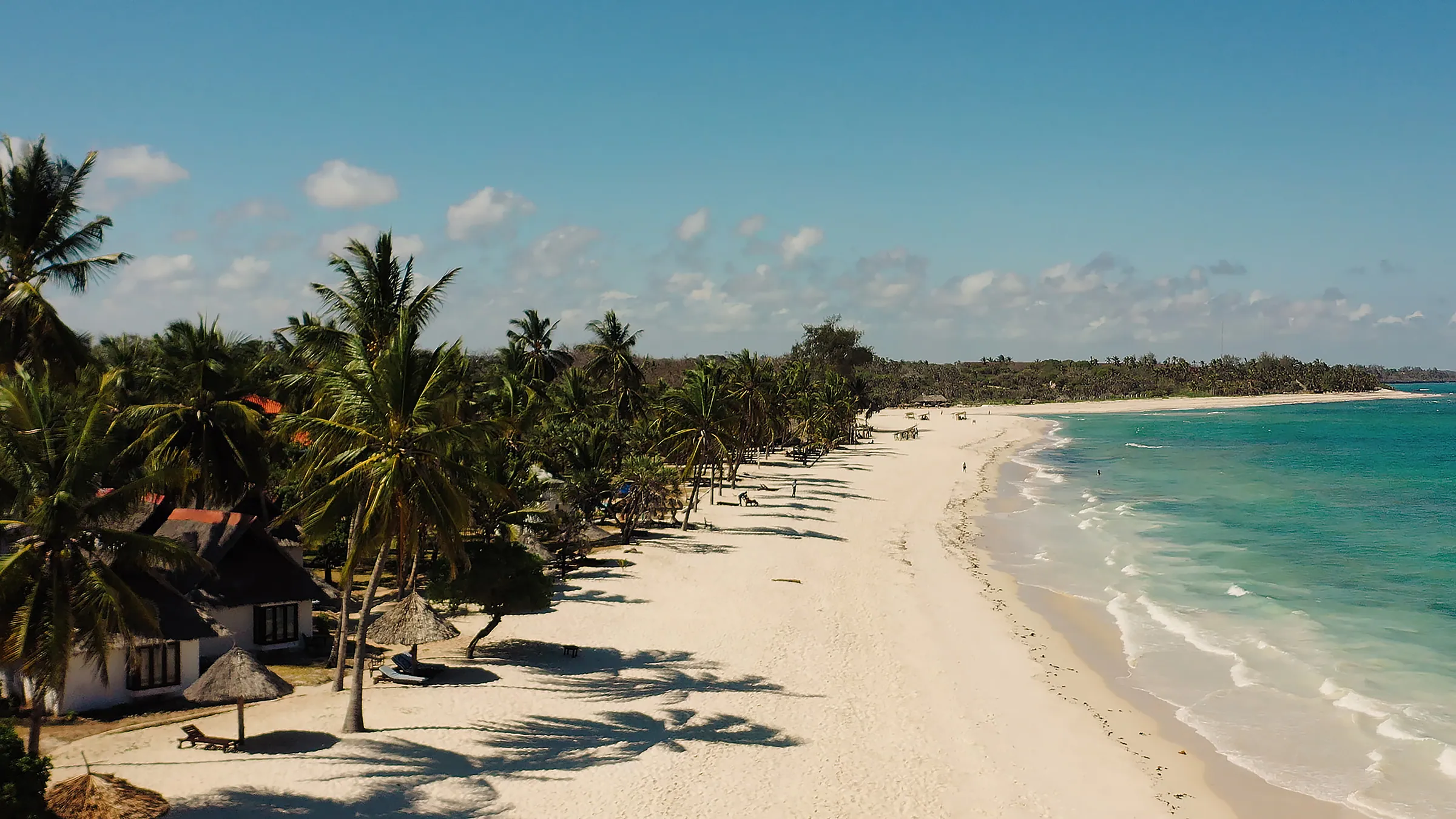
The Ukunda junction, where Diani Beach Road leaves the main road, is the hub. Matatus run north to the Likoni ferry and south toward Shimoni and the border. Tuk-tuks and boda bodas, the motorbike taxis, shuttle between the junction and the beach; agree the fare before you get in, and after dark prefer a taxi called by your hotel or a ride-hailing app, which work in much of the area.
Banks, shopping and practical things
- Cash: banks and ATMs cluster at the junction and along Diani Beach Road; M-Pesa agents are everywhere, and many shops and tuk-tuk drivers take mobile money
- Shopping: supermarkets at the shopping centres on Diani Beach Road, with a wider choice and lower prices than hotel shops
- Phones: buy a local SIM with your passport at an official mobile-network shop
- Health: clinics and pharmacies in Ukunda and Diani for everyday needs; for anything serious, Mombasa's hospitals are about an hour away
The market and street food
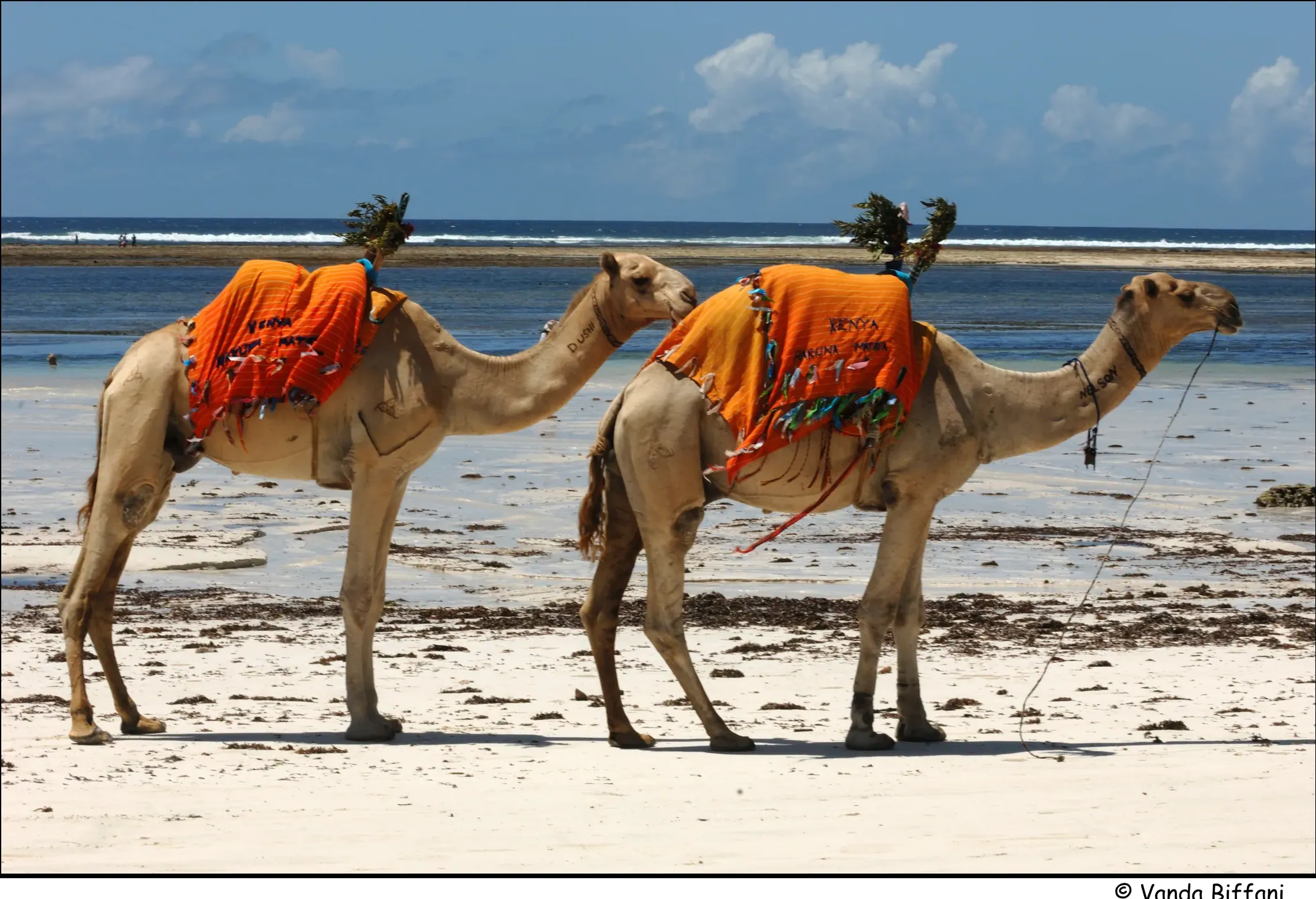
Ukunda's market is where the south coast shops: mangoes and pineapples in season, coconuts, cassava, limes, chillies, fresh fish and stacks of bright kanga and kikoi cloth. Walk it with a guide the first time, keep your phone in a front pocket and bargain with a smile. Then eat on the street: mahamri, the cardamom doughnuts of the coast, with sweet chai in the morning; viazi karai, potatoes fried in a spiced batter; mishkaki, grilled meat skewers; and cassava crisps with chilli and lime. Our Swahili food page explains the dishes.
Digo culture and the Kongo Mosque
Ukunda and Diani are Digo country. The Digo are one of the nine Mijikenda peoples, mostly Muslim, with Swahili as the language of the coast. The sacred Kaya Kinondo forest, south of Diani, can be visited with Digo guides who explain its rules. At the north end of Diani, where the Kongo River meets the sea, the centuries-old Kongo Mosque stands among baobabs; it is still a place of prayer, so view it from outside unless invited in, and dress modestly. In town, cover shoulders and knees, especially on Friday around midday prayers and during Ramadan, when eating in the street by day is impolite.

Ukunda as a budget base
Guesthouses and furnished apartments in and around Ukunda cost a fraction of beachfront hotels, and the beach is a short tuk-tuk ride away through the public access paths. It suits long stays, students, volunteers and diaspora travelers visiting family. The trade-offs are noise, the need for transport after dark and fewer facilities, so check for a mosquito net, a generator or backup power and secure parking. Our Diani stay guide compares the beach options if you would rather be on the sand.
When to go
The town works all year, but the south coast is at its best from October to March, with calmer seas and hot, clear days. The long rains usually fall from April to June, when some guesthouses close or drop their prices. From July to September the south-east kusi wind blows, the sea is rougher and Galu, just south of Diani, becomes a kitesurfing beach. Ramadan moves about eleven days earlier each year; check the dates, because the town's rhythm changes for the month, with quiet days and busy, food-filled evenings after sunset.
Staying safe
Use normal precautions: do not walk the beach road or the beach after dark, keep valuables out of sight in the market and use registered taxis at night. Before you book, check the current U.S. State Department advisory for Kenya and confirm your travel insurance covers your route.
Why plan with us: Kenya Experience is Kenyan-led, with two U.S. companies behind it and Kenyan guides on the ground. You can pay in full or monthly with no deposit, and a specialist replies within two business days.