
Month by month. Updated November 2026. 3 min read.
March in Nanyuki is the long rains in Kenya: typically warm days around 80°F, chilly nights near 54°F and some afternoon showers, about 2.0 inches over the month. For Nanyuki that makes March a good shoulder month, with the weather good enough and the crowds lighter than the peak.
The equator town under Mount Kenya: the base for Ol Pejeta, the Laikipia conservancies and the mountain itself. March sits outside the place's best window, so this page covers the weather you will actually get, what the wildlife is doing, how busy and expensive it is, what to pack and whether a different month or a different place would serve you better.
Weather in Nanyuki in March
The Laikipia plateau sits at about 5,900 to 6,500 ft, dry, sunny and crisp, with Mount Kenya on the horizon and cold nights under clear skies. In March the typical daytime high is 80°F and the night low 54°F, with roughly 5 days that see rain, mostly brief. Day-to-night swings are moderate. Roads are generally good.
| March | February (before) | April (after) | |
|---|---|---|---|
| Daytime high | 80°F | 80°F | 75°F |
| Night low | 54°F | 51°F | 55°F |
| Rainfall | 2.0 in | 0.9 in | 5.0 in |
| Wet days | about 5 | about 2 | about 13 |
| Crowds | quiet | quiet | very quiet |
| Lodge rates | low | low | lowest |
Wildlife and what to do in Nanyuki in March
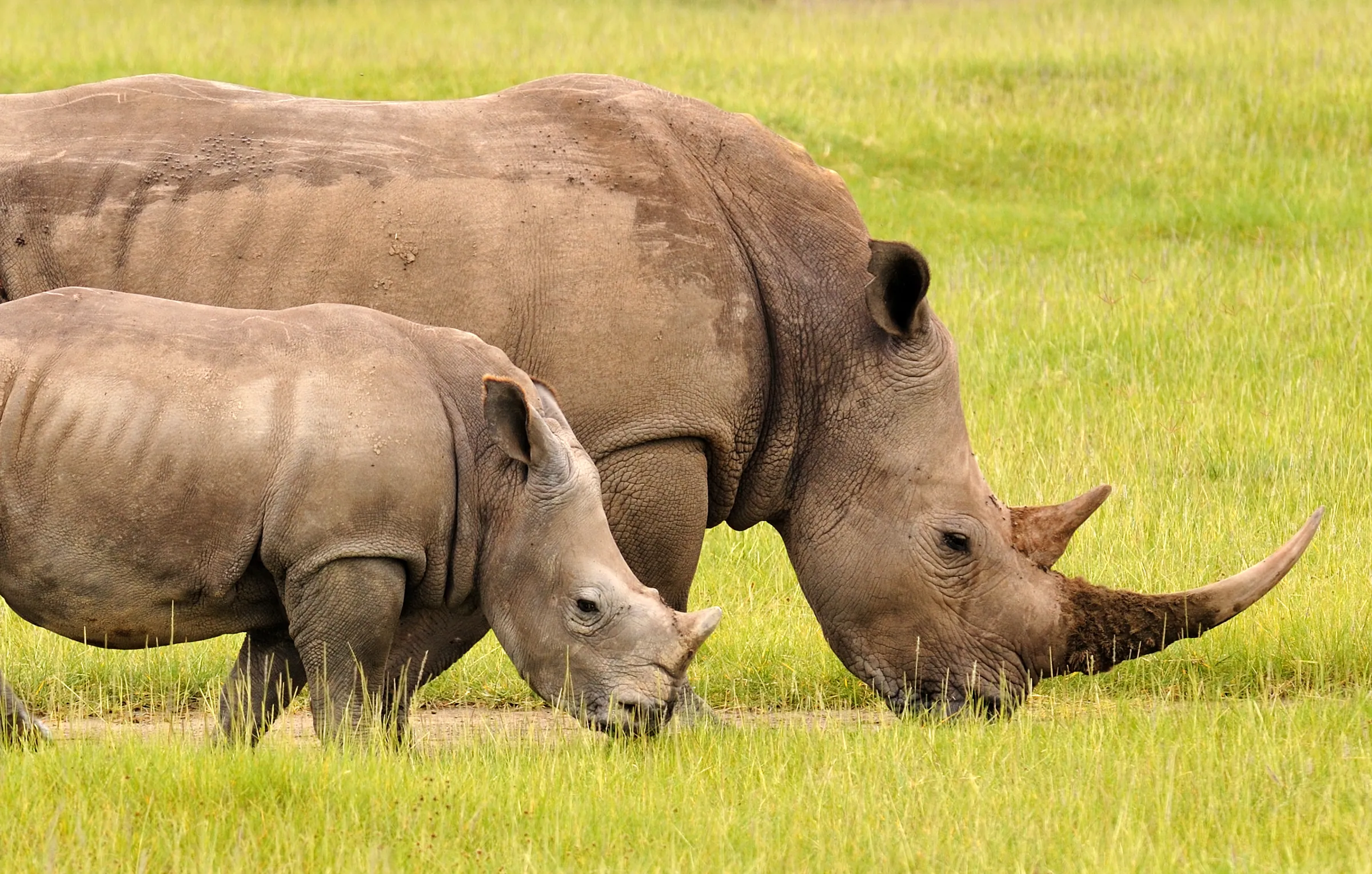
Rhinos graze the open glades; good until the rains thicken the grass.
Clear early in the month, with the rains arriving in the last two weeks.
- Ol Pejeta's rhinos and chimpanzees.
- The equator sign and the Nanyuki market.
- Mount Kenya day hikes.
- Riding and walking on the Laikipia ranches.
Crowds and prices in March
Across Kenya, March is a quiet month with low lodge rates. Entry in Nanyuki: No town fees; Ol Pejeta and the mountain charge separately. Booking two to three months ahead is usually enough, except over public holidays.
For the full cost picture, including flights from your city, see the Kenya safari cost guide and the cost calculator. Malaria risk in Nanyuki is low because of the altitude, though repellent at dusk is still sensible.
What to pack for Nanyuki in March
- A warm fleece or down jacket and a beanie for dawn game drives; open vehicles feel colder than the thermometer says
- Binoculars (8x42 is the safari standard), a headlamp for camp paths and a power bank
- A light jacket for evenings in every month; altitude keeps the nights cool
Is March the right month for Nanyuki?
March is a fair shoulder month in Nanyuki: the weather is still good before April, prices are low, and you share sightings with fewer vehicles. Our best-time guide compares every month side by side.