Towns and places. Updated November 2026. 3 min read.
Swahili taarab and the hip-swaying chakacha dance are the city's signature sounds. The Mombasa Carnival fills Moi Avenue with floats, dancers and music in November. Try biryani, pilau, mahamri, viazi karai and mishkaki skewers. This page covers what people eat in Mombasa, the dishes to look for, the manners that matter at a Kenyan table, and where the county's culture is on show.
What people eat in Mombasa
Swahili cooking built on coconut, rice and the sea: pilau and biryani for feasts, wali wa nazi (coconut rice) with fish curry on an ordinary day, and mahamri with mbaazi (coconut pigeon peas) for breakfast.
- Samaki wa kupaka, fish in a thick coconut sauce
- Viazi karai and bhajia from the roadside fryers
- Mishkaki, skewered beef grilled over charcoal
- Kaimati, sweet dumplings in syrup, and halua
- Madafu, green coconut water, from a cart on the seafront
To drink: Tangawizi (ginger) coffee from the kahawa sellers' brass pots in the evening, and fresh sugar-cane juice.
Table manners and hospitality
A guest is fed first and well. Wash your hands when the jug and basin come round (or before the meal where there is a sink), eat ugali with the right hand, and take a little of everything. Declining food outright can read as refusing the welcome; a small portion accepted is the polite route. Tea is offered at every visit and it is sweet and milky unless you ask otherwise. In Muslim households on the coast and in the north-east, dress modestly and skip alcohol.
Where the culture is on show
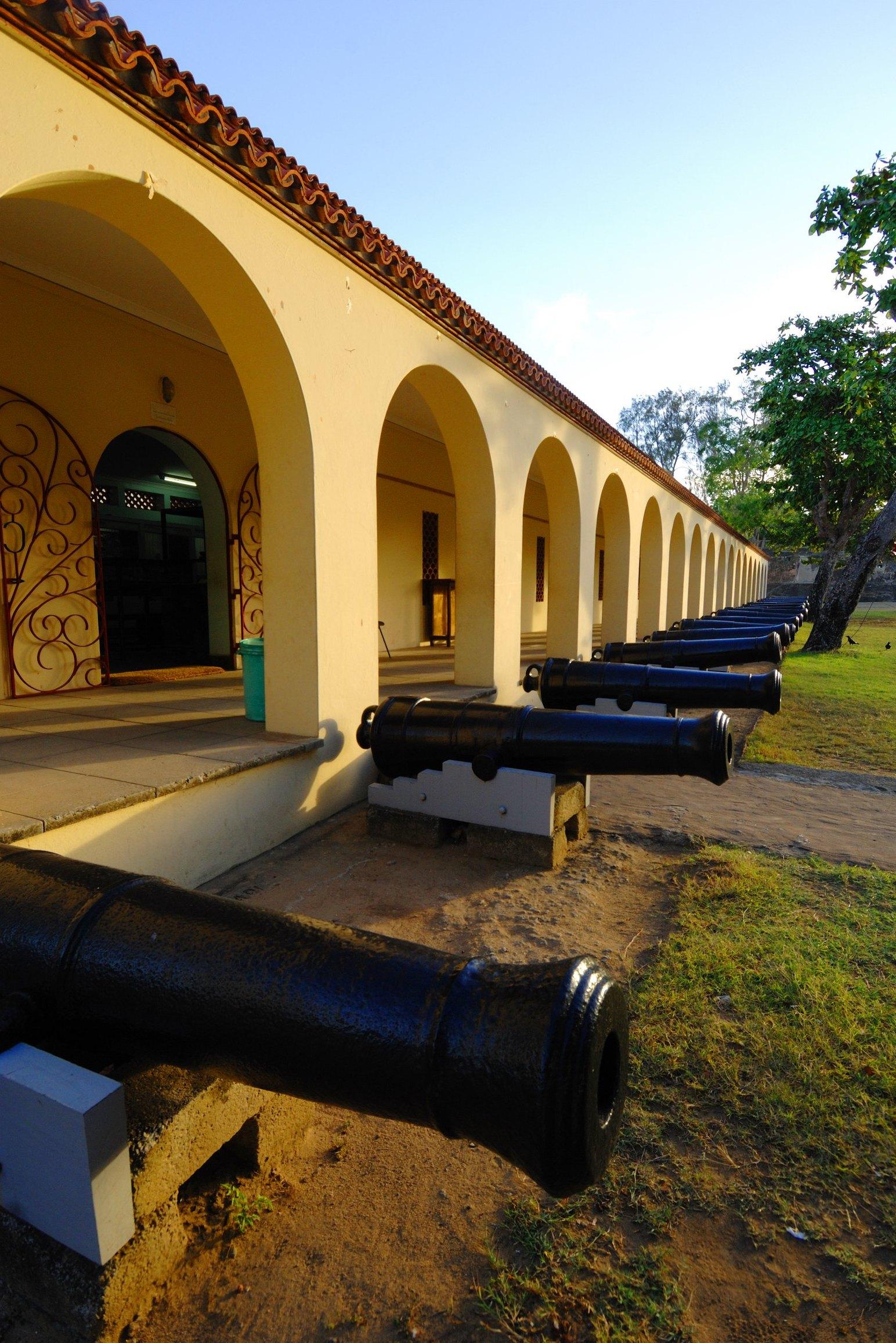
Fort Jesus: a 16th-century Portuguese fortress and museum, with an evening sound and light show. Mombasa Old Town: narrow lanes, carved doors, spice stalls and antique shops beside the old harbour. Bombolulu Workshops and Cultural Centre: crafts by artisans with disabilities, plus traditional dance. Mamba Village Centre: a large crocodile farm with gardens and horse riding. Markets are the everyday museum: the main market in Mombasa is busiest on its market days and is where the county's produce, cloth and cooking are easiest to see.
Eating out: what things cost
A plate of ugali and stew at a kibanda (a small local eatery) in Mombasa costs about KSh 150 to 300 ($1 to $2.50); a meal at a mid-range restaurant KSh 800 to 1,500 ($6 to $12); and dinner at a lodge or hotel, where it is not already in your rate, $25 to $40. Bottled water is KSh 50 to 100, a soda about the same, a Tusker KSh 250 to 400 in a bar. Tip around 10 percent in restaurants where service is not added. Street food is safe where it is cooked in front of you and busy; roast maize, mandazi and samosas are the standards.
Economy and daily life
The port, trade, logistics and tourism drive one of Kenya's most productive county economies. The Port of Mombasa is East Africa's largest seaport and the gateway for Uganda, Rwanda, Burundi, South Sudan and eastern DRC. Fort Jesus, begun by the Portuguese in 1593, has been a UNESCO World Heritage Site since 2011.